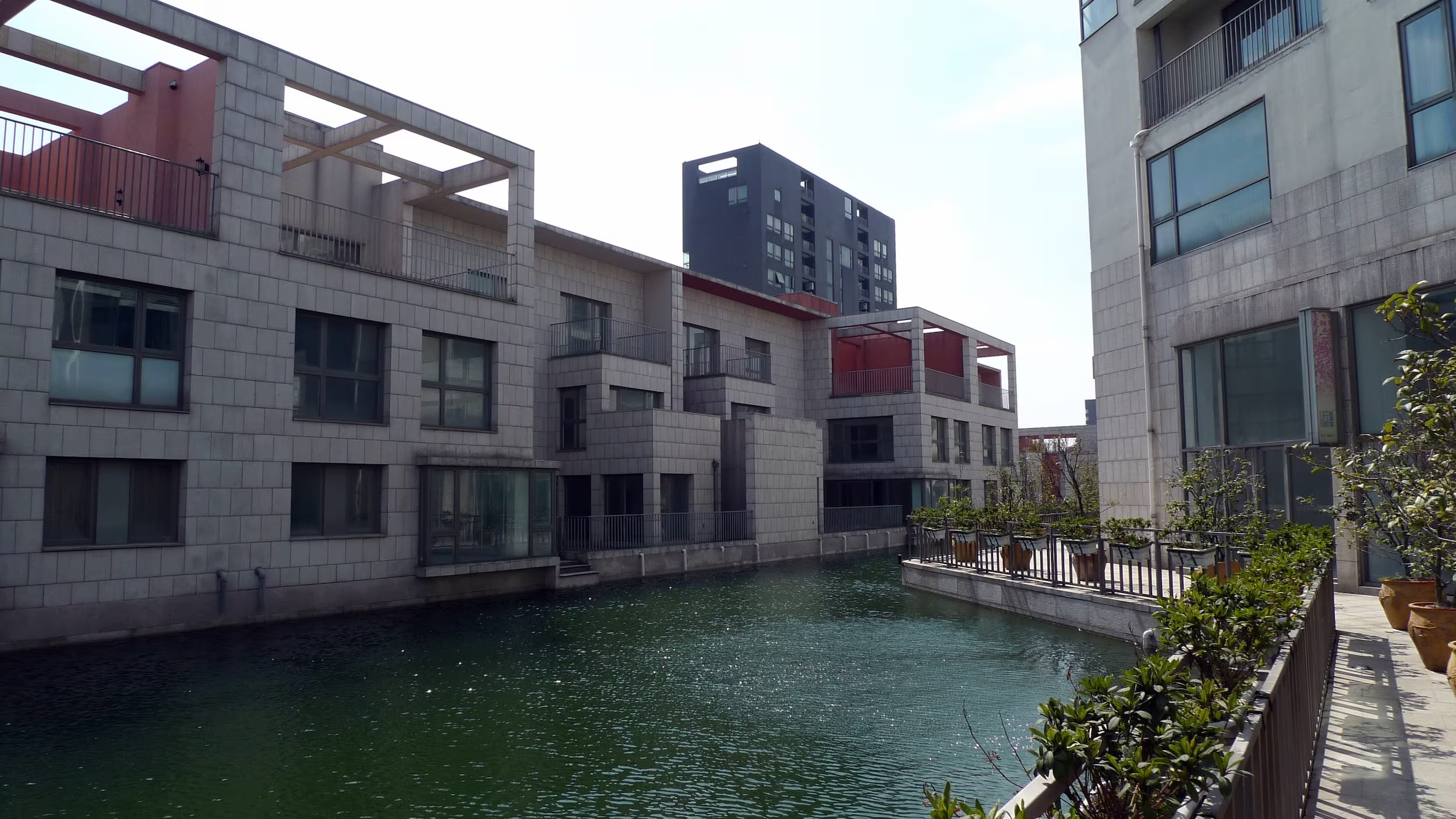
A few kilometers from the center of Shanghai stands a city designed by one of the most important Italian architects of the second half of the twentieth century: Vittorio Gregotti. Is called Pujiang New Town and is located in the Minhang district, south of the megalopolis. The project was born in the early 2000s within the urban planning program One City, Nine Townstogether with 8 other cities, promoted by the municipal government to decongest and reorder the metropolitan area of Shanghai through the creation of new urban nuclei inspired by European traditions and international urban models. The master plan of Italian themed satellite cities is entrusted, following an invited competition, to Gregotti Associateswith the aim of building, in a flat agricultural area characterized by a dense network of canals, a new residential and mixed-use settlement intended to accommodate between 80,000 and 100,000 inhabitants. Pujiang’s project, however, deviates from the stereotyped image of a postcard Italy, combining Chinese culture and Western culture. The reference to the Bel Paese passes above all through the urban structure: one neat grid of squares, canals, pedestrian paths, courtyards and public spaces, in which architecture and landscape they are thought of as parts of a single system.
The program One City, Nine Towns of Shanghai’s satellite cities
Between the end of the twentieth century and the beginning of the 2000s, Shanghai experienced a very rapid urban growth. The metropolis attracted millions of new inhabitants, with a sharp increase in pressure on the real estate market and progressive congestion in the center. Hence the choice to develop new housing centers along the outer belt of themetropolitan area. The program One City, Nine Townsstarted in 2001 by the municipal government, responded precisely to this need: to create new satellite communities connected to the metropolis, each equipped with a own architectural and urban identity. The operation in fact had a territorial marketing component. The authorities wanted to make peripheral or agricultural areas attractive, encouraging the emerging middle class to move outside the center of Shanghai. The international theme was therefore a promotional tool and an incentive: it served to confer image, recognisability and real estate value to new settlements.
The plan envisaged the first city Songjiang New Citywith the British-themed core of Thames Townand other cities distributed in suburban districts. They were among these Pujiangthe Italian city; AntingGerman-inspired and also known as Weimar Village; Luodianlinked to the Scandinavian imagination; GaoqiaoDutch themed; Fengchengof Spanish origin; Fengjingassociated with North American/Canadian references; Zhujiajiaoset on the model of the traditional Chinese water city. The cities of Baozhen and Zhoupu (the latter initially hypothesized to have a mixed Western theme), will instead be respectively absorbed into the urban developments of Dongtan, China’s first eco-city, and Lingang, external to the project.
Where Pujiang New Town by Vittorio Gregotti is located and how it is made
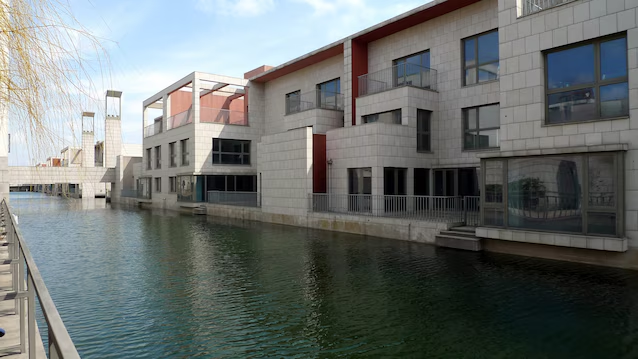
Pujiang is located in the district of Minhangon the eastern bank of the river Huangpuabout 13 km south of central Shanghai. The location was strategic for several reasons: it would have been close enough to Shanghai to function as a commuter city, but external enough to allow a large-scale urban planning intervention also in continuity with the urban transformations planned in view of theExpo 2010. The plant, spread over an area of 15 km2is based on one regular grid – with square meshes of 300 meters per side – which orders the entire area. Inside they are repeated urban blocks and moduleshowever adapted to the site conditions, in particular the presence of numerous channels and small settlements. The orthogonal grid is therefore not only used to design streets and lots: it becomes the tool with which to organize the relationship between residential neighborhoods, green spaces, pedestrian paths, public services and collective facilities.
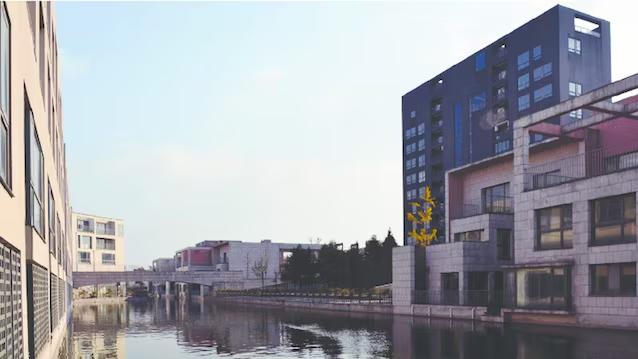
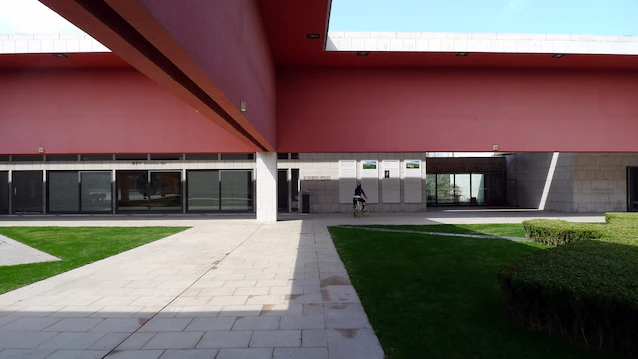
Instead of reproducing an Italian city by following its stereotype, through historicist facades or stylistic revivals, Vittorio Gregotti interprets the theme by adopting the settlement and distribution principles of Greco-Roman tradition and at the same time taking up the urban metaphor of the agricultural fieldthe foundation of China’s rural economy. The result is a composition that enhances the centrality of public space and the relationship between streets, squares, architecture and gardens, recalling in a more permeable key the xiaoquthe Chinese residential areas structured around common courtyards. The housing typologies include urban villas, terraced houses, multi-storey buildings and higher density housing complexes, with the aim of building a varied built landscape and contained in height.
THE’central east-west axisonly partially realized, should have worked as public plug of the new city, as well as the main organizing element of the urban composition. Along this route, which connected the road leading to Shanghai (Puxing Road) to the bed of the Huangpu river, a sequence of squares, administrative and representative buildings, community services (convention centre, shopping centre, sports facilities, university, hospital, offices and hotels, etc.) and green spaces were planned, designed to create places of meeting and social exchange with a civic identity. There north-south direction on the contrary, it would play the role of linear park in order to define the urban edges, accompany the avenues and mask the presence of infrastructures and power lines. There road networkdivided into three levels (primary, secondary and cycle-pedestrian path), would finally have to communicate with the system of navigable canals.
From the competition to today
It dates back to 2001 international competition by invitation announced by the district government for the construction of the city. Various groups are participating in the competition, including Gregotti Associati and Scacchetti Associati. The master plan proposed by the former was selected because it was considered more solid, rational in terms of urban planning and capable of adapting to the context through a orthogonal mesh settlement principlecommon to both the classical city and the ancient Chinese tradition. In 2003, the year the works began, the studio led by Vittorio Gregotti will follow the architectural project of a sample area of approximately 2.6 km², while other buildings and residential areas will be entrusted to the Italian designers Emilio Battisti, Francesco Cellini, Stefano Cordeschi, Mauro Galantino, Sergio Pascolo and Renato Rizzi.
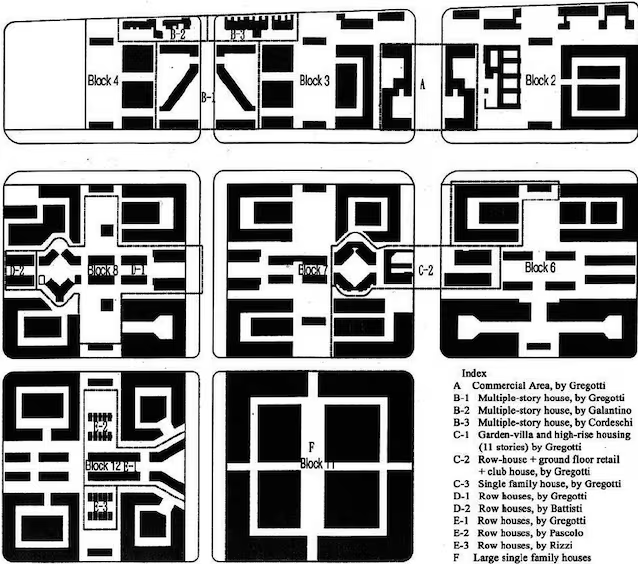
Some parts of the plan have been completed, others have remained on paper, and still others have been incorporated into subsequent urban strategies. Over time, Pujiang was progressively absorbed into the metropolitan growth of Shanghai and today is part of the long-term planning of Minhang district which aims to strengthen its role as a new urban centrality through the strengthening of public services, connections with the centre, commercial, cultural and recreational functions, green spaces and infrastructures by 2035. The New Pujiang Centre: new innovation and research hub hypothesized in continuity with industrial regeneration interventions and solutions for water and landscape management.
Despite the partial realization and the posthumous transformations, after more than twenty years Pujiang remains a significant case of international urban planning and cultural mediationin which the trace of Gregotti Associati’s project, still recognizable in the urban grid and in the relationship between green spaces and canals, continues to dialogue with the transformations of the contemporary Chinese metropolis.
