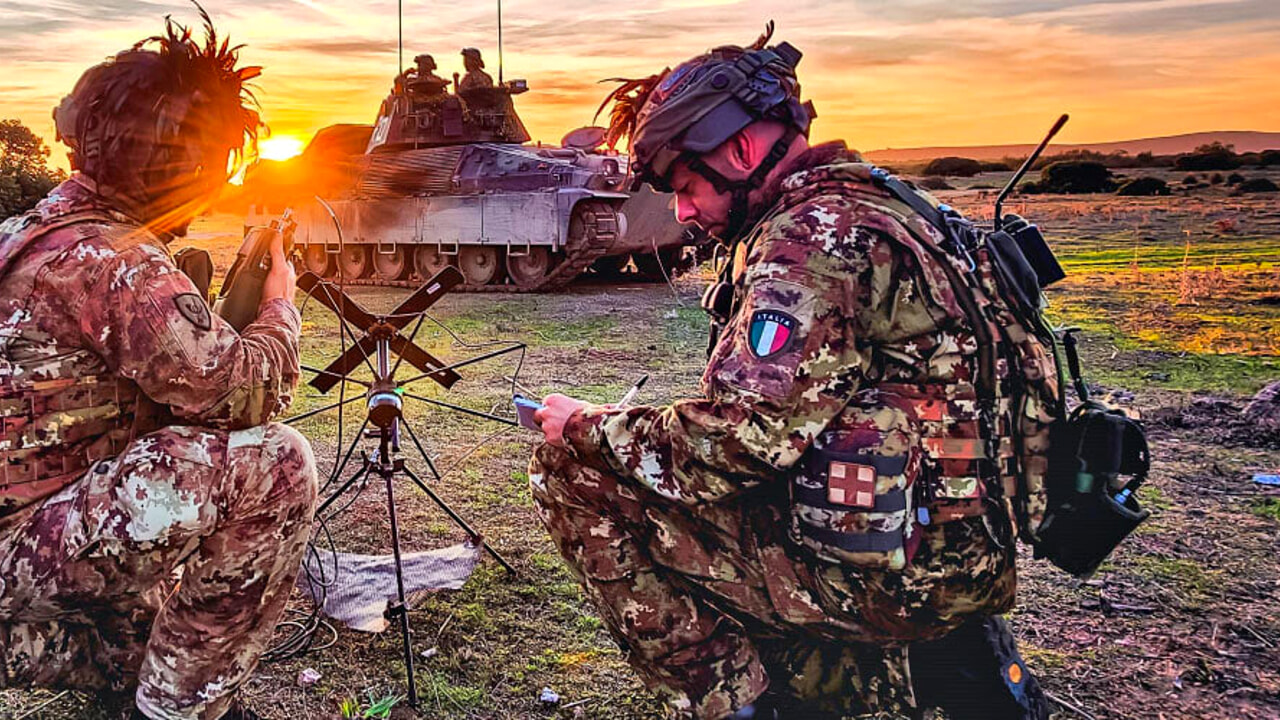
Free movement not only of goods and people, but also of tracked vehicles. The unprecedented security threats that the Old Continent is facing in recent years are pushing the European Union to review its military strategies, thinking of a “military Schengen”.
What does the “Military Schengen” initiative involve?
Seven years after the launch of the action plan for military mobility in Europe by the Juncker Commission in 2018, the von der Leyen Commission is relaunching the initiative with the aim of creating a real “military Schengen” by 2027. The objective of the plan, as specified by the High Representative for EU foreign policy, aims to make it easier to move soldiers and defense equipment between one member state and another.
The package presented on November 19th in Brussels includes a new regulation on military mobility and a joint communication between institutions. To make it achievable, the European executive proposes to remove regulatory barriers, introducing harmonized rules at EU level in order to overcome the current fragmentation made up of cumbersome bureaucratic procedures that limit cross-border military movements. The package, in fact, provides for a “three-day” limit for the authorizations necessary for the passage of troops and military equipment at the borders. In Kallas’s eyes, a system in which some countries require “45 days’ notice before troops from other countries can cross their territory for exercises” is now unsustainable.
To achieve this objective, the Commission proposes the creation of an emergency framework, the new European Enhanced Military Mobility Response System (EMERS). The facility is designed to speed up procedures and ensure priority access to key infrastructure, in support of armed forces engaged in operations within the EU or NATO. Alongside this, the initiative aims to strengthen the resilience of transport infrastructures, through the modernization of the main European military mobility corridors according to dual-use standards and the protection of strategic infrastructures with a new resilience “toolbox”. The aim is to ensure that Europe can move troops and materials quickly in a crisis, reducing the vulnerability of key logistics networks to conventional and hybrid threats.
Where will the money come from to finance the project?
On the financing front, Kallas underlined the EU’s commitment: the proposal for the next multiannual financial framework includes 177 billion euros allocated to dual-use transport infrastructure, designed to facilitate both civil and military mobility. Added to this is the commitment of spending equal to 1.5 percent of the GDP of the NATO allies for investments related to security. “Investing in infrastructure is crucial”, reiterated Kallas, highlighting how the modernization of strategic corridors is not just a logistical issue, but a fundamental building block for Europe’s resilience and strategic autonomy.
To improve military mobility in the old continent, investments of “100 billion” euros will be needed to restructure “500 hot spots” identified as bottlenecks that hinder the movement of troops and vehicles in Europe. Investments that will be completed by the end of this decade. Immediate action is therefore necessary. The Commission will now present the regulation on military mobility to the Council and the European Parliament for adoption, according to the ordinary legislative procedure.
