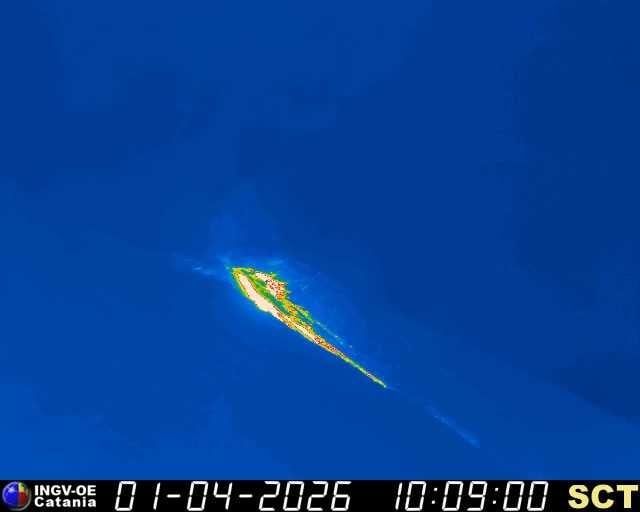
On the volcano Stromboli a has been recordedmore intense activity than normal: the INGV surveillance cameras have in fact identified the beginning of a new one effusive activity from lava overflow from the area North craterwhich produced a modest lava flow whose front is located in the upper part of the Sciara del Fuocoa steep, horseshoe-shaped depression that occupies the northwest flank of the volcano. The activity began yesterday, March 31, around 5.51pm (Italian time), with the Etna Observatory also reporting blocks rolling down the slope.
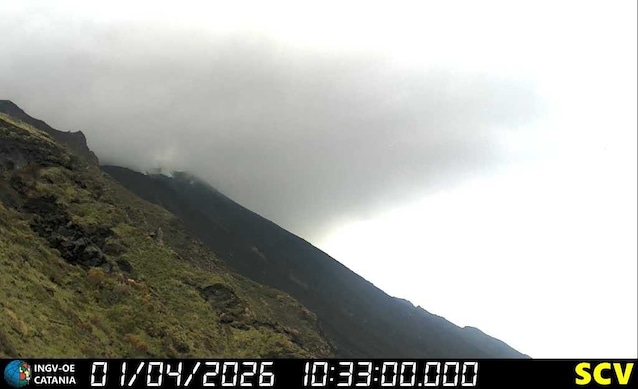
Since 4.45pm yesterday, however, the average amplitude of the volcanic tremor show a increase in valuesrose from medium to high levels. The video surveillance cameras positioned by INGV show how the lava flow is still present this morning, around 10:09, on the upper part of the Sciara del Fuoco.
This more intense than normal volcanic activity can be explained by looking at the nature of Stromboli itself. We are talking about one of the few volcanoes in the world persistent activitywith regular explosions every 10/20 minutes – hence the origin of the term “Strombolian activity”, used throughout the world to indicate small explosions separated from each other, with fragments of incandescent lava, lapilli and ash thrown up to a few tens or hundreds of meters above the vents.
The volcano, however, can go from ordinary activity to more intense eventswith some vents producing an almost continuous activity of throwing fragments of lava (spattering) or larger explosions defined as paroxysms, events which throw bombs and blocks up to the summit area and sometimes cause the fallout of incandescent pyroclastic material.
In recent months, INGV has reported several episodes of volcanic activity of Stromboli more intense than normal, the last of which was recorded at the beginning of March. The last significant eruption, however, dates back to July 2024, when a 2 km high ash cloud triggered a red alert.
