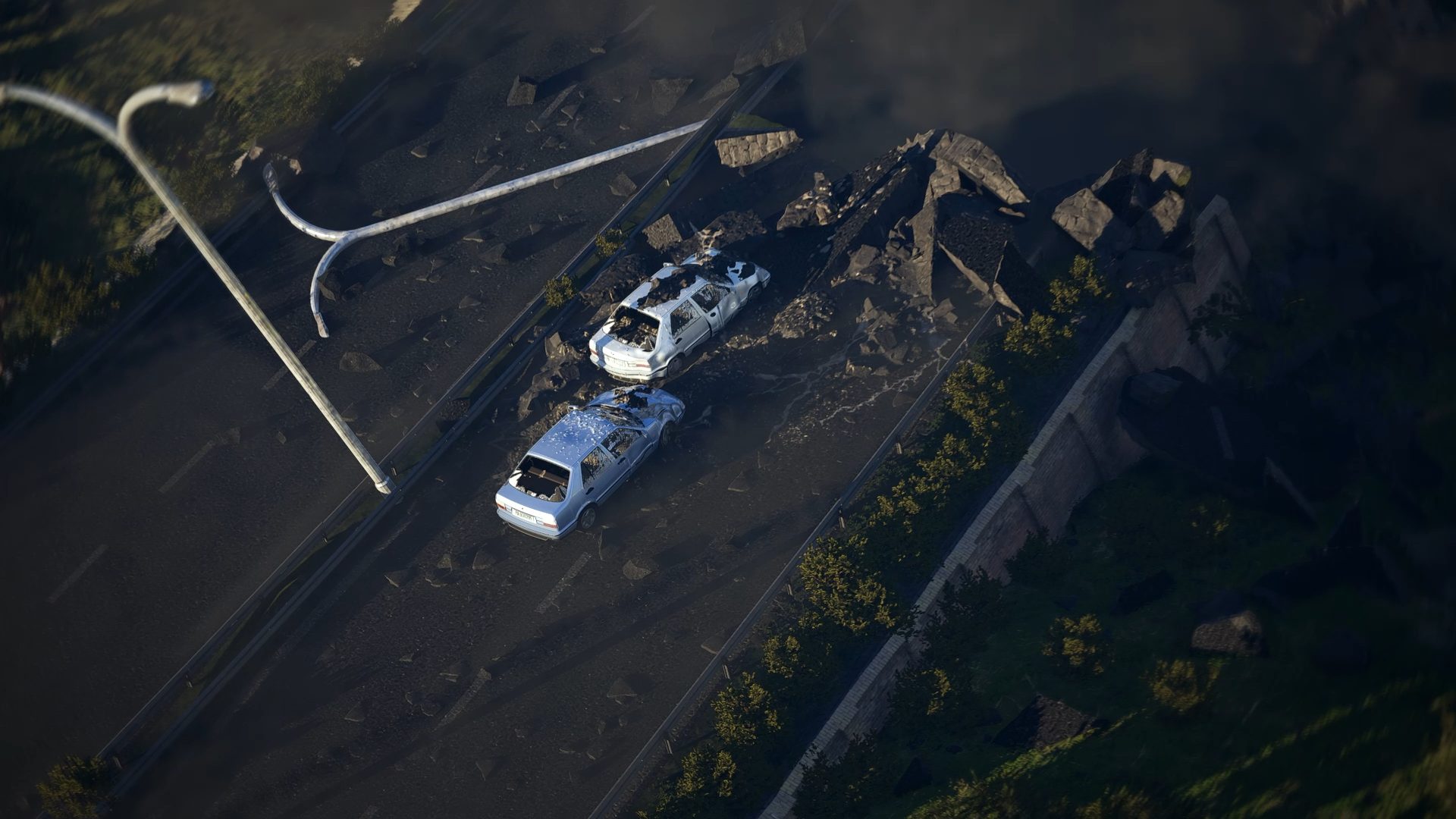
On May 23, 1992, at the height of the junction for Capableabout 500 kg of explosive made a section of the A29 motorway jump in the air, which connects Punta Raisi airport to Palermo. That 33 -year -old attack provoked the death of the magistrate Giovanni Falconeengaged in the fight against organized crime for years: together with him, his wife also lost their lives Francesca Morvilloalso a magistrate, and the three agents of the escort Antonio Montinaro, Rocco Dicillo And Vito Schifani.
But how was it possible to create the Capaci massacre with a scientific precision, making it detonate between 300 and 500 kg of explosive under the asphalt of the highway and hitting a moving car, which should have been traveling at a speed of about 160 km/h? We reconstructed the Capaci massacre with unpublished 3D imagesretracing the entire dynamics of the attack based on all available technical data.
Even today the complexity of this operation, entrusted to inexperienced mafia from the engineering point of view, leaves some questions open on any external contributions to Cosa Nostra to set up the attack.
The technical creation of the Capaci massacre
The realization of the attack was entrusted to a small group of men of Cosa Nostra: among these there were also Giovanni Bruscathe one who physically operated the explosive remote control (recently returned free after serving his sentence in prison), Santino di Matteothen became a collaborator of justice, Pietro Rampullathe former artificant who designed the trigger system, but also Gioacchino La Barbera, Antonino Slut, John Battle And Antonino Gioè.
The channel under the highway and the explosive trigger system
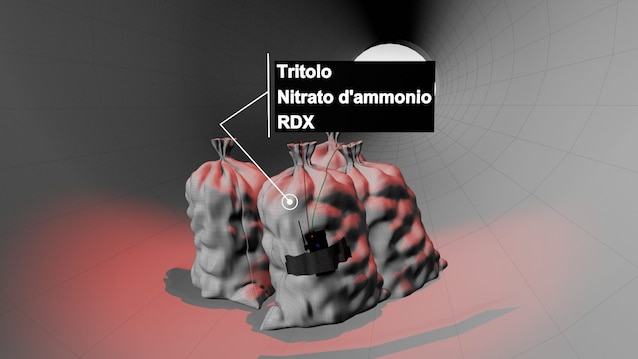
To place the explosive, a precise stretch of the A29 was chosen, at the height of the junction for Capaci. In fact, under the roadway it ran Cement drainage channellong and straight, where they were positioned between the 300 And 500 kg of explosive: more specifically, it was a mix between mince, ammonium nitrate and RDX, an explosive used especially in the military.
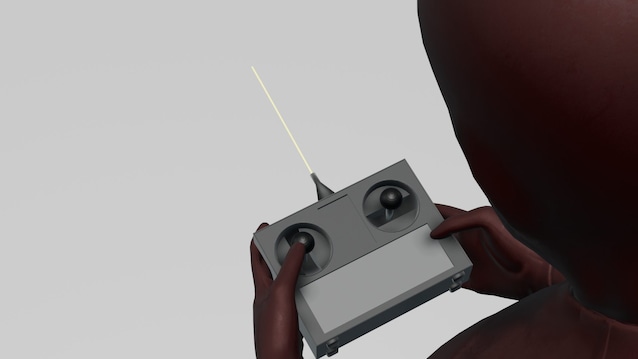
The explosive was then connected to a simple but reliable detonation system, that is, a radio control for toy models. Two levers, a radio impulse and to receive the signal one Receiving box connected to electric detonators.
Giovanni Falcone’s car should have been traveling at a speed of 160 km/halong about 44 meters in 1 second: this means that, for every tenth of a second, would have traveled 4.44 meters And that in 3 tenths it would have been 13 meters ahead. As a result, there was no error margin for the mafia: even only 1 or 2 tenths of a second delay could have decreased the probability of success of the attack.
The flash system and the composition place
To consider, then, there was also the time reaction time, that is, the one spent between the activation of the button and the trigger of the explosion. Precisely for this reason, the mafia led a series of Technical tests: instead of the explosive, they connected to the recipient one flash light bulb cameras, so that you can calculate the signal delay exactly. As a reference point, however, a old refrigeratorabandoned to the margins of the highway. During the rehearsals, the refrigerator served by visual target: The material executors had to learn to trigger the flash exactly when the test machine would pass in front of that point.
As a place of stalking, however, a hill was chosen at about 900 meters away, where on May 23 they positioned themselves Brusque And Gioè, In full view on the motorway section, but invisible for those who traveled.
The dynamics of the Capaci massacre according to official reconstructions
That Saturday 23 May, Giovanni Falcone had landed at Punta Raisi airport to spend the weekend in his Palermo home in via Notarbartolo. Waiting for him on the track, around 5:45 pm, there was the usual escort convoyconsisting of three armored Fiat Croma.
To open the convoy was the Brown chroma, On board the agents of the escort Antonio Montinaro, Rocco Dicillo and Vito Schifani traveled; at the center he traveled the White chroma of Falcone, led by the magistrate himself (who wanted to stay next to his wife); to close the Blue chromawith the agents Gaspare Cervello, Angelo Corbo and Paolo Capuzza.
In reality, not many know that theExplosion was missing Falcone’s car: The first car to jump in the air, in fact, was the opening of, while Falcone’s car ended up crashing against the concrete wall and debris that has risen as a consequence of the detonation.

As also reported by the official statements of Costanza, Falcone’s car, in fact, did not travel at 160 km/h but among the 100 And 120 km/h: Fiat Croma had slowed down suddenly after the judge had removed the keys from the dashboardpassing them over to the driver. Realizing the error, Falcone removing the keys in their place, a few moments before the highway section exploded.
It was precisely this sudden slowdown To prevent Falcone’s car from being affected directly by the explosion, saving the driver Costanza and the escort agents in the closing car. According to some of the most recent reconstructions, if Giovanni Falcone and Francesca Morvillo had worn the seat belts, they would probably have saved themselves from the impact against the debris crater generated by the explosion.
