A team of Finnish divers sent by Divers Alert Network Europe found the bodies of the four Italian divers still missing at Maldives after the tragedy that claimed the lives of five people during a dive last Thursday. The bodies were identified at a depth of 60 meters, in a cave on the island of Alimatha forming part of the atoll of Vaavu. The recovery of the bodies, which will take place in the next few days, will also serve to clarify the dynamics of the tragedy through the analysis of data recorded on the wrist computers of Italian divers.
Among the hypotheses on the possible causes that would have led to the death of the five divers are: underwater currentswhich at this time of year they can be particularly dangerous in the northern Indian Ocean due to the southwest monsoons. One of the possibilities is precisely that the divers were victims of sudden currents that could have dragged at least one member of the group to the bottom. However, it is worth underlining that this is only a hypothesis: the investigations currently underway will clarify what happened on May 14th.
The origin of underwater currents in the Maldives: the role of monsoons
Maldives is subject to two distinct monsoon regimes. From November to April the north-east monsoon dominates, generating relatively stable and predictable currents. From May to October comes the southwest monsoon (Hulhangu Moosun in the local language) which brings rain, rough seas and more intense currents. Monsoons also have a mechanical function, transporting and thus generating ocean surface water surface currents.
During the southwest monsoon, which has already started this year, the winds generate the Southwest Monsoon Currentwhich flows northeastward along the ocean surface. When these currents encounter the structure of the Maldivian atolls, they slow down abruptly upon contact with the shallow waters around the islands. This favors a vertical mixing of currentswith water falling and rising.
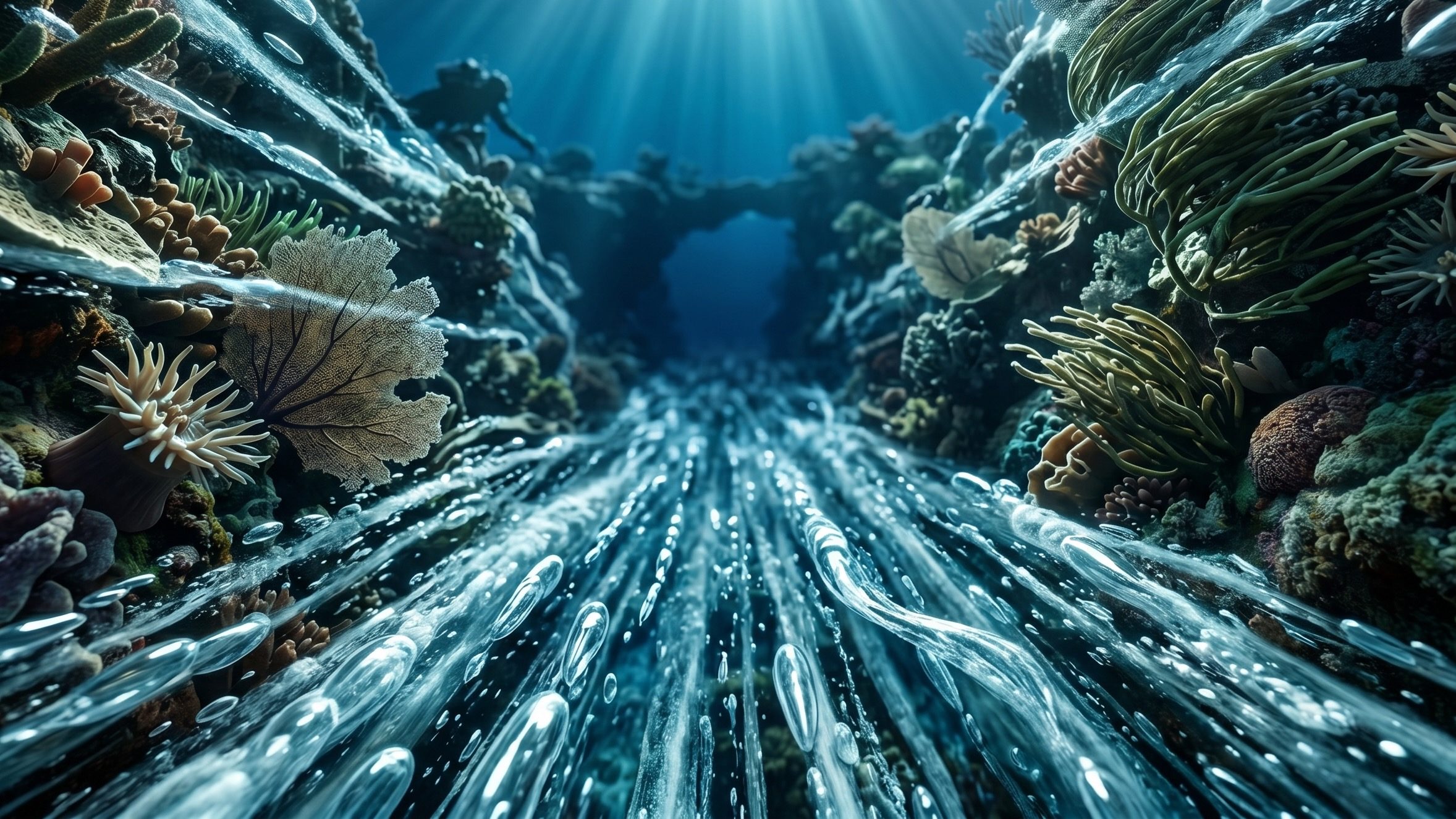
Added to this is the particular morphology of the Maldivian seabed, characterized by channels between one atoll and another called kandu in local language. In these narrow passages the currents are channeled and consequently increase their speed, becoming more intense and unpredictable.
Why they can become dangerous: downwelling and “washing machine effect”
The danger of underwater currents is linked to theirs vertical componenti.e. to the fact that large quantities of water can move downwards at high speed (downwelling) or upwards (upwelling) in the presence of an obstacle, which in the case of the Maldives can be the wall of a coral reef or a kandu.
The downwelling it is the most insidious phenomenon for divers, who can come dragged deep too quickly to be able to go back up under one’s own power. THE’upwelling it is the opposite phenomenon, in which the current acquires a vertical component. It is less dangerous for divers, but contributes to the unpredictability of underwater conditions and, together with descending currents and horizontal currents, contributes to creating what divers jargon call “washing machine” (washing machine): on the corners of kanduwhen different currents meet, water can swirl chaotically causing divers to be rapidly thrown up and down with enough force to put their safety at risk.
The syzygy tide may have made the currents more intense
A factor that influences the intensity of the currents are the tides. Every time the tide rises or falls, large volumes of water must enter or leave the atolls through the kanduwhich in fact are connecting channels between the open ocean and the internal basins of the atolls. This phenomenon can increase the speed and range of underwater currents.
The greater the difference in level between high and low tide, the more water must pass through in the same time interval, and therefore the faster the current must flow in the channel. This difference – and therefore the speed of the currents – is maximum during the syzygy tidesi.e. those corresponding to the full moon and new moon, when the alignment between Earth, Sun and Moon causes a greater deformation of the oceans.
May 14, the day of the tragedy, was only two days away from the new moon, so we were in syzygy tidal conditions. Moreover, in those days the monsoons were intensifyingso much so that the Maldives meteorological service had issued ayellow weather warning due to bad weather and rough seas. The combination of these circumstances may have contributed to creating risky situations during the dive in which the five Italian divers lost their lives. In any case – we reiterate – the investigations will determine the causes and dynamics of the tragedy.
