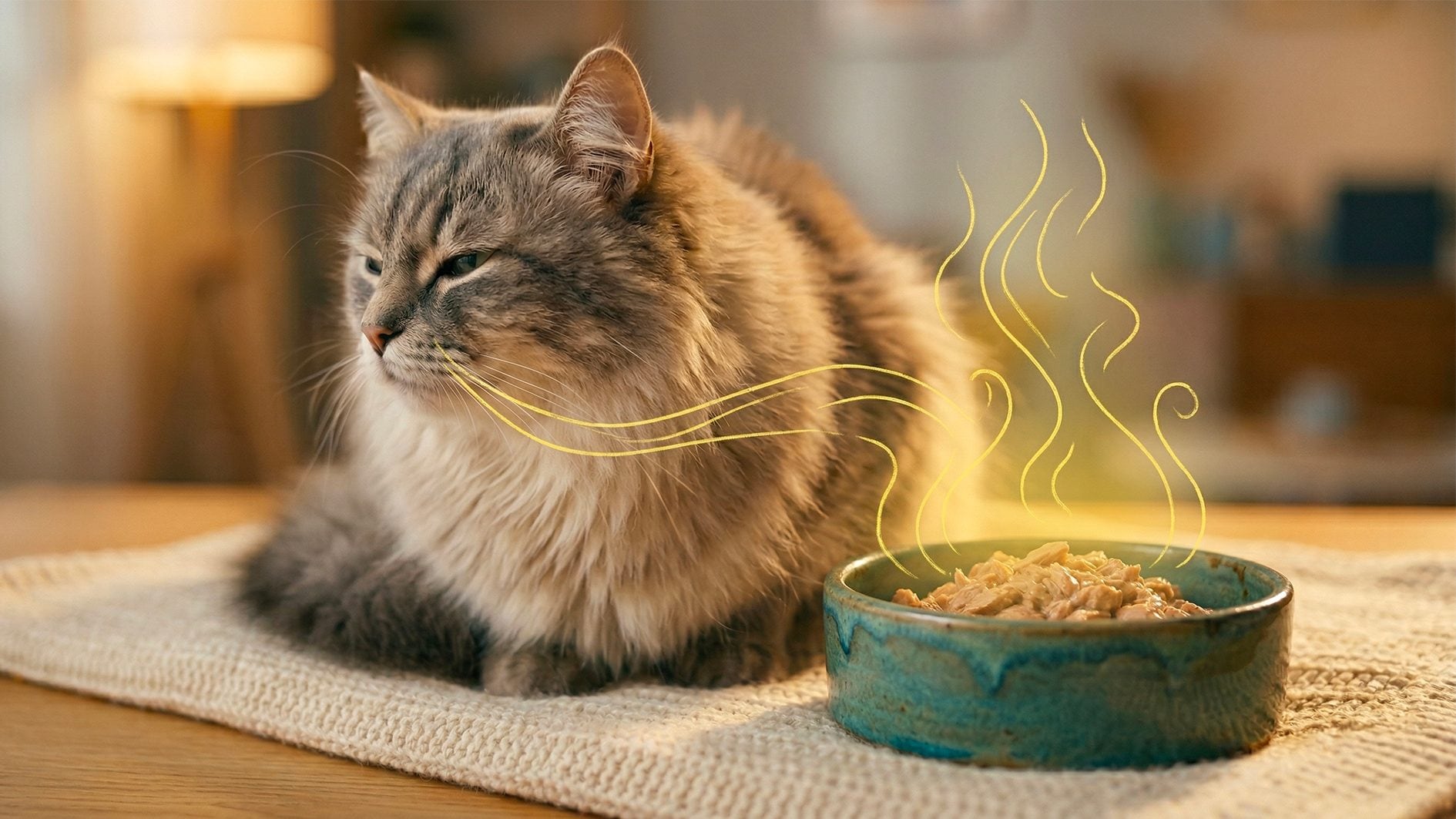
The cat that approaches the bowl, sniffs, eats a few bites and leaves. Does this behavior come from evolutionary instinct or are they whims? According to a study published in Physiology & Behavior by researchers fromIwate University in Japan, the answer is much simpler, the cat gets bored of theodor of food, not of food itself. Cats are solitary hunters who in wild nature capture numerous small prey throughout the day. This evolutionary origin is reflected in their way of eating. In fact, they don’t prefer large meals like dogs, but multiple small meals spread throughout the day. A behavior that the owners know well, but the mechanism of which was not well understood. The team led by professor Masao Miyazaki of the Faculty of Agriculture ofIwate University in Japan, proposed and tested the hypothesis that the decrease in appetite is not caused by satiety, but byolfactory adaptation that is, the progressive “switching off” of the brain’s response to a smell that remains unchanged over time.
The experiment: same bowl, different smells
The study involved 12 mixed breed domestic cats in good health between the ages of 3 and 15. After a 16-hour fast, the cats were subjected to six consecutive cycles of feeding, each consisting of 10 minutes with food available and 10 minutes break.
When it was always offered same foodthe amount eaten progressively decreased from cycle to cycle and the cats ate a lot at the first access, then less and less, leaving the bowl increasingly full. However, when a different food even just in the sixth and final cycle, the appetite immediately recovered, regardless of whether the new food was more or less tasty than the previous one. It was the change in itself It is not the quality of the new food that makes the difference.
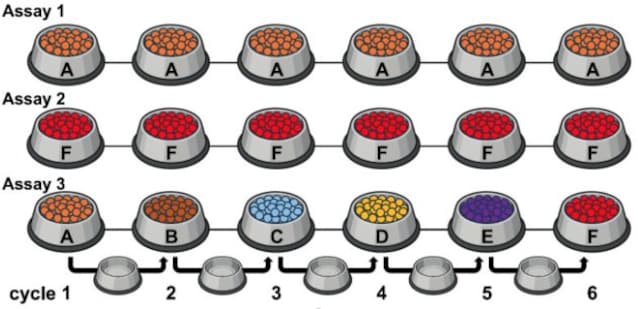
The researchers then separated the odor from the food by exposing the cats just the scent of a different food (without changing the contents of the bowl) and the appetite returned the same. Conversely, if during the break between one cycle and another the cats were exposed to same smell as foodthe amount eaten in the next cycle decreased. These observations confirmed that it is not sight, taste or texture that regulate the desire to eat but the nose and smell.
Olfactory adaptation: when the brain “stops feeling”
The phenomenon that explains everything is called olfactory adaptation (olfactory habituation). When an odor is perceived repeatedly and unchanged, the brain progressively reduces its response to that stimulus, as if “deactivating” it. It’s the same mechanism as after a few minutes we no longer smell the perfume that we wore, or that of our house. There olfactory disaddiction (olfactory dishabituation) is the reverse process whereby the introduction of a new odor “turns on” the system, causing the neuronal response to return to initial levels.
As Professor Miyazaki himself explains in a statement from the University of Iwate, cats do not stop eating simply because they are full but their motivation to eat decreases because they get used to the smell of foodand can be restored with the introduction of a new fragrance.
Possible applications
For cats elderly people or sick who tend to eat little, adding something that changes the scent while keeping the food the same could be enough to stimulate their appetite again, without having to change their diet or resort to richer food. On the contrary, always keeping the same food could help cats overweight to consume smaller portions naturally.
There may also be implications in the design of animal foodwhere aromatic variations could be introduced capable of maintaining high motivation to eat over time.
The study is based on a small sample and on non-sterilized catsso the researchers highlight the need for further studies in larger and more diverse populations.
Sources
Takumi Takahashi, Shota Ichizawa, Sara Kikuchi, Nanami Hara, Reiko Uenoyama, Tamako Miyazaki, Masao Miyazaki, Olfactory habituation and dishabituation dynamically regulate feeding motivation in domestic cats, Physiology & Behavior, Volume 311, 2026 University of Iwate
