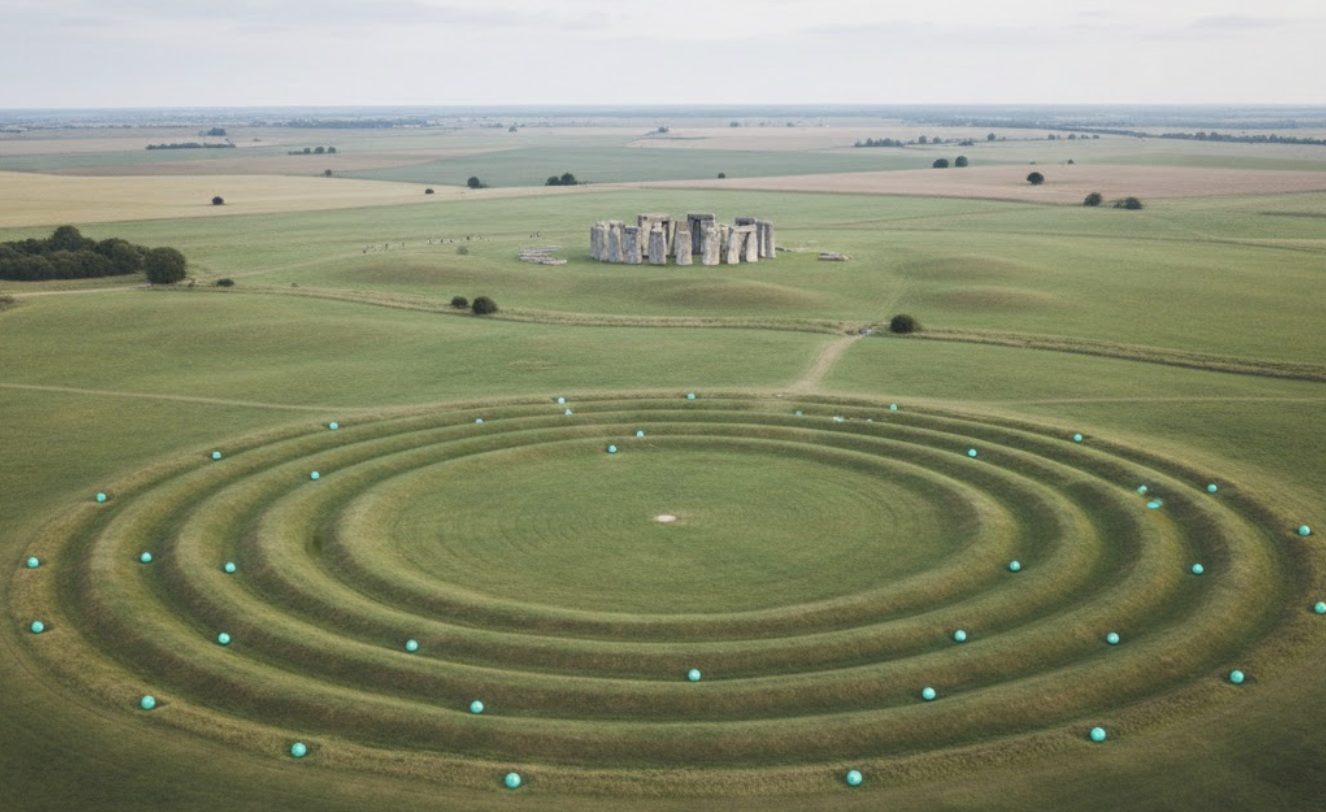
A new study internationalled by one multidisciplinary team of the universities of Bradford, Birmingham, Warwick, Trinity Saint David, and St. Andrews, in the United Kingdom, but also of Vienna and Beijing-Hong Kong, has identified and studied a series of huge pits dating back to the Neolithic not far from the famous site of Stonehenge. It was believed that these anomalies in the ground, arranged in concentric rings, were natural, but the different prospecting techniques used demonstrated their artificial origin.
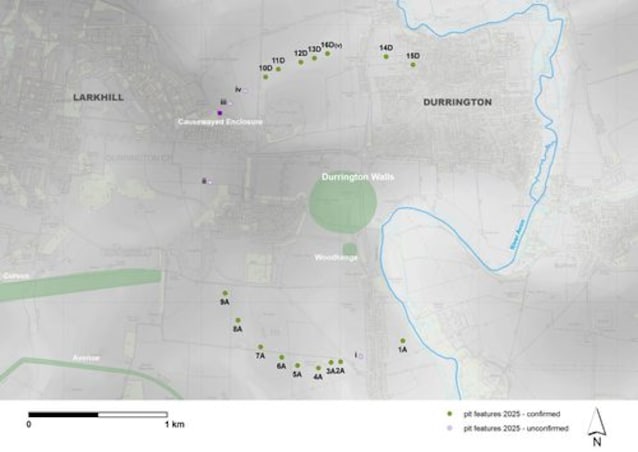
3 km from Stonehengein the south-west of England, is the site of Durrington Wallspart of Stonehenge World Heritage Site. In the 2020a series of archaeological explorations identified a set of big potholessubsequently fill with a filler. This series of holes (with diameter up to 20 meters) is placed on two archeswhich they form a large ring with a diameter of 2 km. The research group that was responsible for studying these large pits wanted to use different analysis techniques to establish whether they were natural or anthropic formations
Firstly, techniques were used electromagnetic prospecting. Measuring the electrical conductivity of the soilit is possible to establish whether the sediment present within these formations is actually a fill, different from the surrounding soil. The electromagnetic analyzes have indeed signaled differences in the electrical conductivity of the soil.
Another technique used by researchers, the Electrical Resistance Tomography (measures the resistance to electrical impulses of different types of soils), made it possible to measure depth and shape of these supposed holes. Analysis has indeed shown that these are pits between 4 and 5 meters deep, with sloping sides and a flat bottomall elements that lean towards one of their own non-natural origin.
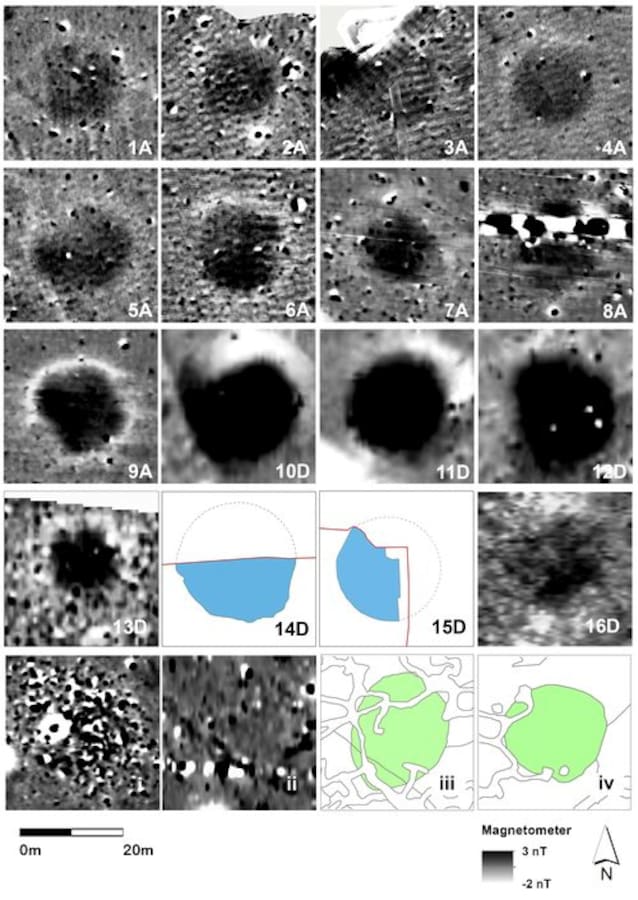
Subsequently, gods were performed core drillingwho demonstrated how the filling of holes is composed of one succession of different layerseven with gravel of origin not compatible with the surrounding soiland therefore certainly brought inside from somewhere else. To support the anthropic origin of the filling sediments, the chemical analyzes of soilswho demonstrated how these fillings occurred over time, in several phases.
Through another technique, the OSL (Optically Stimulated Luminescence), which allows you to date the formation of sediments by estimating the last moment in which the samples were exposed to sunlight (therefore before their interment), the study authors proposed a dating and a sequence for these big holes. They may have been excavated around 2500 BC. C. (so they would be contemporary to some phases of use of Stonehenge, at the end of the Neolithic) and that they have been in use (with a series of progressive fills) throughout the Bronze Age and part of the Iron Ageat least until the mid-5th century. to. C. In the subsequent phases, during theRoman and medieval timesthe use of these pits would be finishedand the artificial fills would have been progressively buried by a natural landfill.
Within the various levels of filling there were numerous animal remainsespecially of cattle And sheep. These were subjected to DNA analysisto establish whether there was a certain consistency among the remains found in the different layers, or these had ended up by chance within the different burial grounds. In fact, inside the fills olderthose dating back to the Neolithic and Bronze Age, one was found greater quantity of coherent animal remainsreporting how probably, near the holes, during this long period, animal-related activities were carried outit is not clear whether rituals or practices.
The hypothesis presented by the British researchers is the first. Considering how close it is to Stonehenge, and how the landscape was a reflection of the rituality of the populations of Neolithic Englandit is likely that gods took place near Durrington Walls rites linked to these large pitssomehow associates to the large megalithic complex.
