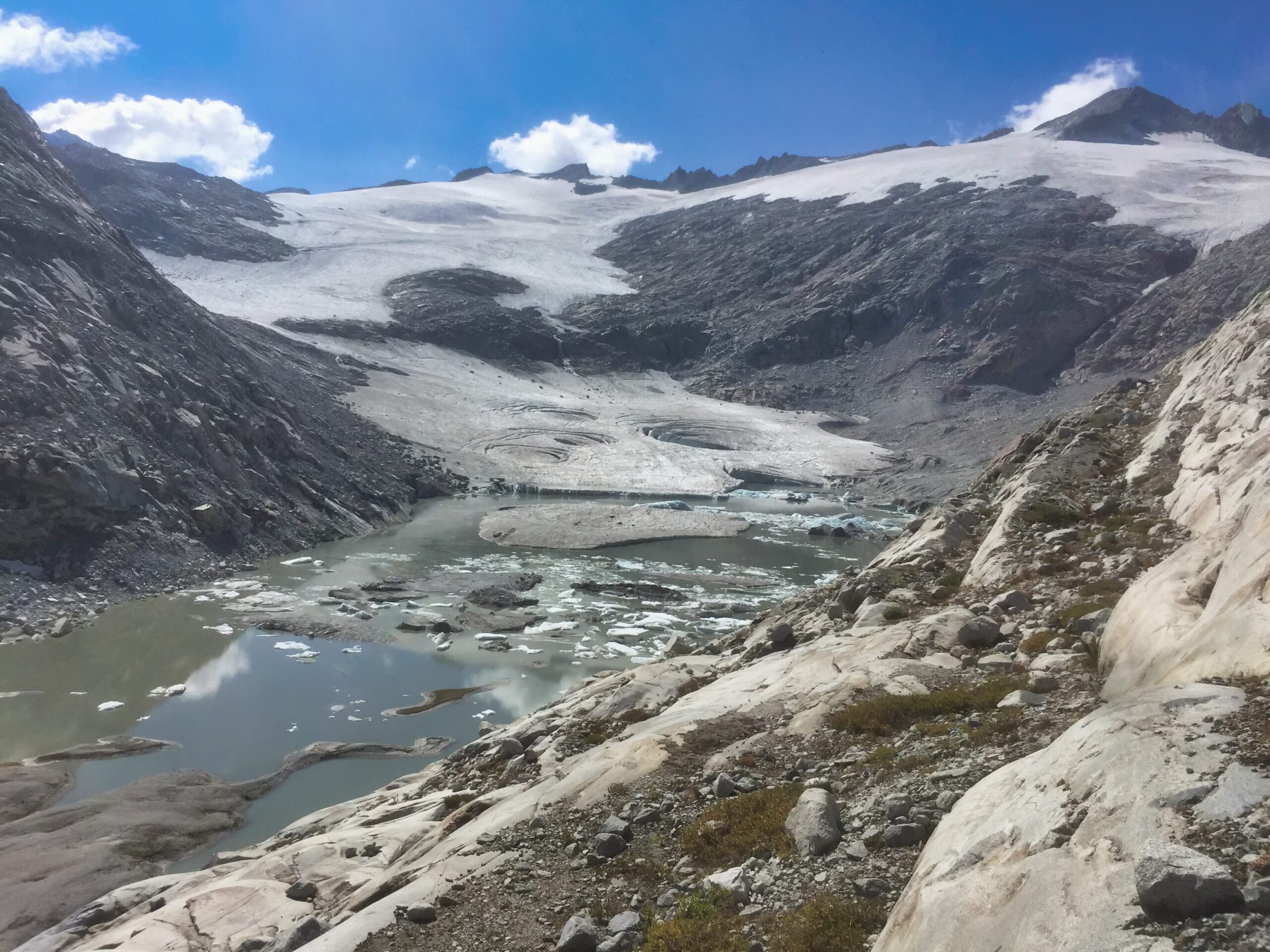
There landslide which on September 1st detached itself from Monvisoat approximately 3500 meters above sea level and close to the Quintino Sella refugeis only the latest in a series of landslide events that affected the Alps during the summer. The cause of these phenomena are the increasingly higher temperatures due to global warmingwhich determine the melting glaciers and permafrosthelping to make the unstable slopes. The gravity of the situation is reflected in Legambiente’s VI Glacier Caravan report, entitled Alpine glaciers and extreme events in a changing climate.
According to the report, over the last 60 years the Italian Alps lost over 170 km² of glacial surfacewith an overall reduction of 50-60% in the last century, while landslides are increasingly frequent: only in 2025 have they been documented 40 landslide events at high altitude. Also the western Montasio glacierin the Julian Alps, considered the lowest and one of the most resilient glaciers in the Alps, today shows serious signs of suffering and structural collapse. Also contributing to the instability of the slopes are the extreme weather eventsincreasingly numerous along the Alpine arc: according to the report, they were detected in 2025 154.
154 extreme weather events and 40 landslides in the Italian Alps in 2025
The Alps, like other mountain ranges on the planet, are particularly sensitive to climate change. These areas they are warming up faster compared to the rest of the planet, because the melting of ice uncovers bare rock which, being dark, absorbs much more heat than a surface covered by ice or vegetation. During the recent heat waves in the summer it the freezing point has exceeded 4000 m.
At the same time, the extreme weather events they are increasingly frequent even at high altitudes, with intense rainfall on the mountain tops. According to the report, in the regions of the Alpine arc in 2025 they were recorded 154 extreme weather events (in 2024 there were 146) with: 52 cases of flooding from intense rain, 27 of wind damage, 25 river flooding, 21 landslides from intense rain. The hardest hit region was Lombardywith 50 extreme weather events, followed by Veneto, Piedmont and Liguria. The frequency of these events, according to recent studies, could double with a 2°C increase in regional temperature.
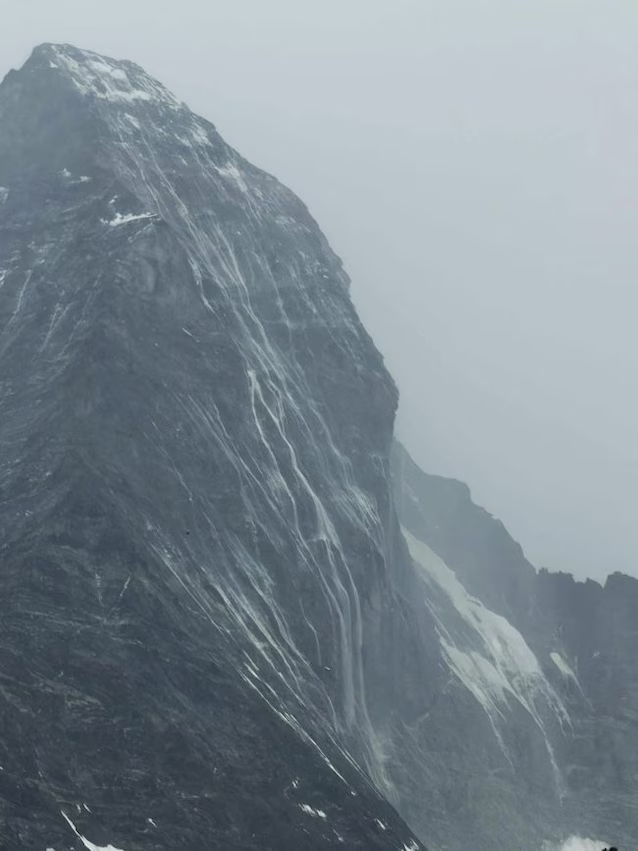
High temperatures and intense rainfall are at the origin of accelerated fusion of our glaciers and permafrost. The rocks, deprived of the pressure exerted by the glaciers and of the “sealant” represented by the permafrost, disintegrate. Melt and meteoric water penetrates deep into the fractures very easily and the already steep slopes become even more unstable. The report reports that in 2025 they were documented at high altitudes in the Alps 40 landslide eventsconcentrated in summer, above all rock collapses And debris flows (rapid flows consisting of water, mud and debris). The most affected regions were Veneto, with 17 events, and Valle d’Aosta, with 12. Between 2018 and 2025 in the regions of the Alpine arc they were well recorded 671 landslide events.
The glaciers of the Alps are increasingly fragile and unstable: 170 km² lost in 60 years
In the Italian Alps over the last 60 years glaciers have lost over 170 km2 of surface. Winter snowfalls, even when abundant, cannot compensate for summer losses due to increasingly higher temperatures. The case of the is significant North Camp Glacierin Livigno, in the province of Sondrio: at 2950 m, in June 2025, there were 170 cm of snow, completely melted already in July, together with a further loss of 50 cm of ice. In the same province, in Val Malenco, the supply basin of the Fellaria Glacierat 3500 meters above sea level, between June and July it had lost 1 m of thickness, a considerable value considering the altitude. In the same year the surface of the largest Italian glacier, that ofAdamello-Mandronebetween the provinces of Brescia and Trento at 2600 m above sea level, we are lowered by 4 mwhile the front is set back by 127 m. For the glaciers of Trentino, thickness losses of between 65 cm and 2.10 m of water equivalent have been recorded.
In general, in 2025 the situation was more serious for the glaciers of western Alpine sectorbut the reduction in surface area (on average by 18.3 m) and the decrease in thickness were significant for all the glaciers analyzed. Overall, Europe’s valley glaciers have shown signs of severe distress. Particularly critical is the situation ofAletschin Switzerland, the largest glacier in the European Alps, which retreated by an average of 40 meters per year.
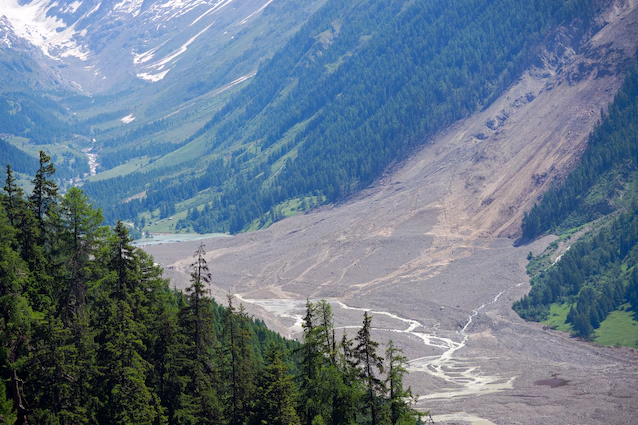
The progressive disappearance of glaciers also has a strong impact on Alpine rivers. The presence of abundant ice reserves ensured that, even in the absence of precipitation, they would not dry up, as they were fed by their melt water. Now, however, Alpine rivers are increasingly dry, with serious repercussions on ecosystems and agriculture. The effects of climate change are finally calling into question the usability of mountain areas and infrastructure related to winter tourism. In the Italian mountains they are counted 273 decommissioned plants and 247 buildings suspended or abandoned at high altitude, while over 44% of historic venues dedicated to winter sports could lose climate reliability in less than 30 years.
The situation of the glaciers and Alpine slopes requires a constant monitoringthe update of glacier register and of maps of permafrost distribution And of danger geomorphological. We also need adaptation interventions that allow the population to deal with the effects of climate change.
