
The so-called “dragon stones” (known as “vishap“, which in Armenian means “dragon“), the fascinating ones prehistoric monuments of 2nd millennium BC characteristic of the high mountain landscapes ofArmeniahave fascinated travellers, historians and anthropologists for centuries. Carved to represent gods fish or animals that appear to be gods rams (but there were also hybrid forms of ram-fish or cattle-fish), they can even reach 5 meters in height.
For many years scholars have wondered why these great monoliths had been erected, and now there seems to be an answer: in an era when the management and control of water resources was vital, the stones indicated where to find waterand they were probably also ex votos, that is, symbols of thanks and prayer so that the source of life would continue to nourish and make the community prosper. The theory emerged from a study conducted by two Armenian researchers, Go Gurzadyan (Centre of Cosmology and Astrophysics of Yerevan University) e Arsen Bobokhyan (Institute of Archeology and Ethnography), who also observed how the stones follow a recurring pattern: the 115 stones examined in current Armenian territory they are found in a range ranging from 1000 to 3000 meters above sea level.
Contrary to what one might think, There doesn’t appear to be a decrease of the size of the vishaps as the altitude increases, nor of their number. This demonstrates how the placement of these monoliths was perceived by the communities that built them as extremely important and necessary.
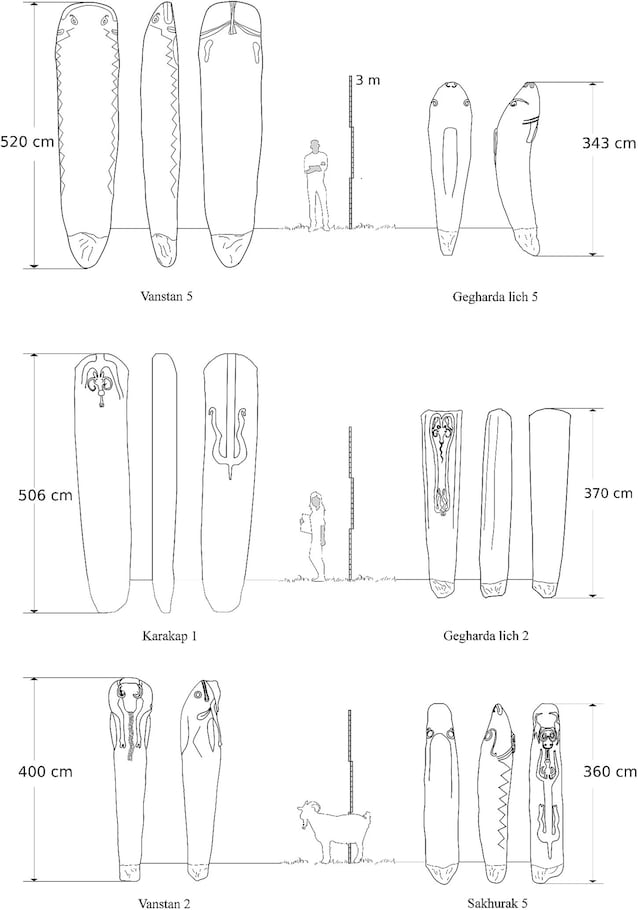
As you might imagine, making a dragon stone in prehistoric times was a extremely laborious process. Not only did the stone have to be quarried, hewn, worked and sculpted, but once this work was completed it was also necessary to transport it to the point for which it was designed, even at 3000 meters above sea level.
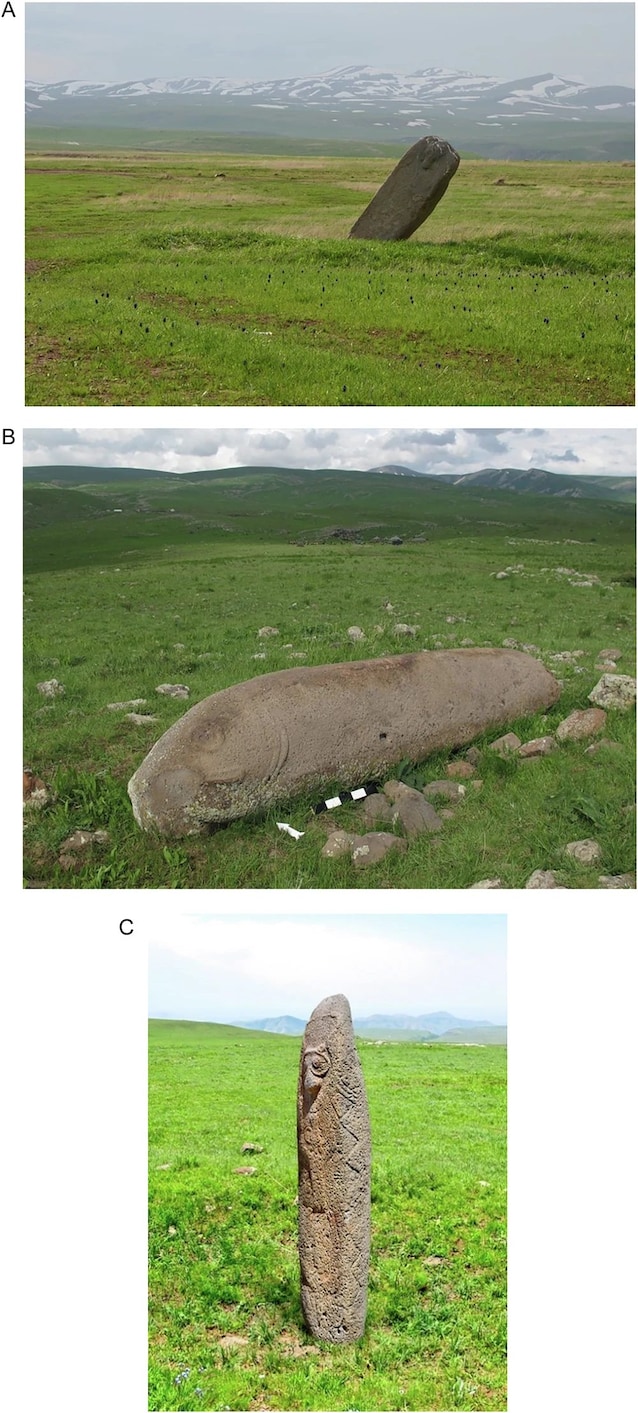
The presence of these fascinating stones, according to Guzardyan and Bobokhyan, seems to be linked to water sources. Even the fish symbolismthe most common one in vishapcould refer to a cultic sphere strongly linked to the aquatic element. It is not unusual for the presence of to be concentrated around these monoliths several prehistoric archaeological sitesincluding even ancient ones irrigation systems. Consequently, the dragon stones were probably gods territory markersintended to signal not only the presence of reliable water sources for the ancient inhabitants of the mountains, but also to act as community religious and social hubs.
