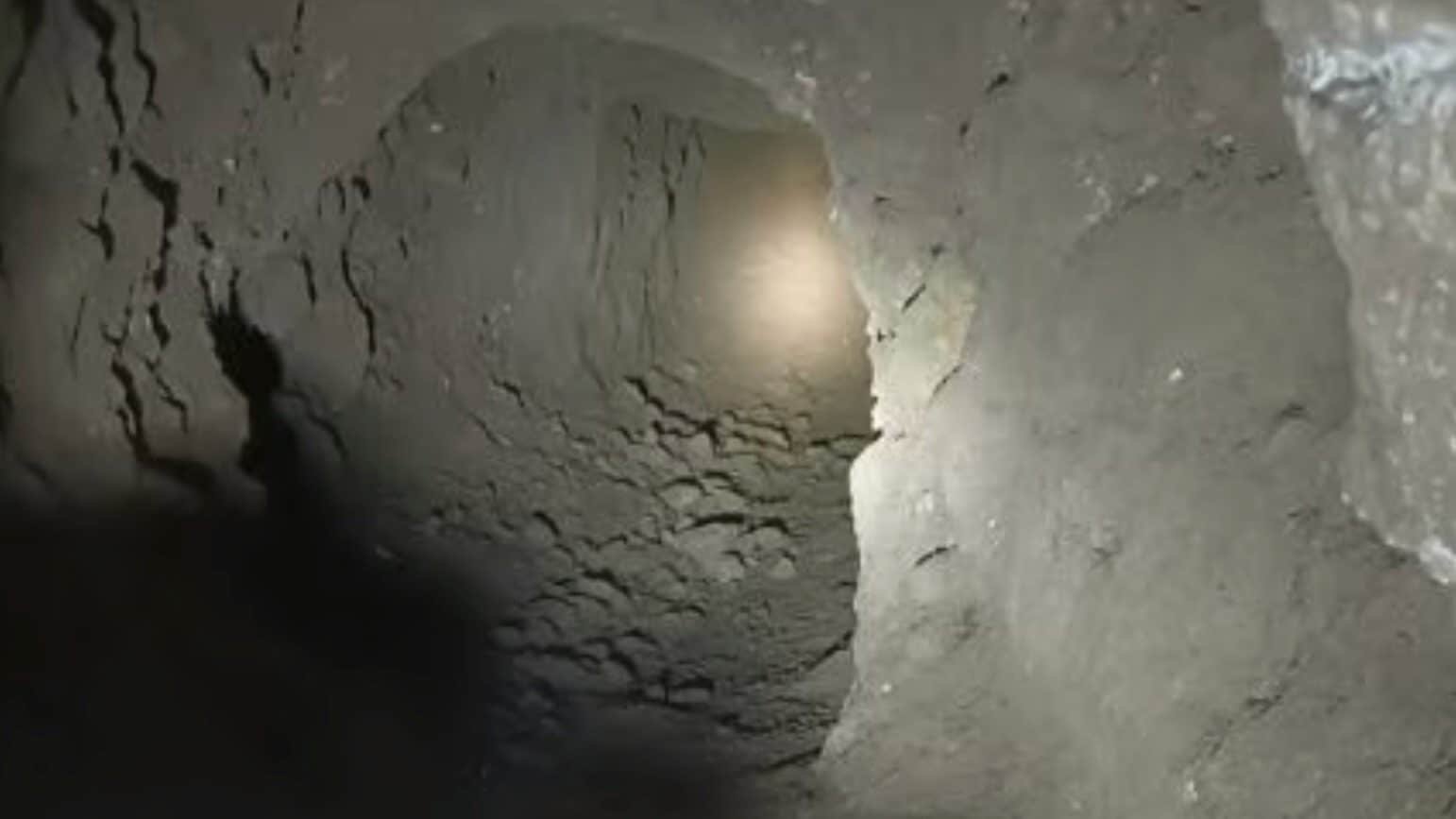
There bank robbery Crédit Agricole in Piazza Medaglie d’Oro in the Arenella district of Naples, near Vomero, took place thanks to 12 meters of tunnels dug by hand under the branch which allowed the thieves to enter the vault and escape into the sewer system after taking 25 people hostage. But how is it possible to dig such a long tunnel under a bank without anyone hearing anything? The answer lies in a layer of landfill material several meters underground in the area, made of rubble, debris and garbage accumulated over decades. He told us Gianluca Mininwho physically walked through the tunnel and created a 3D scan.
Why we didn’t hear the robbery tunnels being dug in Naples: the stratigraphy of the area
The tunnel used by the robbers to enter the branch and then escape is approximately 12 metershas a diameter varying between 70 and 90 centimetres (you have to crawl to go along it) and a difference in altitude of approx 1 meter: starts from the wall of a sewer collector and emerges in a room adjacent to the bank vault.
This is where geology becomes the protagonist. Contrary to what has been said in many news reports, the tunnel was not dug into the Neapolitan yellow tuff. In Piazza Medaglie d’Oro the tuff is in fact found very deep. The stratigraphy of this area, starting from the bottom, is done like this:
-
- Neapolitan yellow tuff: compact volcanic rock, produced by ancient eruptions of the Campi Flegrei, is found at the base of the entire area.
- Pyroclastites in primary position: other volcanic rocks, always of Phlegraean origin, deposited directly by eruptions.
- Filling material: one layer metric (i.e. several metres) made of soil accumulated over the decades, perhaps over a few centuries, together with pieces of earthenware, tiles, blocks, rubble and various rubbish. A real one “historical rubbish”.
The attic of the bank and the homes in Piazza Medaglie d’Oro rests directly on this fill material. The deepest foundations of the bank building go down to the tuff, but the floor under which the robbers made the hole rests directly on the layer of landfill material. This material is inconsistent, poorly cemented And relatively easy to remove. It does not require heavy equipment, does not generate significant vibrations, does not make noise. This is why the robbers completed the excavation work without arousing suspicion on the surface.
How thieves dug under Piazza Medaglie d’Oro
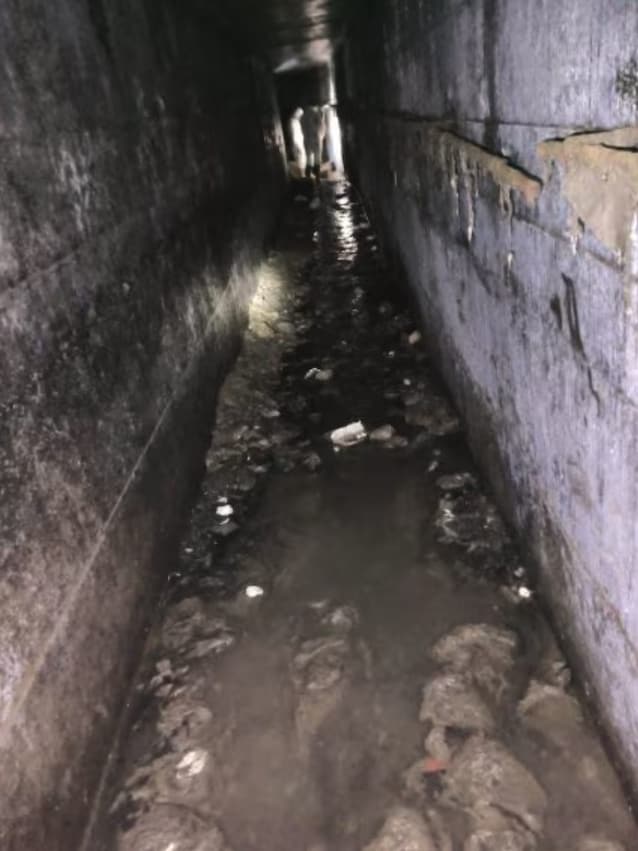
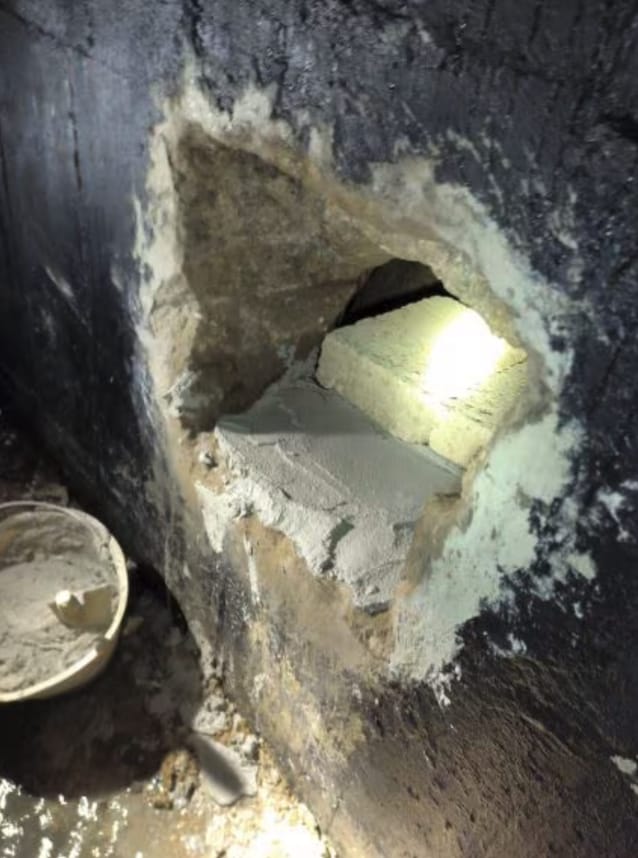
According to Minin’s reconstruction, the robbers used the jackhammer only once: to pierce the wall of the sewer collector, made of cement conglomeratea hard material. That was the only noisy moment of the operation.
For the rest, all 12 meters of tunnel have been dug by hand with a pickaxe. The robbers filled one bucket at a time and dumped the soil directly into the sewer, where it was carried away directly by the running water.
When Minin entered the tunnel for the 3D scanning, he realized that the residual excavation material was decidedly smaller than the volume of the tunnel: confirmation that a good part of the earth was carried away by the sewage waters over time.
Having said that, it is not enough to have an ice ax to score such a sensational blow: you need to have a very in-depth knowledge of that subsoil. The sewerage network of Naples is in fact not linear: it is a real one labyrinth of tunnelswhere main collectors connect to numerous smaller secondary collectors, both in width and height, with sewage flowing at different speeds and thicknesses. To move down there safely you need to know the route by heart, have adequate equipment, lung capacity, orientation in the dark, and the ability to get out even when the torches go out.
In short, whoever planned this robbery had in all likelihood prepared everything down to the smallest detail and used it weeks, maybe months, to dig the tunnelspossibly even in distinct phases.
What we don’t yet know about the Crédit Agricole theft
The investigation is still in its early stages and many questions remain open:
- Who are the robbers?
- What is the loot and how much is it?
- How long did it take to dig the tunnels and prepare the robbery?
- Was there an internal baseman?
- Where did the robbers end up?
As always, to get answers we will have to wait for the developments of the investigation led by the Naples Prosecutor’s Office with the chief prosecutor Nicola Gratteri.
