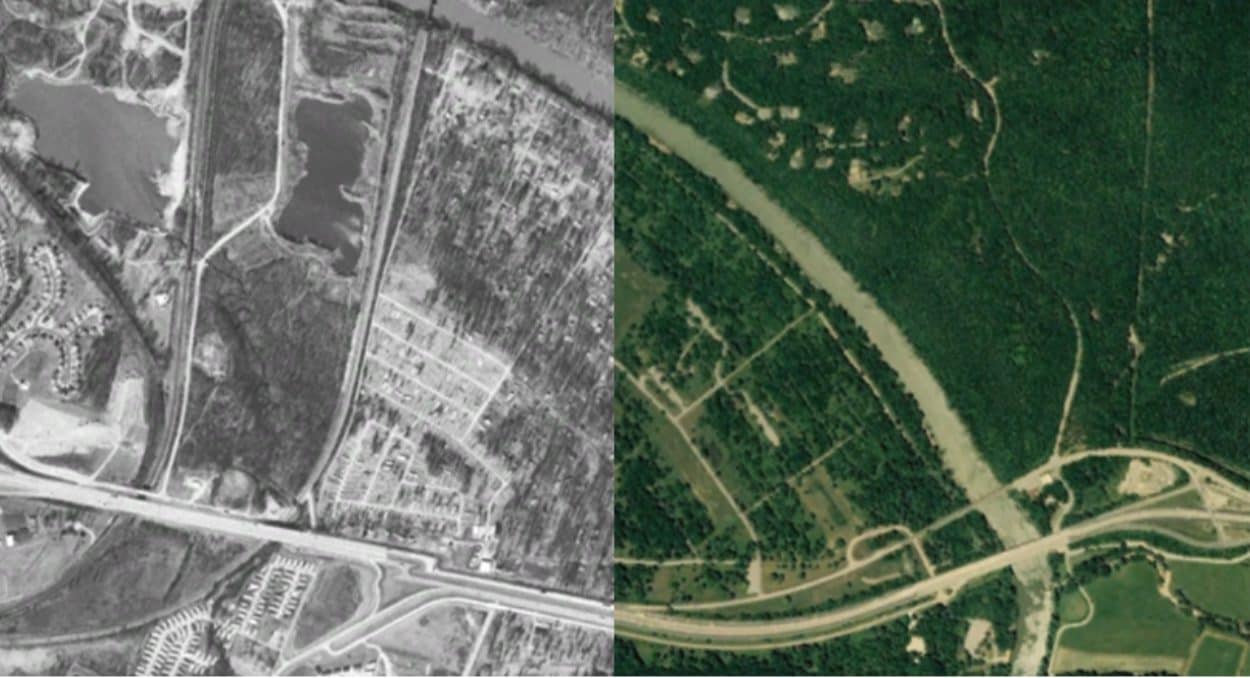
The town of Times Beachin the state of Missouri (USA) was evacuated in 1982 during a flood, but the inhabitants never returned to their homes: the land in the area had in fact been contaminated, over the years, by dioxins mixed with engine oil which was spread on dirt roads, a common practice in the 70s to avoid raising dust. The dioxins are a family of toxic compounds, infamous for causing thousands of victims or serious health problems around the world, especially between the 70s and 80s. The major environmental contaminations of this product were mainly caused by industrial accidentslike those of Seveso in Italy, as well as the use of the herbicide Agent Orange during the Vietnam War.
The ghost town of Times Beach: toxic waste diluted in oil
The town of Times Beach sat in one rural area around St. Louis and several streets in the suburb were unpaved: dust caused by passing vehicles inconvenience to the inhabitants and the administration commissioned a local company to intervene. The appointed company belonged to Robert Blissentrepreneur of the area, e spread used motor oil on the roadson private estates or on racecourse tracks, to compact the dust: a practice that is inconceivable today, but legal at the time, which the entrepreneur combined with his main business, the collection of industrial waste.
In the same period, the chemical industry Hoffman-Taffin the American city of Verona in Missouri, summarized the2,4,5-trichlorophenoxyacetic acidpart of the production of defoliant Agent Orange used by the American armed forces in the wooded areas of Vietnam. Among them production wastethe most dangerous was certainly there 2,3,7,8-tetrachlorodibenzodioxincomposed toxic and carcinogenic: Bliss’ own company was entrusted with the disposal.
Bliss mixed the sewage of the tanks containing the dioxin to the treated oils and spread this mixture into more than twenty-five locationsincluding Times Beach and the Shenandoah Stables arena.
The discovery of the contamination and the consequences
Forty horses of the Shenandoah arena were, in 1971, the first victims of this practice, together with various wild and domestic animals; When the owner’s daughter of the area fell ill, finally, the authorities launched an initial investigation. Alone in 1974 the US Centers for Disease Control and Prevention (CDC) managed to link the episodes to the dioxin contained in the soil treated with oil spreading, and to identify the various treated areas.
In 1980thanks also to the most famous case of Love Canal (in the state of New York), was a federal fund was established to finance cleanup work of the affected areas: the following years saw more in-depth studies, e in 1982 Times Beach residents were alerted for the first time to the presence of dioxins in their town.
In the final days of the year, however, the Times Beach affair became complicated. A’flood of the nearby Meramec river led toevacuation of inhabited areas: the inhabitants left their homes convinced that they could return after a few days, without worrying about taking their belongings with them, but the fear of the spread of dioxins led the authorities to order the definitive eviction of the area.
After the flood, in fact, the levels of dioxins in some areas they also exceeded the concentration by 300 times considered “safe”: after a few months, the EPA (US Environmental Protection Agency) announced a pproperty purchase programto facilitate the transfer of residents.
Times Beach today
The reclamation works in the area lasted decades, finishing in 1996 with the incineration of waste and land from the city and surrounding sites, in total 265,354 tons of material of which only 37,000 from Times Beach: the residues of this treatment were buried under a “hill” near the former city.
In 1999 the Times Beach area was transformed into a park, called Route 66 National Park in honor of the historic road that crosses the USA from the Great Lakes of the northeast to the Pacific coast. And since 2001 it has no longer been considered an area at risk for the health of visitors and operators, as also confirmed by the latest analyzes of 2012.
The dangers of dioxin and legislative shortcomings
There danger of dioxinsa family of chlorinated aromatic compounds, was already known in the 70s: these are the years of the Seveso accident in Italy (1976), where a uncontrolled reaction inside a reactor of the ICMESA factory led to the formation of TetraChlorineDibenzoDioxin (TCDD) and the release of vapors into the surrounding town.
The acute effects on the population, i.e. the immediate symptoms due to exposure to high concentrations, had already been observed: it was mainly about respiratory difficulties, eye and skin irritation (chloracne), as well as possible malformations for fetuses exposed. The consequences a long termhow lymphomas or problems with the cardiovascular system, they will become famous over time, especially in areas of Vietnam where the use of the herbicide Agent Orange has been more massive.
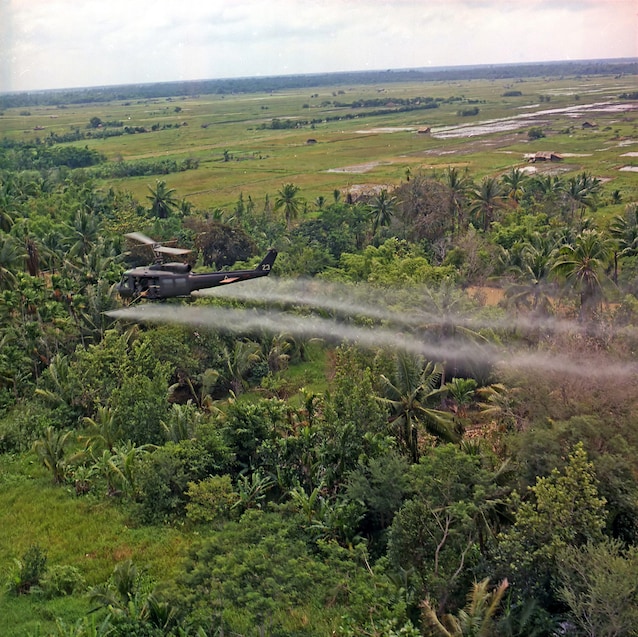
Just this herbicide, and his production in the United Stateslinked the destiny of the Asian country to the town of Times Beacha suburb near St. Louis, Missouri. Despite the known dangers of these compounds, in the United States the production sites of Agent Orange ei related waste industrial they weren’t particularly attentive or regulated by the authorities: manufacturing companies could therefore entrust waste collection to small companies, without caring particularly of their disposal.
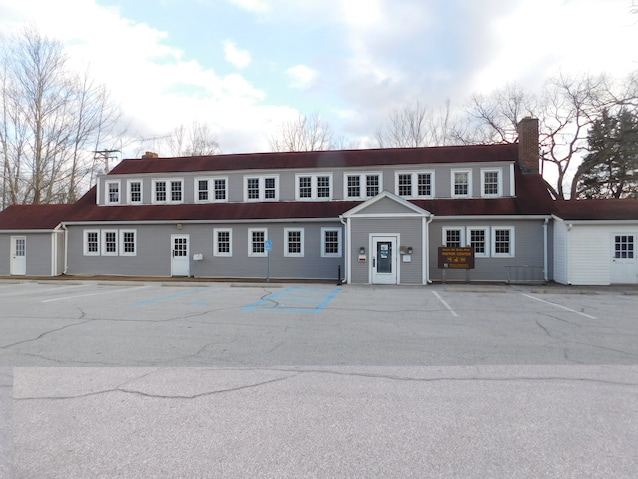
The park is today a important green and tourist areawhere visitors can get away from the bustle of the city, go horseback riding or fish on the Meramec River: only one building remains of the old citypreviously a bar/dance hall called Bridgehead Innnow transformed into the park’s Visitor Center.
