
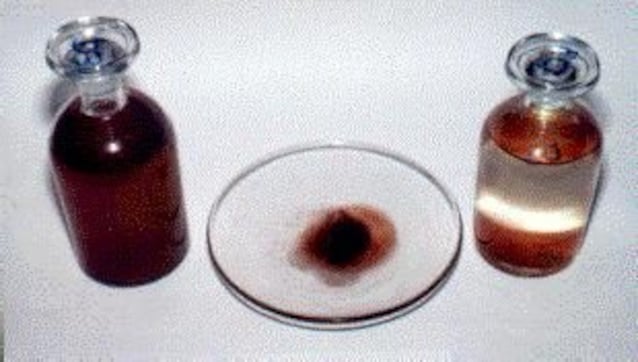
The morning of July 25, 2001 the inhabitants of the region of Kerala, in India, they woke up to an unexpected surprise: the rain – frequent in the area – began to take on a color blood redstaining everything on which it landed and giving rise to conjectures about a hypothetical extraterrestrial origin of the phenomenon. In a short time the analyzes clarified the situation, identifying the person responsible in a particular case algae present in the area, the Trentepohlia abietina. Below, some images taken by local residents.
The causes of the mysterious red rain in India
As anticipated, starting from July 25, 2001 an area of approx 450 x 150 km within the Indian region of Kerala was affected by red colored rain. Universities immediately began collecting samples and, upon analyzing them, it was realized that the particles inside them had an extremely similar appearance to that of a cell of red-brown colourwere mainly composed of carbon And oxygen and each had a diameter between 4–10 µm.
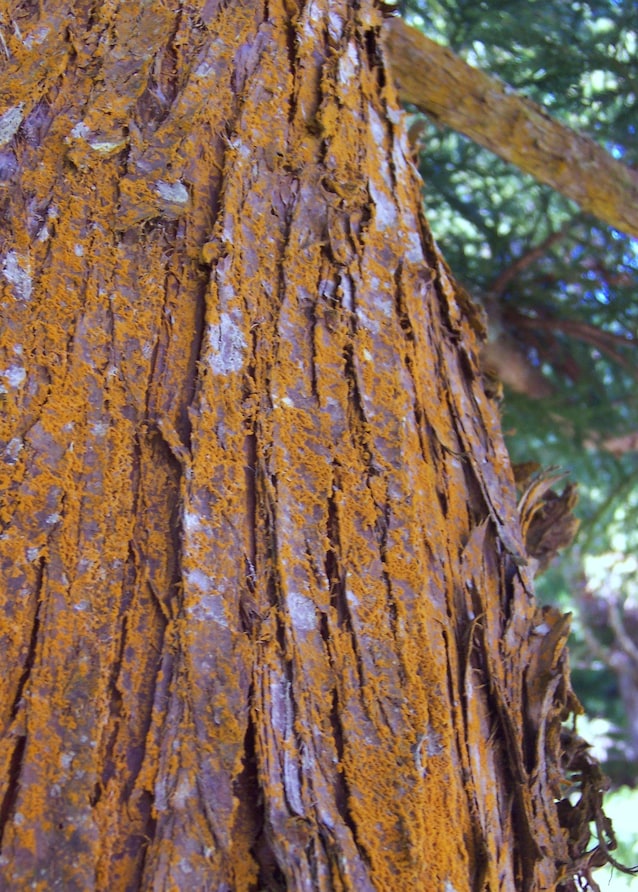
It was soon realized that these were nothing more than such algae Trentepohlia abietina. One of their most typical characteristics is the presence within them of carotenoidspigments such as beta-carotene responsible for the typical red-orange color. Usually these algae can be found on the bark of plants but, in the event of strong winds, it is possible that these are dispersed into the atmosphere, falling back to the ground with the rain and giving it that typical red colour.
However, not everyone was convinced of this theory and, in parallel, a hypothesis was developed – now denied – relating to a hypothetical origin extraterrestrial.
The extraterrestrial hypothesis
One of the first studies on the subject, called The Red Rain Phenomenon of Kerala and its Possible Extraterrestrial Originwas published in January 2006 by researchers Godfrey Louis And Santhosh Kumar. The two hypothesized that the origin of the particles present inside the drops would have been of extraterrestrial origin – as if coming from the disintegration of a small comet or the fragment of a meteorite.
To seek further confirmation, the researchers sent 15 ml of rain to another researcher, J. Thomas Brenna from the Division of Nutritional Sciences at Cornell University. He carried out a series of tests, including X-ray microanalysis And infrared mass spectrometryreaching the conclusion that the value of nitrogen inside them was perfectly compatible with that of terrestrial particles. He also confirmed the presence of DNA, also highlighting how the percentage of carbon detected was compatible with that of terrestrial biological samples. The combination of this evidence allowed this hypothesis to be definitively refuted.
