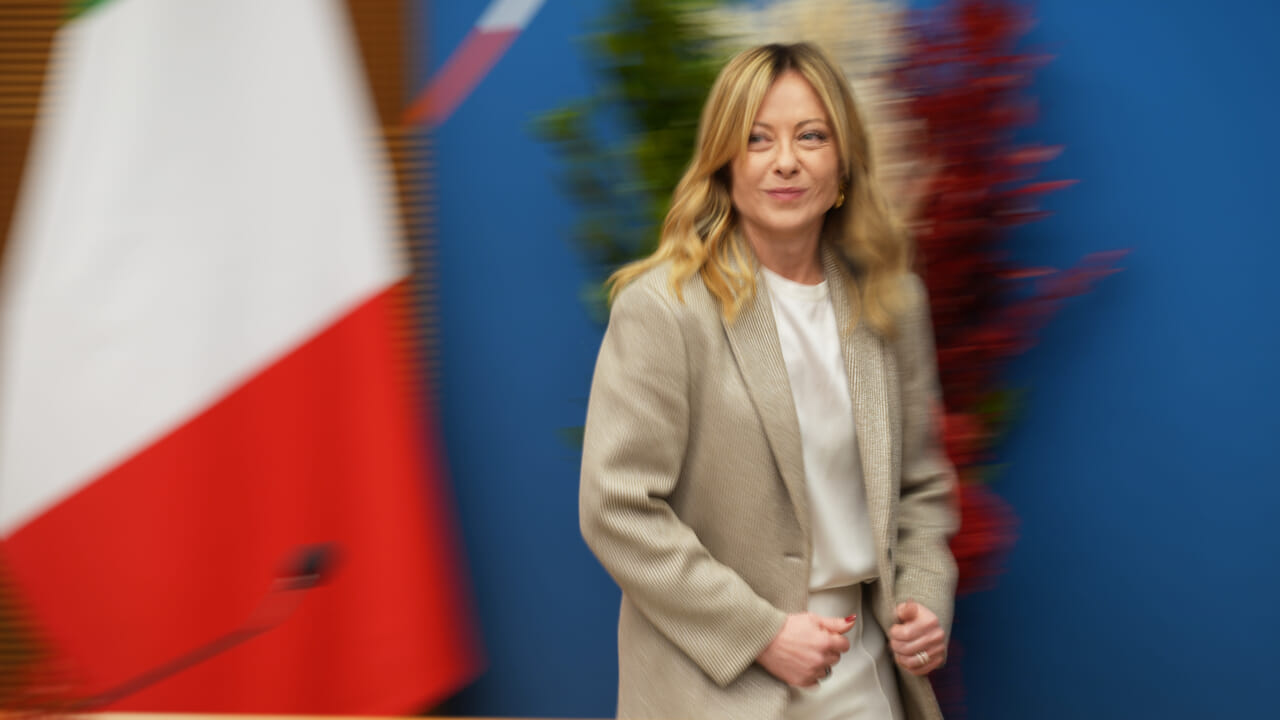
The three points on which Meloni is basking the last mile of his (first) government
Giorgia Meloni’s fourth press conference as Prime Minister was highly anticipated, given the numerous topics on the table and given the time gap since the last meeting of the head of government with journalists (which the reporters present in the Chamber pointed out). The result was a three-hour face-to-face meeting, but with essentially calm tones, “used” by the prime minister to launch the watchwords that will accompany her action throughout 2026, i.e. between now and the elections: Giorgia Meloni’s last mile programme.
Three hours for the “last mile program”
The first message was in the tone. Apart from some harshness linked to personal facts – when she reproached the Domani reporter for the investigations into her home in the Torrino area of Rome, or those of the director of Fanpage for the journalistic investigations into her bank accounts – the tone and contents of Giorgia Meloni’s speech were marked by moderation and inclusiveness. Almost as if, as next year’s elections and the constitutional referendum in March approach, the prime minister has decided to adopt a reassuring posture, aimed at undermining the position of “full powers” that the opposition instead wants to attribute to her: that of the “Meloni who wants to subjugate the judges” or who, with the (possible) reform of the electoral law, “intends to change the rules of the game in her favor” just before the vote. The “ducetta”, as the evil ones paint it.
None of this: the posture shown in the press conference proved to be little or not at all assertive. Indeed, the Prime Minister wanted to appear conciliatory with the opposition when, for example, she invoked their involvement regarding new regulations against Crans-Montana type massacres.
The key themes of 2026: security and magistrates
Then we saw the actual contents and here Giorgia Meloni identified the two or three themes on which she wants to conduct the two electoral campaigns before her. The first theme is that of security, the second the magistrates, which he held together in a logical passage aimed at connecting the numerous news cases of the last few days particularly felt by public opinion. “Unfortunately, magistrates often frustrate the work of the police,” said the prime minister, referring to the very serious events involving immigrants who were previously arrested and expelled, or to the case of the imam of Genoa which was later covered by a judicial investigation. A passage that served the Prime Minister to clarify that security will be one of the most popular leitmotifs in the electoral campaign a year from now and, at the same time, a criticism that puts magistrates in difficulty, in fact the “subject” of the March referendum.
Confirming herself to be very attentive to the mood of public opinion (the other day she was late for the Volenterosi summit in Paris to visit the injured in the Swiss tragedy, which greatly shocked people), Meloni insisted on the topic of the youth gangs that operate in big cities and in the most marginalized neighbourhoods, the so-called “maranza” (she used this very term, and we imagine that Mario Draghi or the lawyer Conte really don’t know what the maranza are). Meloni has announced a crackdown on knives in the hands of minors, with fines also for parents who do not supervise their children. The issue in itself is a small matter and will certainly not solve the problem, but it will also help in this case to send a message in view of the elections: on the issue of security, the right is more credible than the left.
The scenario on which the decisive match is played
It is then sufficient to observe the TV and newspapers most sensitive to the centre-right, and the insistence with which they deal with these topics, to understand what will be the scenario on which the Prime Minister intends to fight her decisive battle, in what the Financial Timess has just defined “the year is make or break for Meloni”.
