
“Turn your shoulders”, in our daily language, is seen as a negative action, a gesture of abandonment or contempt; It wasn’t like that for Dick FosburyAmerican athlete, who turning his back on the auction of the jump up has positively revolutionized the story of this sport by inventing the Fosbury Flop or jump to the Fosbury. They were the Olympics of Mexico City of 1968 When the public assisted for the first time to an athlete who running with one Curve trajectorylaunched himself into the air and, instead of facing the bar frontly, gave her back, inarce In a gesture never seen at that level, winning gold and setting the new record at 2.24 meters. An innovative technique that, thanks to physical principles And biomechanics More efficient, has made the previous jump methods obsolete (scissor and ventral scale jump) opening the doors to new records. The secret of this technique lies in the position of the center of gravity; Thanks to the dorsal arch, the athlete’s body climbs the bar while its center of gravity goes below it, allowing to reach higher heights with greater efficiency. It is with Fosbury Flop, that the Cuban in 1993 Javier Sotomayor has established the current world record of 2.45 meters.
Dick Fosbury’s invention: turn his back on the auction
Dick Fosburyborn in Portland in Oregon in 1947 and died in 2023, was a genius. The US athlete won thegold in the upper jump to Mexico City Olympics with a new movement, all of his, who had started experimenting during the years ofHigh School (the equivalent of high school). Fosbury struggled to compete and excel in this discipline using the techniques of the time – scissor, ventral climbing or straddle – So he decided to change the movement and position of his body. His revolution was made possible on the one hand by regulation of the upper jump, which allows the athlete to overcome the bar in any way, the important thing is that it detaches from the ground with a single foot and from theIntroduction of rubber -tap mattresses essential to cushion the landing and improve safety. Landing on the back, unthinkable on old surfaces in sand or wooden chipsthus became possible.
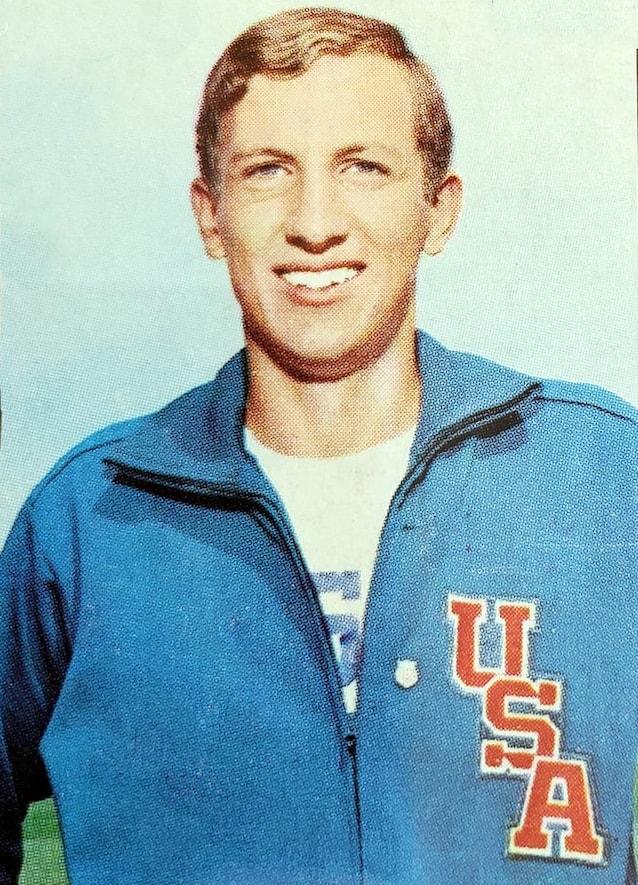
Despite the obvious improvements, many coaches remained skeptical towards that strange, baptized movement “Fosbury Flop“From a local newspaper already in 1964. However, the university levels Valsero in Fosbury the qualification for the Mexico City Olympics of 1968. In the final one, he was the only athlete to face the bar at the shoulders, surprising the whole world with the victory of the gold medal and establishing the new Olympic record of 2.24 meterswhich would remain unbeaten until 1976.
The impact of his victory was immediate, at the next Olympics Ben 28 of the 40 athletes in the race They had now adopted the leap to the Fosbury.
Why is Fosbury jump more efficient? Technique analysis
What’s behind this epochal change? Why is the new method conceived by Fosbury more efficient? As with a billion other phenomena on earth, the answer gives us the physics: the secret is in center of gravity. Let’s imagine to concentrate all the weight and mass of the athlete in a single invisible point: that is the center of gravity or center of mass. The fundamental feature, exploited in the upper jump, is that this point must not necessarily be within the physical body, it can also be external to it. During the motion of an object, the trajectory of the center of gravity always performs one parable determined by the position and movement of the body.
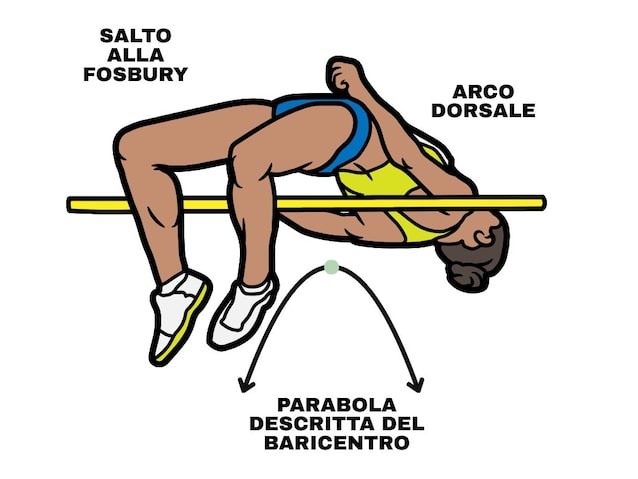
The athlete of the jump upstairs, thanks to thebackbone which performs at the highest point of the flight, it is able to pass its body above the bar, while its center of gravity, at that precise moment, riaman below of the sticker itself. This allows you to exceed greater measures with less strength or with the same elevation required by previous techniques. In fact, in the methods preceding the foundation of the US, during the peak of the jump the center of gravity was always above of the sticker, requesting a greater effort to achieve high heights.
The phases of the Fosbury Flop
The leap to the Fosbury is an almost mathematical procedure in which every detail and every centimeter make the difference. We can divide it into 4 phases:
- Curvilinear run (A “J”): The athlete generates horizontal speed and centrifugal force, pre-set the rotation of the body useful for the detachment. The race has a rhythm growingthe steps are counted and precise to get to the detachment with the correct foot.
- Detachment: the last step is the longest and serves to transform the horizontal speed into a powerful vertical thrust. The detachment takes place with the foot farthest from the sticker. The position of the body must be inclined with your shoulders further back than the pelvis and foot at the time of detachment from the ground.
- Flight and backbone phase: the jummer approaches the auction with the backgiving himself the pushed with the arms and passing it first with your head and only at the end with your legs. At this point the parable of the center of gravity is already defined and, during the peak of the jump, the back arch which allows the body to “wrap” the bar and to have the center of gravity below it.
- Landing: The neck and back are the parts of the body that first reach the rubber -tap mattress that mitigates the blow.
With this “ritual” the Cuban athlete Javier Sotomayor has skipped the beauty of 2.45 metersdefining the current world record that has been unbeaten since 1993, while Gianmarco “Gimbo” Tamberithe most famous Italian jumper, won theOlympic gold in Tokyo 2021 by jumping 2.37 meters.
The following table shows the differences in effectiveness of the various jump methods. Upon the same level of the center of gravity, the measurements of the jump vary considerably (data of the FIDAL – Italian Athletics Federation):
| Jumping technique | Height of the center of gravity (m) | Jump measurement (m) |
|---|---|---|
| Frontal jump | 1.50 | 1.17 |
| Scissor | 1.50 | 1.26 |
| Horine or western roll jump | 1.50 | 1.40 |
| Ventral climbing | 1.50 | 1.44 |
| Jump to the Fosbury | 1.50 | 1.50 |
