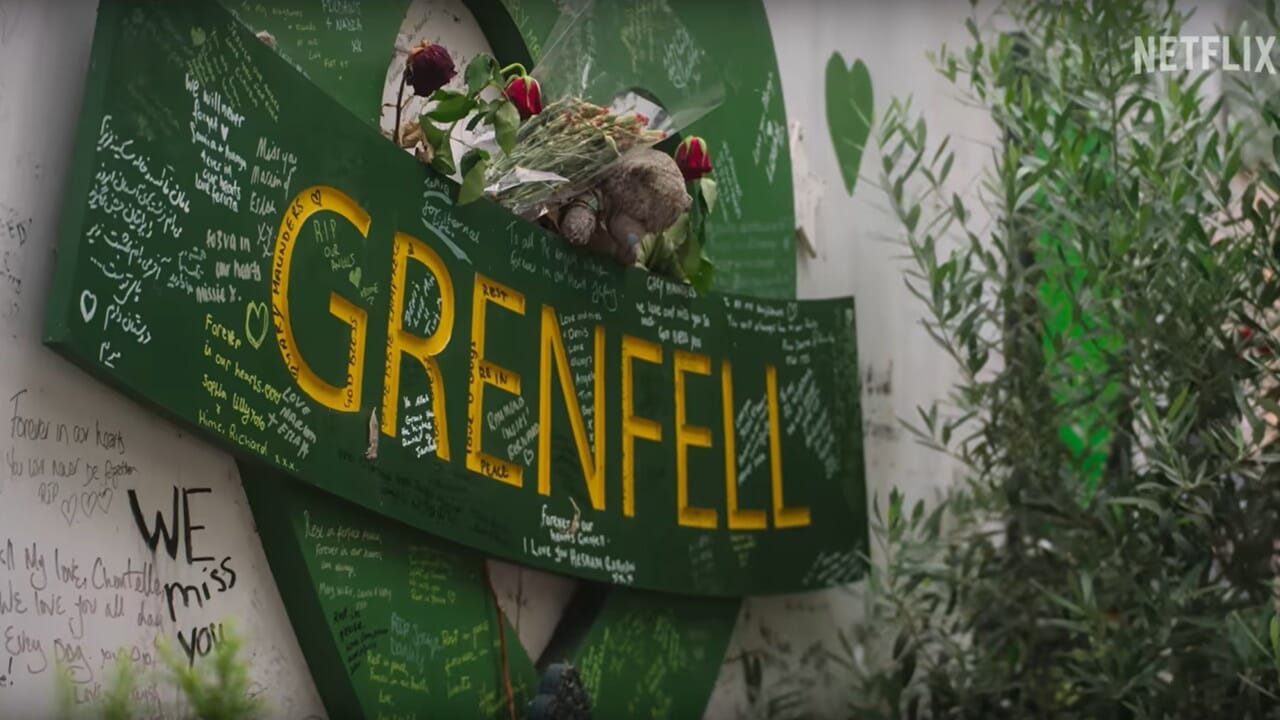
A building that had to protect common citizens has turned into a lethal trap. We are in London in 2017, in the North Kensington district. A skyscraper was the scenario of a catastrophic event that produced, unfortunately, a high number of victims. We retrace the terrible tragedy at the base of the Netflix docufilm “Grenfell’s disaster”, from Friday 20 June on the famous platform.
Grenfell’s disaster: true story
On the night of June 14, 2017 London woke up in the flames. At midnight and fifty -four a call to the firefighters signaled a fire that broke out in the kitchen of the 16 on the fourth floor of the Grenfell Tower, a 23 -storey residential skyscraper in the North Kensington neighborhood. Within a few minutes the fire spread outside the building, going up along the facade with an impressive speed. At 03.00, the whole tower was surrounded by flames. The balance is terrible: seventy -two people died in one of the most serious disasters in the recent history of the United Kingdom.
According to the preliminary investigation of Professor Niamh Nic Daéid of the University of Dundae, the flames started from a hotpoint refrigerator. The resident Behailu Kebede said he was awakened by the alarm and seeing smoke from the refrigerator area, near the kitchen window. A few minutes later the flames had already extended beyond the apartment, unleashing hell.
The speed with which the fire spread was devastating and in half an hour the flames had already reached the top floor. The subsequent investigations revealed that the main cause of the rapid propagation was the external coating installed during a renovation in 2016: aluminum panels with polyethylene nucleus, a highly flammable material and this material acted as an accelerant, merging, running and releasing enormous quantities of thermal energy. Other structural factors have contributed to the disaster: vertical cavities behind the coating, flammable insulation, windows reconditioned with combustible materials, exposed gas systems, a non -functional smoke extraction system, elevators not adapted to evacuation.
The firefighting plan of the tower provided that, in the event of an emergency, the residents remained in their apartments, but that night the protocol failed, and at 1.26 it was already clear that the fire was out of control. The instructions to evacuate only arrived at 02:47, but for many it was too late. Some managed to escape alone, while others were saved by the firefighters, who evacuated 65 people. But many, especially on the high floors, took refuge in the house of neighbors or friends, trapped by a dense and toxic smoke that spread along the only present staircase. Twenty -four people died on the top floor. The stories of the victims moved the whole world: children, whole families, the elderly.
Grenfell Tower was part of the Lancaster West Estate Popular Building Complex. The building, built in the 70s, had been recently renovated with a budget of 8.6 million pounds, with materials that therefore made the structure a deadly trap. The management of the building was entrusted to Kensington and Chelsea Tenant Management Organization, an entity already accused by some residents of ignoring reports on risks and safety conditions. After the disaster, a complex investigation coordinated by the Metropolitan Police started, with the involvement of forensic experts, archaeologists and dentalologists. Over 1,100 witnesses have been listened to and the hypotheses of crime range from culpable disaster to public negligence. The public investigation identified serious shortcomings in the rescue response, in the design of the building and in the choice of materials. The first official report spoke of “systemic failures”.
