
In 1923 the French psychiatrist Joseph Capgras described the case of Madame M.a patient suffering from a form of psychosis convinced that her family members, together with numerous inhabitants of Paris, had been replaced with lookalikes of the same appearance and imprisoned underground in the French capital. Since then, the term Capgras syndrome has been used to refer to a psychiatric disorder in which patients develop the belief that the people they care about have been replaced with identical lookalikes. The cause of this syndrome could lie in a “short circuit” of the brain, which loses the ability to integrate visual information related to physiognomy of faces with i affective memories associated with them, imprisoning patients in a continuum jamais vu, literally “never seen”, i.e. the feeling of strangeness in front of familiar people, things and places.
The secret in the Paris underground: the denunciation of Madame M.
On June 3, 1918, in Paris, one disconcerting news thundered in the complaints office of a police station: they lived underground in the city numerous people imprisonedespecially children, most of whom were concentrated in the basement of Madame M.’s house.
It was revealed Madame M. herselfa seamstress in her 50s who described herself as a benefactor with a noble soul. On the other hand, according to him, Madame M. enjoyed illustrious origins: granddaughter of the Queen of the Indies and descendant of King Henry IV, aged 15 months she had been kidnapped and exchanged for a little girl by a man, Mr. M., who since then pretended to be her fatherdepriving her of noble titles and an inheritance exceeding 125 billion.
A life of deception
Since then, as Madame M. (or Madame de Rio-Brancoas she preferred to be called), her life had been a succession of plots hatched against herAnd to steal her fortune, all with a similar plot. At 29 she married Mr. G., who was secretly murdered a few years later and replaced with some “impostor” lookalikes (about 80 in just over 20 years) perfectly identical. A similar fate had also befallen his children: the eldest, who died at the age of 22 months, would actually have been replaced by the nurse with a lookalikehimself poisoned and revived after the funeral to be taken to a new family. One of her daughters, however, had been stolen and replaced numerous times:
“To replace my real stolen daughter they always put another one, who in turn was taken away and immediately replaced… (…). I had more than two thousand in five years: they are lookalikes… Every day little girls arrived at my house and, every day, they were taken away.”
Not just relatives: the doorman, the neighbors, the servants, the doctors, the prefect, the police commissioners and other 28 thousand people all over Paris they had been kidnapped, replaced with lookalikes and locked up in a dense labyrinth made of tunnels and secret rooms in the Paris underground.
The diagnosis of Capgras syndrome
It was clear to the police that Madame M.’s stories, despite the impressive lucidity and calmness in the story, were the result of a delirium that hid a mental disorder. Subjected to a psychiatric evaluation, the woman was admitted two days later to the Sainte-Anne hospital, where she was diagnosed with chronic hallucinatory, interpretative and imaginative psychosis with a fantasy theme.
A few years later, Mrs. M.’s case attracted the attention of the French psychiatrist Joseph Capgraswho carefully documented its history in the article The illusion of “sosies” in a chronically systematic delight (The illusion of “doubles” in a systematized chronic delirium). Subsequently, it was discovered that the symptoms manifested by Mrs. M. were also present in other psychiatric patients, who were diagnosed with Capgras syndromenamed in honor of the French psychiatrist.
What happens in the brains of patients with Capgras syndrome
In all cases of Capgras syndrome, patients share the same belief: to firmly believe that loved ones have been replaced by lookalikes looking perfectly identical.
But how is it possible that our brain can fall into such a deception? Although there is not yet a definitive answer, the study of patients with brain lesions has allowed us to formulate a fascinating hypothesis. To understand it, imagine having to identify the face of a person dear to us in a photograph that also portrays unknown faces. In all likelihood, our brain will quickly and instinctively recognize the familiar person, associating an immediate thing with their face sentimental value.
Even if we are not aware of it, every time we observe a familiar face our brain carries out exactly this operation: some areas of the temporal cortex identify what we are observing as a facewhile other regions, belonging to limbic systemthey give it an emotional meaning. Thanks to specific neuronal connections (real “roads of the brain”), information relating to physiognomic characteristics is integrated with affective ones, allowing us to recognize that the face in front of us does not belong to just any person.
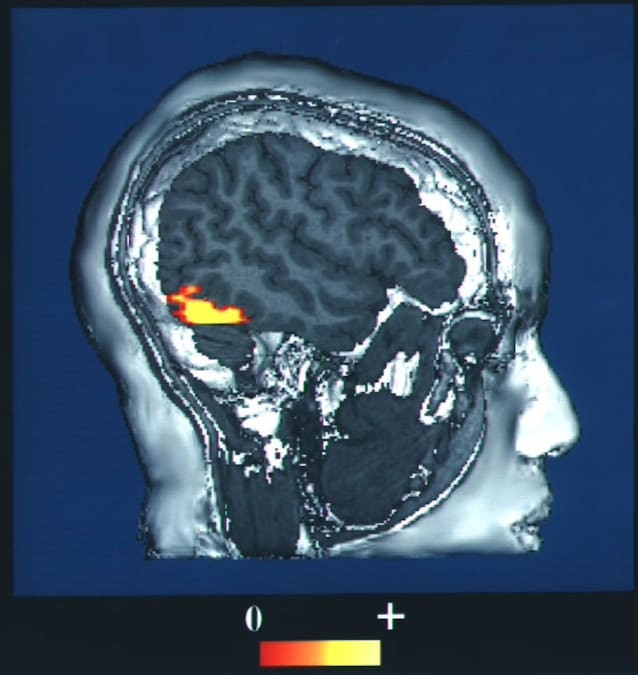
In patients with Capgras syndrome, these connections between the temporal and limbic regions could be compromisedfor example following a cerebral stroke or a neurodegenerative pathology, causing the inability to associate the face of a person known for his sentimental value. In short, those who suffer from Capgras syndrome are able to see a friend or family member, but are no longer able to feel it as such, mistakenly mistaking him for a lookalike.
It’s hard to imagine, isn’t it? Yet, a partly similar sensation (although they are distinct phenomena) manifests itself when we experience a jamais vu, the opposite of déjà vu: a familiar experience or element, like a word repeated several times, a place or a face observed for a long time, suddenly appears new or foreignleaving us in one for a few moments state of disorientation.
Fortunately, in the case of the jamais vu these sensations last a few seconds. In Capgras syndrome, however, this is the case “sense of deception” becomes one recurring sensationreminding us how much the reality we live and perceive is the result of a delicate and harmonious chemical and physiological balance in our brain.
Sources:
Capgras J., L’illusion des “sosies” dans un délire systématisé chronique, 1923 Kaushal PJ et al., Capgras Syndrome, 2023 Gramling G. et al., Distinguishing Reality: A Case of Delusional Misidentification Syndrome in a 39-Year-Old Male, 2023 Sinkman A., The syndrome of Capgras, 2008 Hirstein W. et al., Capgras syndrome: a novel probe for understanding the neural representation of the identity and familiarity of persons, 1997
