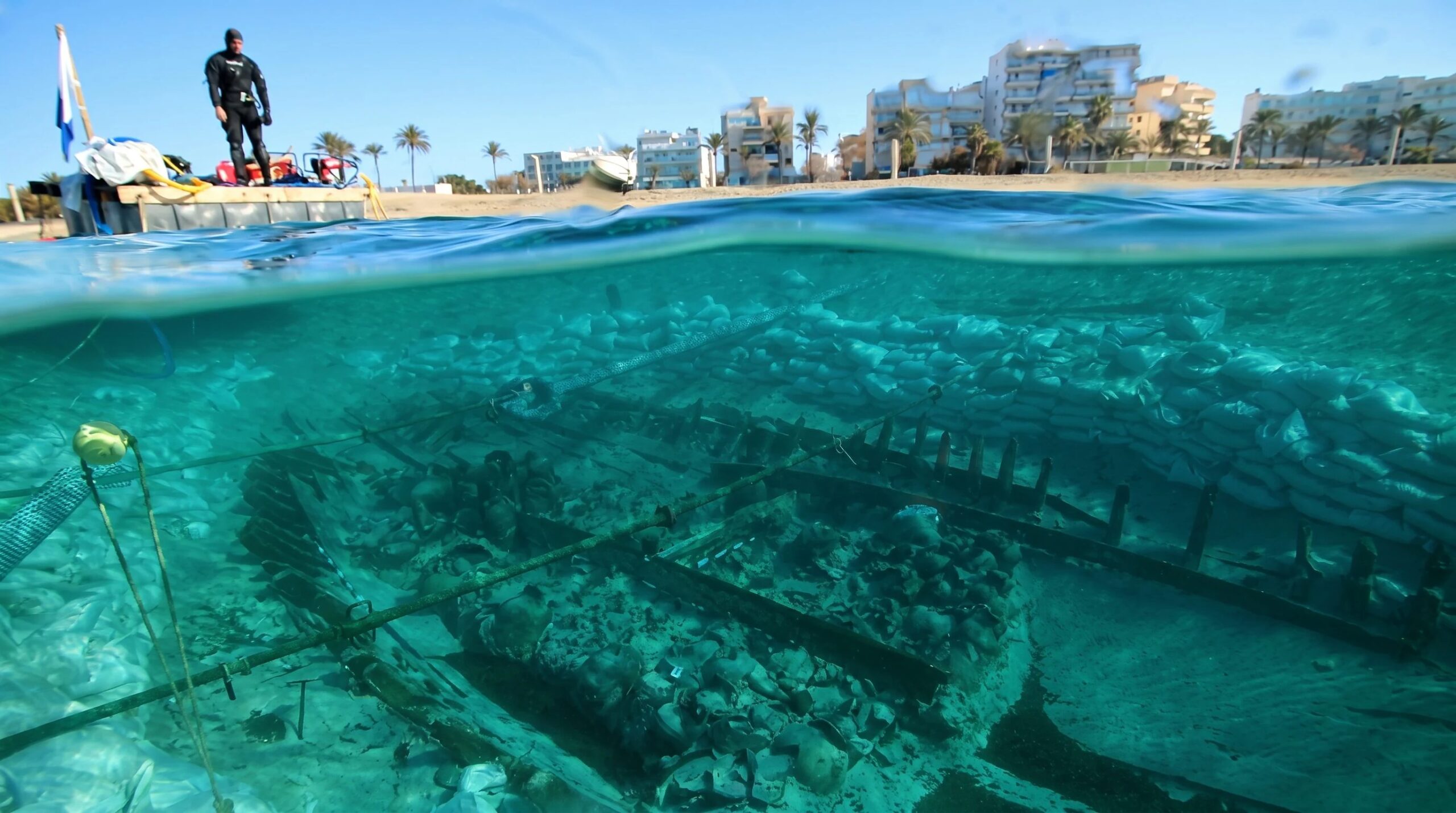
After years of underwater research, the wreck Roman of Ses Fontanellesdiscovered in 2019 off the coast of Playa de Palma, a Majorcait was completely recovered. This is an ancient Roman ship from the 4th century AD discovered in Mallorca in 2019, a few hundred meters from the beach near Les Meravelles and in shallow water. The operation, coordinated by Council of Mallorca within the project Archeomallornautamarks a fundamental stage in the study of one of the most important late antiquity shipwrecks found in the western Mediterranean, among the best preserved.
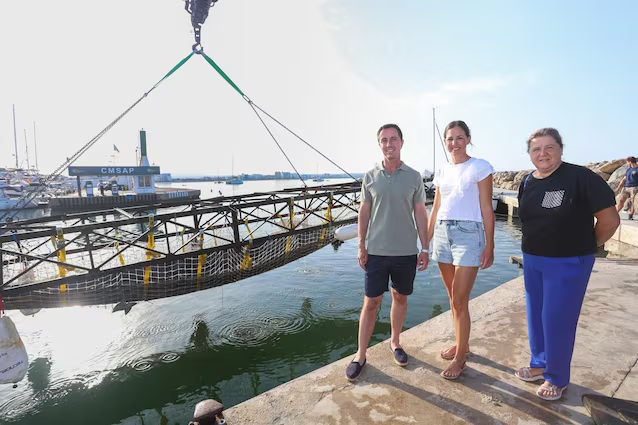
The vessel, dated to 4th century ADlay a few meters deep and had remained protected for centuries by marine sediments, which favored the conservation not only of the hull, but also of numerous elements of the cargo and on-board equipment. During the operations the archaeologists recovered hundreds of findsincluding amphorae intended for the transport of foodstuffs, fragments of the wooden structure of the ship, 90 meter ropes, baskets, remains of linen sails and two anchors. Among the finds there are also shoes, coins and a drill-like tool.
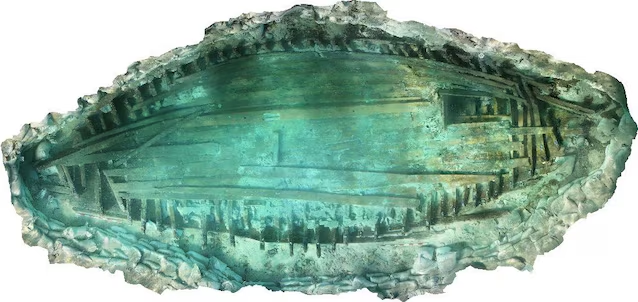
The wreck represents an exceptional testimony to maritime trade in the Mediterranean during the Late Antique era. The amphorae and inscriptions painted on some containers are already providing valuable information onorigin of the goodson trade routes and on the organization of naval transport in a period of profound transformations in the Roman Empire.
The recovery of the ship was made possible thanks to collaboration between underwater archaeologists, restorers, marine biologists and specialists in the conservation of ancient materials. Each element was documented, mapped and raised from the seabed following procedures designed to preserve its integrity, since wood and other organic materials, once brought to the surface, require specific treatments to avoid rapid deterioration. With the completion of the excavation and recovery of the wreck, a new phase of the project now opens. The finds will be subjected to restoration and multidisciplinary analysis which will allow us to delve deeper into the history of the vessel, its cargo and the construction techniques used by the Roman shipyards. The investigations will also be able to clarify the circumstances of the shipwreck and reconstruct with greater precision the journey that the ship was making when it sank in the waters off Mallorca.
