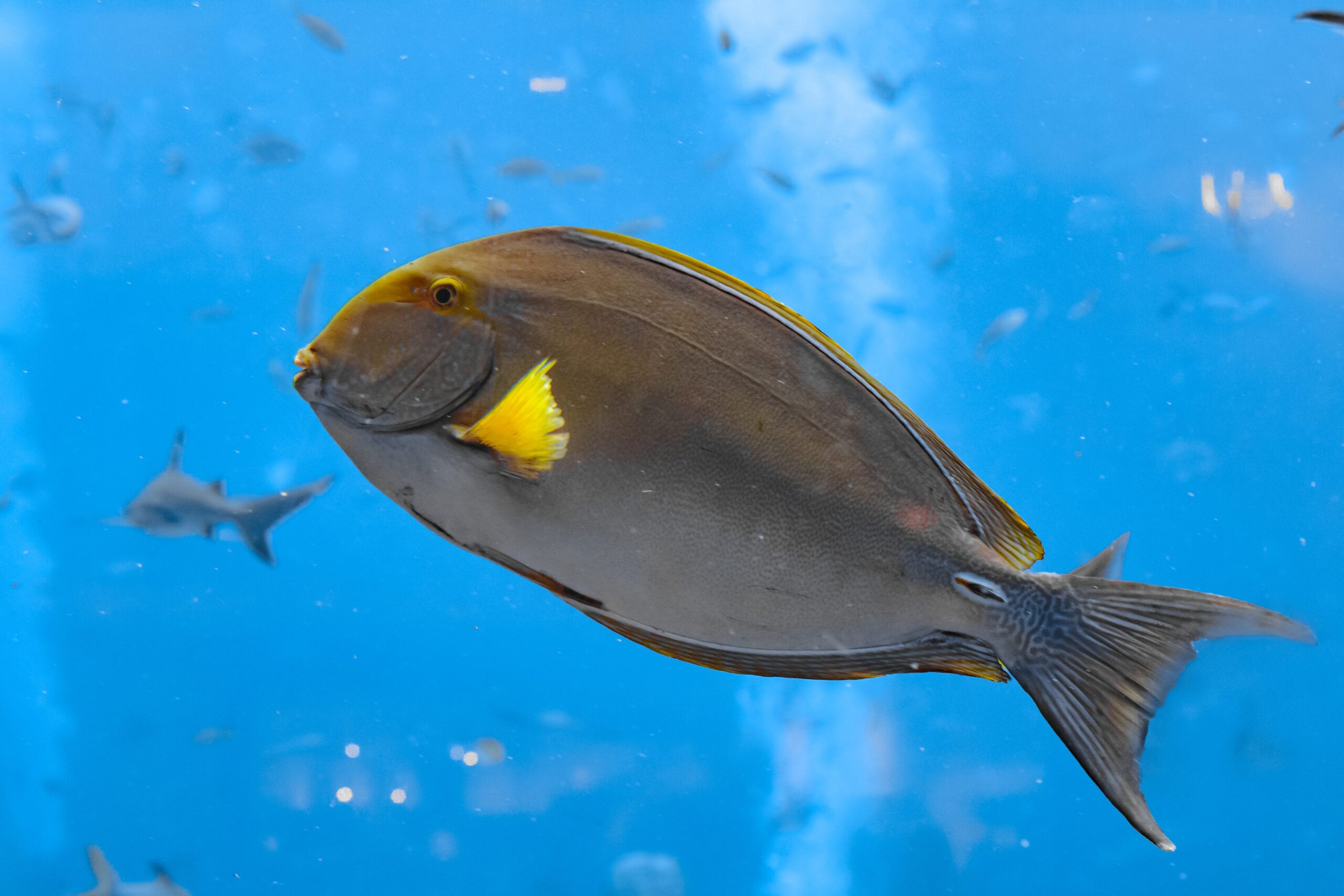
A study just published in the scientific journal Bioinvasions Recordsafter about a year of studies and analysis, confirms the report of a Surgeon Surgeon Yellow Pinna (Acanthurus xanthopterus) took place in 2024 off the south-eastern coast of Sicily, in the province of Ragusa. The report started from an underwater sports fisherman, as part of a project of Citizen Science activated by the Civic Museum of Natural History of Comiso. Many will remember Dory, the nice smoother fish of the film “In search of Nemo”: Dory is also a surgeon fish, a tropical species belonging to the same family as the yellow fin fish. The surgeon observed in Sicily, which takes its name from small sharp thorns such as scalpel On the caudal fin, it comes from the Indo-Pacific and is a new alien for our seas, such a said species lessepsian which from the Indian Ocean is moving to the Mediterranean waters through the Suez channel and here finds favorable conditions as a result of the progressive tropicalization of the “Mare nostrum“. The case is analogous to that of Scorpio fish found last summer always off the coast of Sicily, but this time does not represent a danger to man. The story shows how the active participation of citizens and enthusiasts can contribute effectively to scientific research.
We know the surgeon better better
The yellow fin surgeon (Acanthurus xanthopterus) belongs to the acanturid family and is debtivorThat is, it feeds on debris, such as algae and remains of crustaceans and molluscs. It occupies rocky seabed at high depths. Its natural areal (i.e. the area in which it normally lives) includes the whole tropical indopathic regionbut it is expanding in other geographical areas. Presents the blackish body with aLively yellow area around the eyes and along the external edge of the dorsal fin. However, it changes color with age and this can make the exact identification difficult. It is ovoid in shape and has on the caudal fin small sharp thorns like scalpelsfrom this detail the appellation of surgeon. Unlike Scorpio fish, it does not represent any danger for man in the case of contact. The Acanturidi family to which the specimen found in the Sicily channel belongs, includes beyond 80 species All tropical and bright colors. Of these, 9 species have been reported in the Mediterranean waters and, in particular, Acanthurus xanthopterus It was identified for the first time in 2021 in Egyptian waters. Due to the tropicalization of its waters, in fact, the Mediterranean is becoming increasingly suitable for the survival of this family of tropical fish.
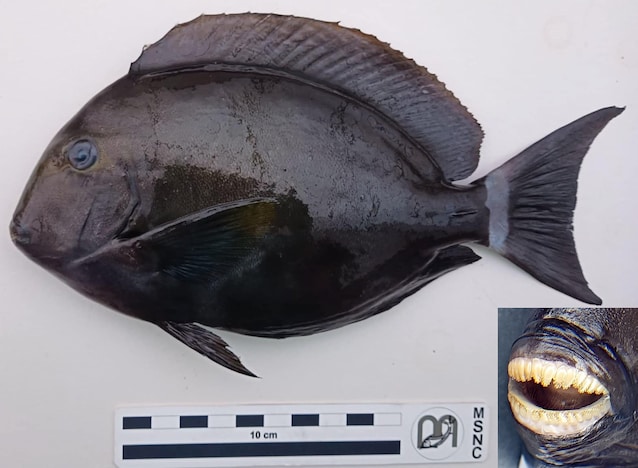
Credit: bags, G. et al. (2025) Bioinvasions Records
The first sighting in Sicily and genetic analyzes
On October 31, 2024, an underwater sports fisherman captured near Torre di Mezzo, in the stretch of sea along the Ragusan coast, a specimen of one Itptic species never previously seen And he immediately delivered it to the Civic Museum of Natural History of Comiso, which activated a Citizen Science project on marine environments. The museum’s experts measured and classified the specimen was measured and classified and extracted and also analyzed a DNA sample in order to trace with certainty to the acanthurus xanthopterus species. After almost a year of research, the discovery was published in the Bioinvasions Records magazine and also shared on the Facebook Oddfish website (strange fish), which collects Reports of citizens and fishermen on catches and observations of fish species that arouse curiosity; In particular, new tropical species that are reaching the Italian coasts.
What is Citizen Science
“Citizen Science” would be a slightly too literal translation of the English term Citizen Science (CS), a form of participatory research Injustment by common citizens and enthusiasts of a subject, which contribute to a scientific project by collecting data and information which then make available to researchers. The term was coined around the mid -90s of the last century by two researchers, the American Rick Bonney and the Englishman Alan Irwin.
In motto cases they are collected environmental data To monitor natural phenomena or animal and plant species: in this way, the public concerned actively participates in a research together with professionals and researchers. In recent years, the initiatives of Citizen Science have increasingly increasing and this form of public contribution to the progress of science has been affirming itself, to the point of being born also a European association of Citizen Science (ECSA), which combines many volunteers dedicated to the collection of data of various kinds, from biology to astrophysics. The CS allows the collection of a huge amount of information that a single researcher would not be able to acquire alone. Obviously any information goes validated by experts before you can be included in a database. Lately, a large number of free digital apps are available for collection and transfer of data.
