They have passed 114 years from the Titanic shipwreckone of the most famous naval disasters ever to have occurred in history, which inspired James Cameron’s Hollywood film of the same name, released in theaters in 1997. night between 14 and 15 April 1912 during his maiden voyage the ocean liner RMS Titanic hit an iceberg off the Canadian coast: in a short time the tears in the hull caused theentry of large quantities of water into the ship, causing the vessel to fall into the depths of the Atlantic Ocean in less than three hours. Of the 2200 passengers on board only 705 were savedfor a total of 1495 victims.
But why did the Titanic sink so quickly? And what were the errors in its design? In this video we will reconstruct the true story of this ocean liner, shedding light on the causes and dynamics of one of the most famous maritime tragedies in the world. Furthermore, thanks to the investigations into the wreckage found, we will understand how an “unsinkable” ship sank in just 3 hours after impact.
The true story of the RMS Titanic and how it was built
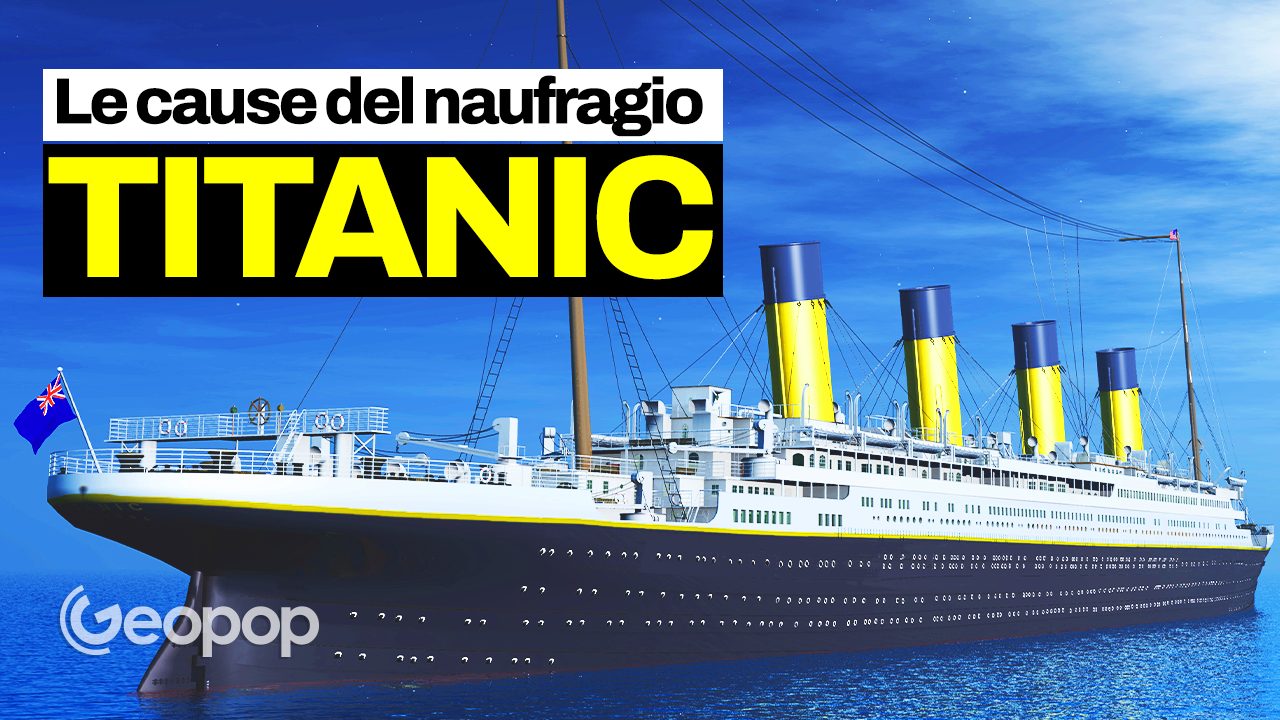
The RMS Titanic was a British linerwhich was part of the Olympic Class, whose construction began on March 31, 1909. The first step was the creation of the keel, i.e. the “spine” of the ship, which was followed by the construction of the hull using steel panels riveted together. Inside the hull, in the lower part of the ship, they were present sixteen watertight compartments which, at the time, represented a technical vanguard in the sector – even if, as we will see, they were affected by serious design problems.

As for the engines, the Titanic had installed so-called “alternating motion” motors powered by coal which allowed the engines to be started two lateral helices of the transatlantic. Then there was a turbine engine which instead took care of powering the central propeller, used for navigation in the open sea.
A final interesting detail is that of the safety lifeboats. There were 20 on board, for a maximum capacity of 1178 people: this means that even in the best case scenario, about half the crew he would have had no way of saving himself in case of accident.
At the time of its construction the Titanic was the largest ship ever built: approximately long 269 meters and with 46 thousand tons of tonnage it was essentially a floating luxury hotel. An engineering work so avant-garde that it was defined as “unsinkable“.
On April 10, 1912, 4 days before the shipwreck, the RMS Titanic departed on her maiden voyage from Southampton, United Kingdom, to New York: the captain was in command Edward John Smithwho on that very occasion was making his last trip as commander after more than 40 years of service.
The voyage of the Titanic and the collision with the iceberg
The shipwreck of RMS Titanic it was one of the most famous naval disasters that ever occurred and, as bad luck would have it, it happened during the maiden voyage of the largest and most luxurious ship of the time, when on the night of April 14th it collided with an iceberg in the middle of the Atlantic waters. During the route to New York in fact the Titanic had to cross an area full of icebergs, off the Canadian island of Newfoundland.
Even though there were more iceberg than the average (if we consider the time of year), some studies have shown that it was values not exceptional and, therefore, predictable. In reality, other ships had previously warned the Titanic about the presence of icebergs in the area: why were their messages ignored? It is believed that the radio station inside the ship was probably busy transmitting messages from passengers, effectively ignore the reports of boats that have already passed through the area.
The sinking of the “unsinkable” ocean liner
Meanwhile the Titanic came dangerously close to an iceberg at a speed of 22 knots, that is, approximately 40 km/h. At 11.35pm the iceberg was spotted when it was just a short distance away. The maneuvers to dodge it were of no use: at hours 11.40pm of that fateful one Sunday 14 April 1912 the right front part of the hull hit the ice mountain, creating a series of gashes 90 meters long from which water began to enter.
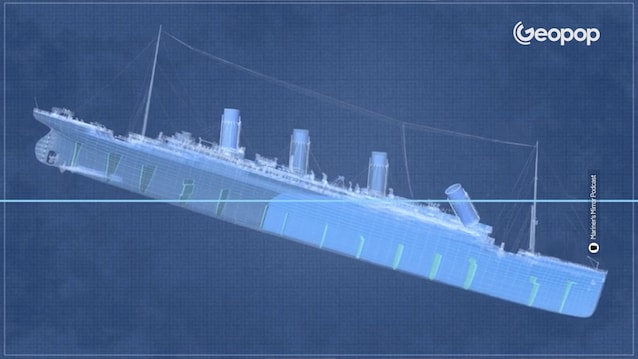
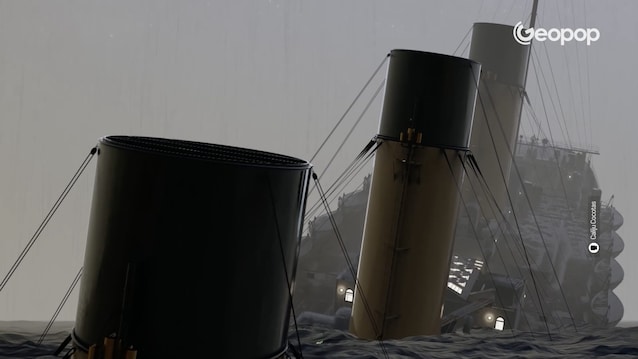
Around midnight i watertight compartments they began to fill with water, causing the bow to sink deeper and deeper. In fact, due to a design error, the compartments were watertight only “horizontally”, allowing the water to pass over them vertically as the ship tilted. At 2:00 the ship was tilted so much that the engine propellers were out of the water. At 2:10 the bow of the ship ended up completely under water and the stern it tilted about 45°. At this point the weight of the three propellers (about 100 tons) created a “leverage” effect, breaking in two the upper part of the transatlantic. The two halves will then detach completely at 2:18 and they will sink in the lap of the next half hour.
Why the Titanic wasn’t brought to the surface
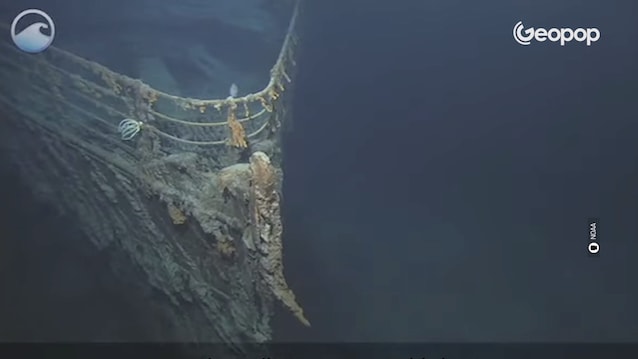
After the accident, the two extremities of the Titanic sank towards the bottom of the Atlantic Ocean, stopping at about 3800 meters deep and distant 600 meters from each other. The location of the wreck remained unknown for approximately 73 years, until it was discovered by the oceanographer Bob Ballard The September 1, 1985.
Why was it never brought to the surface? After 73 years in the oceans, the wreck was completely rusted, making it almost impossible to recover. Furthermore, the operation would have cost a fortune, not to mention the technical difficulties, given that the wreck had sunk at a depth of 3800 metres. Among other things, according to the latest analyses, it is estimated that the wreck will not remain on the seabed forever and that erosion could do so disappear almost completely within the next thirty years.