
In common language we often tend to use words like in an interchangeable way like totalitarianism, dictatorship and authoritarianismbut in reality they exist important differences Among the three terms. When we talk about non -democratic political regimeswe refer to systems in which power is not exercised by the people, or at least not in a free, pluralistic and transparent way. In these contexts, the rules of the game are not written by citizens or guaranteed by independent institutions, and those who command do so without there being effective mechanisms to control or limit it.
What is totalitarianism?
The totalitarianism it is a type of political regime that aims to penetrate and direct all aspects of collective and private life. He does not limit himself to govern: his primary objective is that of shake society and the individual. Nazism and fascism are a key example, which studied their official creeds at the table, to which all the individuals of society had to conform, under penalty of exclusion, jail or exile. To ensure that Brainwashing’s work, however, the creed is not enough: it also takes the mass mobilization: youth and popular organizations, public rituals, parades … why It is not enough to obey, you have to Also actively participate.
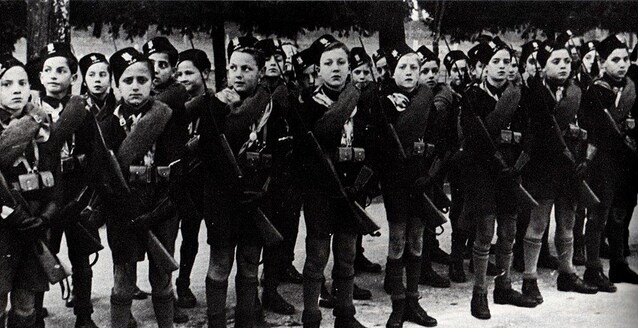
In addition to this, in the totalitarian regime Any freedom of expression is prohibitedand particularly severe censorship. There can be no type of dissent, public or private, to the single party in command.
Fortunately, the totalitarian regimes – who had long life in the last century – almost disappeared from the face of the earth. Almost because, unfortunately, because at least two totalitarian regimes still exist. The best known regime is that of North Koreain which it imperates theideology of Juchebased on nationalism and Marxism-Leninism, which has evolved over the years to reflect the principles of autonomy and self-sufficiency of the country. Also in this case, the cult of the personality of one’s leader (in this case of Kim Jong-un) applies. The country is so isolated from the world that even another calendar has: if we are in 2025, for the North Koreans this is the year 114, because they count from the birth of the founder and the first president of the nation, Kim Il-Sungwho still – despite the fact that he died 31 years ago – is still considered the “eternal president”.
The other case is in the Horn of Africa: the regime of Isaias Afwerki has meant that theEritrea became one of the most repressive states in the world. There are no democratic elections since 2001, and every form of dissent has been brutally repressed. The government strictly controls the life of citizens, imposing a mandatory military service that can last all life. Needless to say, freedoms of expression and press are severely limited.
What is a dictatorship?
In its modern meaning, one dictatorship it is a political regime in which everything Power is concentrated in a single organ or one person (usually a charismatic garment or a small group) that exercises it without any control from other powers: there are no real elections, nor opposition, nor free printing. The boss decides everything, often arbitraryly.
The term “dictatorship” has A long and articulated story. In the’Ancient Romethe dictatorship was an extraordinary chargeconferred to face an emergency. A citizen was appointed dictator, but only for a limited time, usually six months, with the aim of solving a crisis. Among the best known cases that of Cincinnatowho accepted power and then returned to cultivating the fields once he made his duty, that of Silla which instead used the dictatorship to consolidate a personal power much longer than expected, and that of Julius Caesar that in 49 BC He was appointed dictator for a short time, then again in 48 BC, in 46 BC and finally in 44 BC He was proclaimed “Life dictator” (perpetual dictator), breaking with the republican tradition. This centralization of personal power, outside the usual rules, was seen as a threat to the Republic, and contributed to the decision to assassinate it. Julius Caesar It was the last Roman dictator in the original sense of the termbut also the first to embody a use of dictatorship that anticipates modern authoritarian drifts.
In everyday language, the term also assumed figured meanings: let’s talk about “fashion dictatorship”, “market dictatorship” or “dictatorship of the audience” to indicate situations in which a power, often not political, dominates without alternatives. The country that at the time comes to mind first is without a shadow of a doubt, theIranwhich is in all respects a theocratic dictatorship, with the power concentrated in the hands of religious and military leaders.
What is authoritarianism?
The meaning of the term authoritarianism Instead it is wider and faded: it indicates a system in which power is exercised from abovein a hierarchical way, with commands that are not discussed and the use of coercion to obtain obedience. But authoritarianism is not just a question of government. It can also be a attitudea way of behaving or managing power within institutions such as school, family or company: when there is no room for dialogue and participation, but only for obedience, we are in an authoritarian climate.
The most used definition in the academic field is the one proposed by the Polytologist Juan Linz. According to him, a authoritarian regime It is a political system that has four fundamental characteristics:
- Limited political pluralism, but not entirely absent: There are other institutions (such as Church, Army, Companies), which are not completely submitted to the state, unlike the totalitarian regimes.
- Absence of a strong directive ideology: authoritarian regimes do not have a rigid and mandatory doctrine. More than on ideologies, they are based on traditional values and conservative mentality.
- Absence of mass political mobilization: unlike totalitarianism, which asks for continuous and fanatic participation, authoritarianism is satisfied with a passive consensus. Citizens must not be excited, as long as are good.
- Presence of a strong, but not omnipotent leader: those who command are powerful, but work within informal and predictable limits. He must take into account internal balances, alliances and pressures between the various actors of power (army, economic elites, dominant party …).
In short, unlike the totalitarianisms (like the Nazism or it Stalinism), authoritarian regimes They do not want to transform society or “create the new man”but keep it under control, braking the changes. It is a current example the Belarusiawhere President Aleksandr Lukashenko, in power since 1994, has built a regime that strictly controls the economy, media and institutions. The elections are generally seen as fraudulent, and the repression of political dissidents is systematic, with arrests, intimidations and violence against those who oppose the government. Also the China el ‘Saudi Arabia They are examples of authoritarian regimes: the first for the severe control of its citizens – strongly limited to the level of political freedom – and the second because saying one’s opinion may not be a good idea, given the heavy repercussions towards political activists.
How (and fall) authoritarian regimes work
The authoritarian regimes they don’t aim to change everythingbut to maintain control: they grant spaces limited to economic competition and tolerate certain social changes, but try to filter and slow themnot to prevent them entirely. The leader He plays a central role, as a mediator between the various forces of power, and it is precisely this centrality makes the system fragile: the succession It is often the Achilles heel. When the leader dies or loses authority, the system risks collapsing due to lack of balance. However, The end of an authoritarian regime does not automatically mean democracy. It is often replaced by another authoritarian regime, perhaps less solid, but equally oppressive. In summary, if one dictatorship And an extreme form of concentration of poweroften personalistic, absolute and permanent, a authoritarian regimeon the other hand, is more nuanced: limits pluralismdoes not impose a totalizing ideology, is satisfied with a passive consensus and works through a lEDER Forte but tied by internal balances. Both forms can re -emerge every time a democracy enters crisis.
