Trump’s blitz speaks more to Americans than to the world
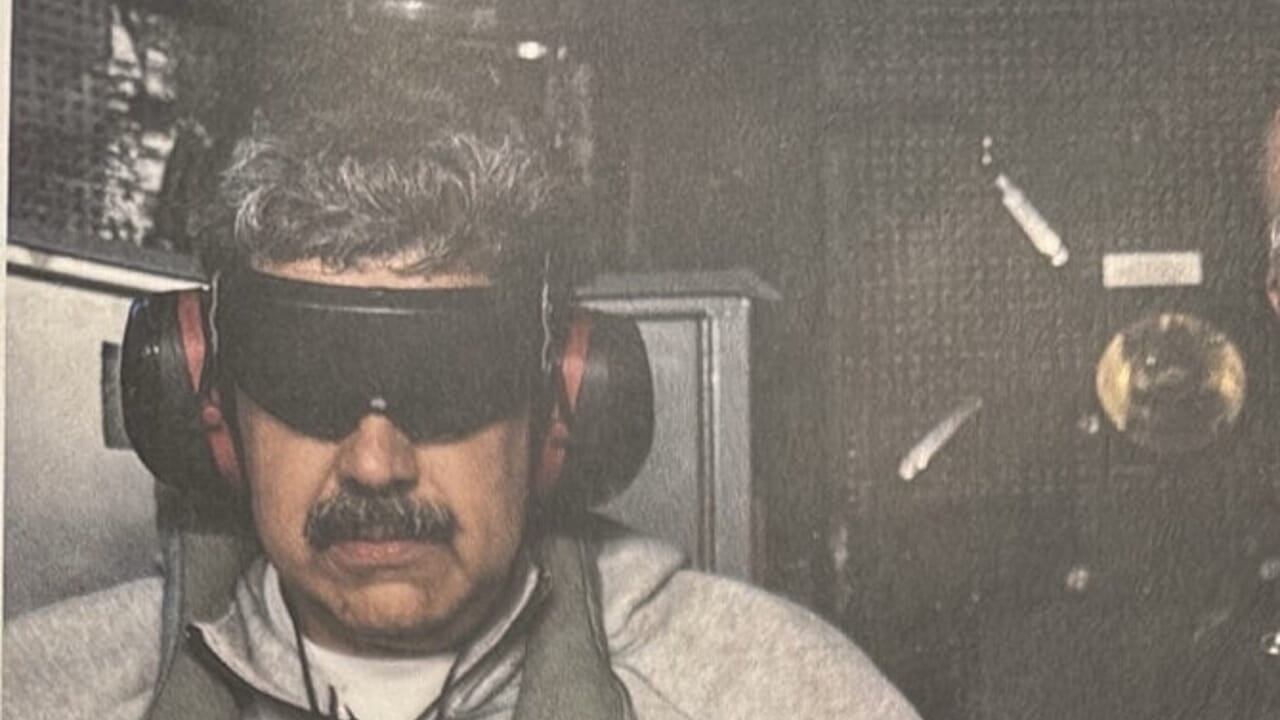
2026 began with a US military operation that led to the capture of Nicolás Maduro (and his wife Cilia Flores) and their transfer to the United States on very serious charges related to drug trafficking. But what is the real objective of the action desired by Donald Trump, the president of the United States who declares himself anti-interventionist and aspires to the Nobel Peace Prize?
Unlike Putin, Trump (still) acts within a context of constitutional constraints, outside of which he seriously risks that his military apparatus will refuse to obey him. The rift within the Armed Forces, after the contempt he has shown for America’s historic alliances and consolidated procedures, is now also evident to the Administration and requires careful and prudent management of the Commander-in-Chief’s authority. (Anyone who has followed certain public signals – from the deliberately modest posture on symbolic occasions, to the coldness of the command executives in some political “rallies” – knows what I’m talking about).
First, Trump understood that he cannot use military force against everyone without distinction: his military is not a personal army. Whether they like it or not, they are still soldiers of a democracy, and they will not act completely contrary to the Constitution and Congress. The chosen enemy must therefore be “felt” as such by the military, and this would not be possible (at least for now) if the objective were Greenland or – even worse – Canada: a generalized refusal of obedience would become a high probability and an unacceptable risk.
A regime clearly hostile to both the democratic and neocon vision, such as the Venezuelan one – which has pushed an enormous portion of its population into exile and aligns itself with historical enemies such as Russia, China, Cuba and Iran – appears much more “welcoming” to the military leaders. Unleashing American power against such an objective, especially in surgical ways, can be seen by the Administration as a way to once again ingratiate itself with these leaders without alienating too much MAGA’s isolationist base.
Secondly, not even a malleable and ultra-conservative Supreme Court like the current one could support armed aggression not validated by Congress: the Constitution is too clear on the matter. Trump therefore modeled his initiative not as a political-military operation, but as an action relating to internal security.
Is Maduro the real target?
Maduro is not a target as head of state of a hostile country, but as the leader of a criminal organization dedicated to drug dealing on American territory (according to the US prosecution system): not an enemy to be defeated, but a criminal to be arrested and tried. And the military operation that led to his capture will be painted and sold as an action against organized crime. This, for American law and therefore for the Supreme Court, will be more acceptable; and even for the Congress it will end up being difficult to criticize the presidential initiative: for the Democrats there will be little support, for the neocon Republicans “a tyrant has been overthrown”, and for the MAGA Republicans “drug trafficking has been hit”.
From Trump’s point of view, therefore, several results are achieved: decapitation of a hostile regime; spectacular blow to drug trafficking (it doesn’t matter if real or only apparent, given that fentanyl did not pass through Venezuela); display of military capability; luster to personal prestige; internal regrouping within the Republican Party; slap to the Democratic one; and perhaps an opportunity for rapprochement with dissatisfied military leaders. In short: more an action of internal politics than foreign policy.
Good news and bad news
The end of Maduro’s power is, in itself, excellent news for Venezuela and for democracy in general. The way it got there, however, is very bad news.
Among other things, it is not at all certain that the decapitation of the regime will lead to its end: the vice president remained in her place, and so did the rest of the Government and the Bolivarian Armed Forces; and the most recognizable opposition continues to move between exile, repression and fragmentation. In fact, all the negative aspects of this action are certain, while the positive ones are yet to be seen and demonstrated.
Footage of Former Venezuelan President Nicolás Maduro entering the DEA Building earlier in New York City, telling bystanders “Goodnight” and wishing them a “Happy New Year.” pic.twitter.com/v4mctwzyc2
— OSINTdefender (@sentdefender) January 4, 2026
If this surgical action – militarily impeccable – is followed by the most painless possible overthrow of the regime and its replacement with a democratic government, and if Maduro is then returned to the Venezuelans to be regularly tried by them for his violations and his crimes against their people, this “Special Military Operation” can be remembered as a painful but positive step for democracy.
But if the situation is left to fester as it is, and Maduro is simply put on trial in America for drug dealing in complete disregard of international law, it will be just another black page in American history.
