
If putting on makeup in the morning seems like a harmless and habitual gesture, a few centuries ago it could seriously put your life at risk. This is what happened, according to some hypotheses, to Elizabeth I of Englandwho died at the age of 69 on 24 March 1603 after 45 years of reign, and to many noblewomen between the 16th and 18th centuries due to “foundation“, lipsticks and blushes based on toxic substances such as lead and mercury. Elisabetta’s case, perhaps one of the best known in history, although unconfirmed, is linked to the use of a particular greasepaint called “Venetian cerussa” (Venetian ceruse) based on leadwhich the queen supposedly used to cover the scars left by smallpox. The lead inside the cerussa, however, in the long run caused lead poisoning, with loss of hair, teeth and… skin irritationsmaking it necessary to apply more and more product to cover new wounds. A vicious cycle that is difficult to break.
Venetian Cerussa: the most prized “foundation” of the time
The cerusa, or “spirit of Saturn” was a skin whitener very popular between the 16th and 18th centuries, composed of cerussite (also known as white lead or lead white), a white powder based on lead carbonate (2PbCO3·Pb(OH)2), mixed with water and vinegar. According to Guinness World Records, the cerussa wins the award for most toxic makeup product ever used regularly!
This sort of paste was applied to the skin like a real stucco, often left to dry and spread in several layers, to obtain a total and uniform whitening effect. There were various types of cerussa, but it seems that the Venetian one was the most prized due to the purity of the lead-based powder used.
A text from 1688, “Magistery of Saturn or Lead”, advises against using waxes other than the one produced in Venice, because they added whitening additives such as plasterwhich did not guarantee the same “lightness” and final effect as the Venetian cerussa. In short, as hypothesized by makeup artist Lisa Eldridge in her book “Face Paint”, the “Venetian ceruse” could almost be considered the first makeup brand in history.
“Skin as white as snow” from the Greeks to Elizabeth I
Not just Snow White: since ancient times the so-called porcelain skin was something you couldn’t miss. Give it psimuthion Greek, which even the philosopher Theophrastus talks about, to the Roman Cerussa, up to China, different peoples very distant from each other, in times in which the exchange of information was rather complicated, began to use the same compounds (lead-based whiteners) for the same reasons, in a sort of convergent evolution of makeup.
The diaphanous and very pale skin was a symbol of nobility, because the nobles did not spend time in the sun like the peasants, or of youth and fertility. Ideas that between the 16th and 18th centuries sparked the use of whitening among all the European nobility, including Queen Elizabeth I. There are many theories and hypotheses surrounding her death: from pneumonia to cancer, right up tolead poisoning. The problem is that Elizabeth herself imposed the prohibition on carrying out an autopsyso it was not possible to establish the cause of death with certainty.
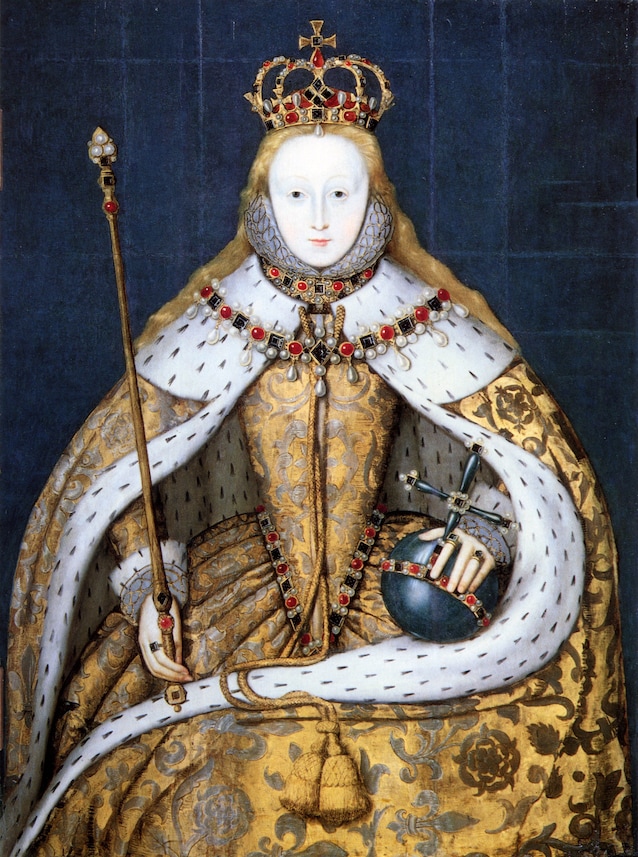
In 1562, Elizabeth I was struck by smallpox, which left her face covered in scars. To try to cover the signs of the disease, as well as for current fashion, it is said that he made extensive use of Venetian cerussa. The reason why it is assumed that Elizabeth I also died from the Venetian cerussa is that in her last years of life she began to exhibit symptoms attributable to lead poisoning: loss of teeth and hair, nausea, memory loss, irritability and skin irritation… Which only increased the use of cerussa, to cover new scars and wounds.
Like her, many court ladies, from Madame de Pompadour in France to the Countess of Coventry in England, also used it. And if we do not have certain data for Elizabeth, the death of the Countess of Coventry was confirmed lead poisoningprobably related to the excessive use of cerussa. As if that wasn’t enough, in addition to diaphanous skin, the fashion of the time demanded it colored lips and cheeksa sign of vitality and strength. Needless to say, even the blushes and lipsticks of the time were toxic. Cinnabar, one of the most used blushes was based on mercury! In short, wearing makeup at the time was an extreme version of the famous saying “Whoever wants to appear beautiful must suffer”.
Side effects: the harm of lead
Actually, lead It doesn’t absorb much into the skin: through the skin the percentage that reaches the blood is approximately 0.06%. However, considering how much and how often the Venetian cerussa was used, it is plausible to hypothesize that chronic use was responsible for the intoxications and lead poisoning in the contemporaries of Elizabeth I.
Under the conditions we are exposed to today, the greatest risk is given byingestion or inhalationa risk to which some categories of workers are exposed, such as those who work in a foundry, welders, electricians or those who work with lead paint (present in many old houses) or in battery recycling.
Lead poisoning, which can be acute or chroniccauses problems related to the dose to which you are exposed. We go from gastrointestinal symptoms to alterations in the state of consciousness; from cognitive deficits, for example anemiapassing through pain, convulsions, kidney problems, neurotoxicityinfertility up to encephalopathy and serious damage to the Central Nervous System.
Today we no longer find it in cosmetics, but the journey has been long: from the 16th century it took until 1976 to see lead banned from foundations and lipsticks (which there was a risk of ingesting) with Directive 76/768/EEC, subsequently integrated by Regulation (EC) no. 1223/2009, which also banned lead acetate, which escaped the previous ban which still allowed its use limited to hair products.
