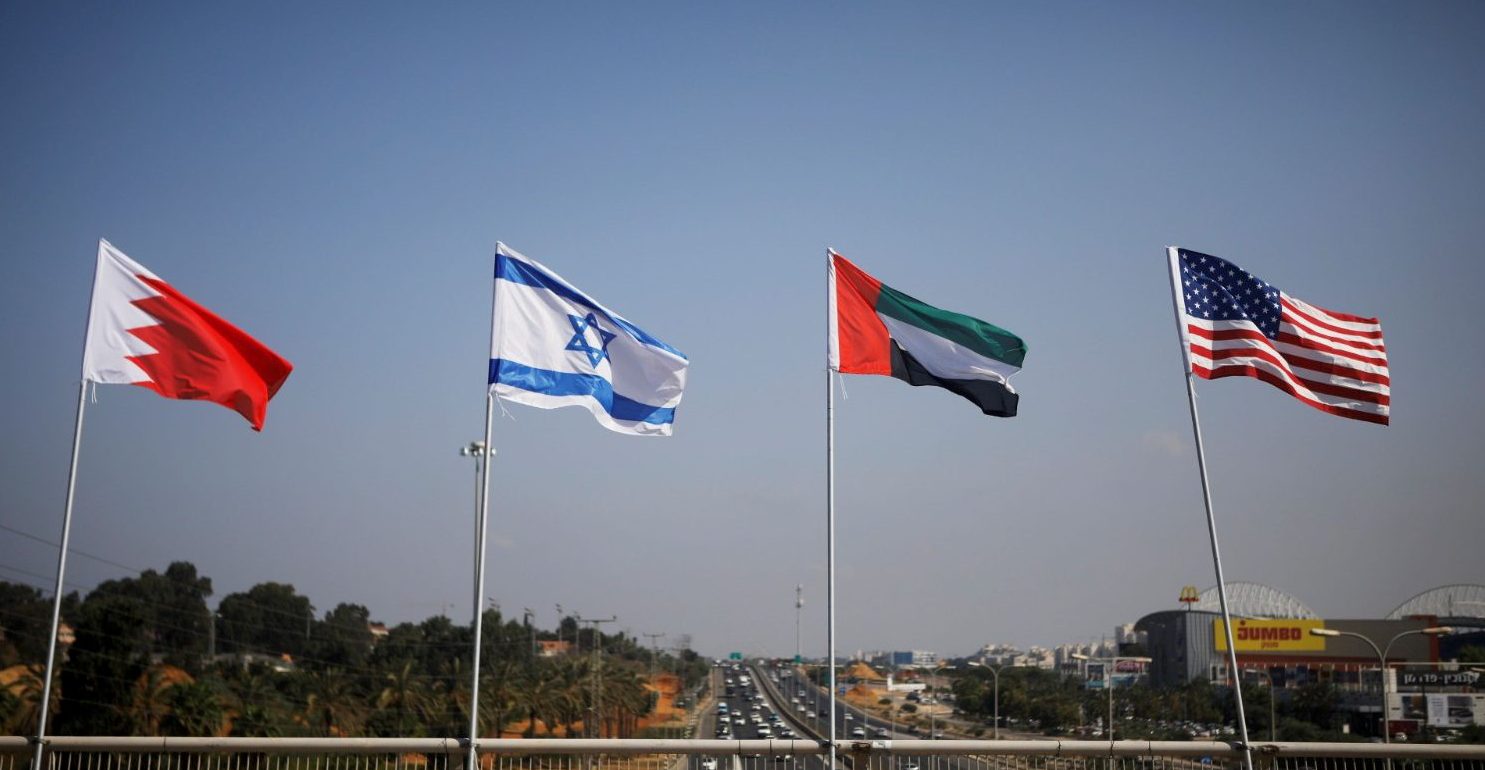
In a Middle East already shaken by violence in Gaza, a Israeli attack of 9 September 2025 against Hamas a leadership a Dohacapital of Qatarhas aroused international indignation and Abraham’s agreements are put at riska series of agreements for the diplomatic normalization which involved among others Israel, United Arab Emirates and Bahrein. An emergency summit took place yesterday in Doha, with the participation of dozens of Arab and Muslim countries, harshly condemning the Israeli raid.
What the Abraham agreements provide for
During 2020, international diplomacy has witnessed the development of Abraham agreementsa series of agreements that have sanctioned the normalization of relations between Israel and a group of Arab countries made up of United Arab Emirates, Bahrein and Morocco. These agreements were mediated by the United States, during the first presidency of Donald Trump: the first understanding was reached in August 2020 between Israel and the Emiratesfollowed on September 15 by the historic meeting in the White House, where Israel signed separate agreements with Abu Dhabi e with the bahrein.
Subsequently, in October, also Sudan He announced the normalization of relations with Israel, although the agreement was not formally ratified. Finally, in December, Morocco has also joinedobtaining in return the recognition by the United States of his sovereignty on western Sahara.
The goal of Abraham’s agreements was to promote the peace and stability in the Middle Eaststimulating cooperation in various sectors, including economics, technology, energy, tourism and safety. In fact, there have been significant benefits for signatory countries: The United Arab Emirates, for example, have gained access to Israeli advanced technologies in the cybersecurity and agritanology sectors, while Israel benefited from investments and economic cooperation opportunities with Arab countries.
In addition, common projects have been started in the energy and infrastructure fields, while the security cooperation has been enhancedwith particular attention to the threat represented by Iran. Israel and the Emirates collaborated on intelligence and defense, while Bahrein has participated in joint initiatives to combat destabilizing activities in the region.
However, the escalation in Gaza and the tensions deriving from Israeli military actions they put these agreements to the test and the objectives of regional stability and economic growth. Countries such as Saudi Arabia, although not signing, have expressed concern about the absence of significant progress in the Palestinian question, an element that continues to influence the regional dynamics and the sustainability of the Abraham agreements.
Because Abraham’s agreements are at risk
The current geopolitical context and the growing regional tensions in fact put the stability of these agreements at risk. In many Arab countries, public opinion It remains critical of Israelespecially against the military campaign in Gaza, raising the pressure towards political leaders.
Recent Israeli actions exacerbated the tensions: the Israeli air attack in Doha, Qatar, he aroused unanimous sentence by the Arab and Islamic nations during an emergency summit summoned to Qatar. The hereditary prince of Qatar, Tamim Bin Hamad Al-Thani, defined the attack as “traitor and coward”, interrupting diplomatic cooperation and intelligence with Israel.
During the summit, it was underlined that actions such as Israeli risk compromising the efforts of normalization and undermining regional stability. In addition, one emerged growing frustration towards the United Statesaccused of not preventing Israeli aggression.
The United Arab Emirates, despite being signatories of the agreements, they expressed disappointmentlimiting Israeli participation to events such as an aeronautical salon and suggesting a possible cooling of relationships. Despite the declarations of condemnation and the limited actions taken, for now no signatory country officially announced the termination of the agreements. However, recent tensions and official positions indicate a possible “cooling” of relations.
Israeli attack in Doha: what happened and the reactions
September 9, a Israeli air attack He hit a compound (fenced area with residences, offices or other structures) in Doha, Qatar, where Hamas members were found. According to the militiamen, the attack caused the death of six people, including some collaborators and relatives of the managers, but did not hit the main leaders. In particular, the attack on Doha has taken on an important value because Qatar carries out A fundamental role as a mediator In regional conflicts, such as that in Gaza, and is an allied firm of the United States.
The White House said of not to have been informed In advance of the attack and tried to reassure Doha, but the raid put to the test the trust between Israel and the Arab countries, including those signatory of the Abraham agreements. Although there was no definitive breakdown, the episode risks having accelerated a cooling process of Israeli relations in the region. The “new Middle East” appears farther today, with the Gulf countries that could respond by strengthening a common line, without sacrificing solidarity towards the Palestinian cause.
