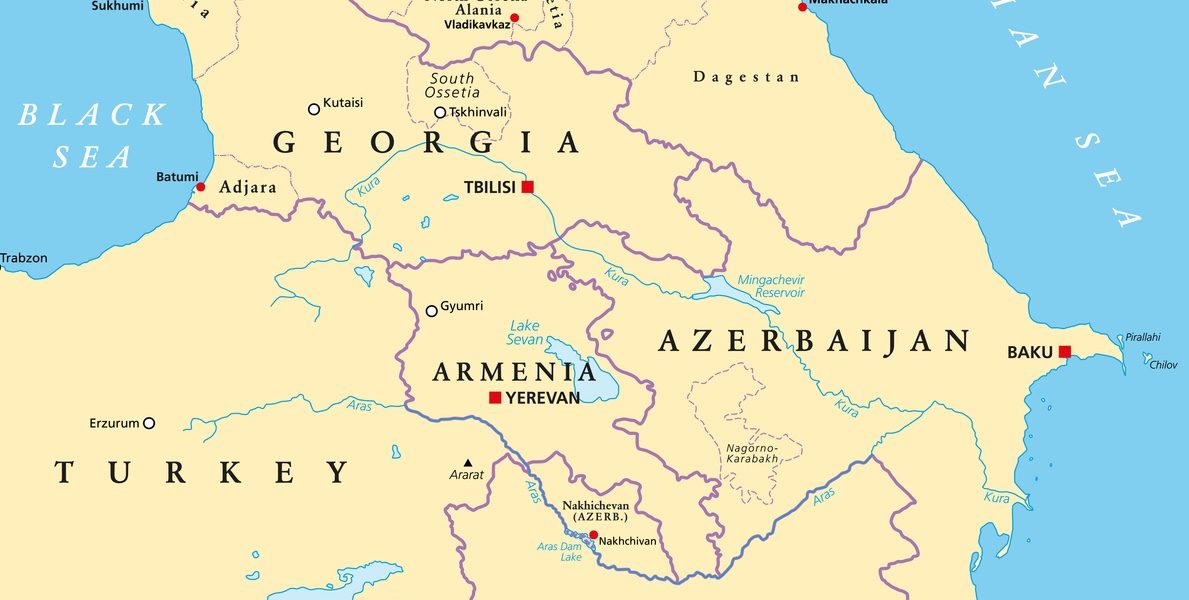
Armenia And Azerbaijan They have signed a historic peace agreement that will put an end to almost 40 years of conflict. The meeting between the Armenian Prime Minister, Nikol Pashinyanand President Azero, Ilham Aliyevtook place last Friday at the White House, with Donald Trump to do as a mediator. Specifically, the Treaty provides for the creation of a hallway about 40 km between Azerbaijan and the region of Nakhchivanan EXCLAVE AZERA within the Armenian territory and so far not connected directly to Baku. To deal with the development of the corridor will be directly the United States: in the meantime, both countries will conclude bilateral agreements With Washington on trade, energy, infrastructure and technology.
It is therefore a diplomatic success for the US President, who since his election campaign has presented himself as a resolver of international conflicts and who, precisely with the same goal, will meet in the next 15 August in Alaska Vladimir Putin To try to mediate a fire in Ukraine.
But therefore, why is this agreement so important for Armenia and Azerbaijan and why the tensions between the two countries have continued for almost four decades? Tensions between Yerevan And Baku They began in 1988, causing a first armed conflict ended in 1994 and the second broken down in 2020, with thousands of victims and displaced people. Internationally, Fly said he was favorable to the peace agreement, while Tehran ha criticized The construction of the corridor that risks modifying geopolitical balances in the region.
The origins of the tensions between Armenia and Azerbaijan
It should be emphasized that Armenia and Azerbaijan are in a particularly strategic geographical position: Armenia borders on Georgiathe Türkiye el ‘Iran (as well as with Azerbaijan himself), while Baku has a direct frontier with Russia and Iran and overlooks the Caspian Sea. Both countries, among other things, were part of the territory of the former Soviet Union.
With the dissolution of the USSR in 1991 and the proclamation of independence of the two countries, the tensions between Yerevan and Baku opened. In reality, as early as 1988 i Armenian separatists they had tried to take control of some parts of the Azera Region of Nagorno-karabakhuntil in the 1991 they declared an independent state (called Republic of Artsakh) asking for annexation to Armenia.
The subsequent tensions led to the outbreak of a war that continued until 1994with a balance of 30,000 dead, hundreds of thousands of displaced people (especially Azeri) and a peace agreement mediated by Russia. The separatist region of Nagorno-Karabakh was proclaimed independent de factoeven if the government remained strongly dependent on economic, political and military Armenia.
The situation remained unchanged until 2020when the armed clashes always resumed in Nagorno-Karabakh, decreeing one Occhian victory of Azerbaijan After just over a month: the war caused 7,000 victims and resolved, once again, thanks to the intervention of Moscow as the main mediator. In 2023, then, a Azero military attack in the separatist region caused the escape from Azerbaijan of more than 100,000 people of Armenian ethnicity.
Precisely for this reason, some some are still in progress between Armenia and Azerbaijan territorial claimswhich in recent years have been brought to the International Court of Justice and the European Court of Human Rights (ECHR).
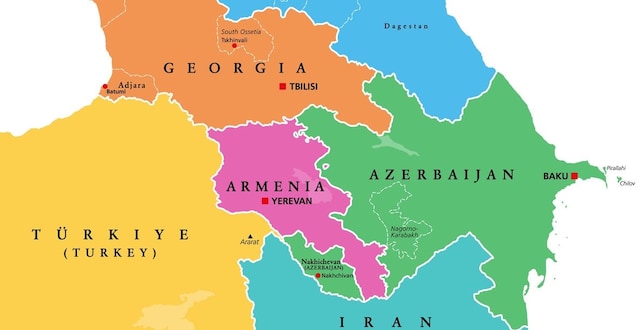
Because from the corridor for Nakhchivan the USA of Trump also earn
The complete text of the agreement, however, has not yet been published and for the moment, the two countries have limited themselves to publishing the text of a memorandum. According to what reported by the CNN, the approximately long corridor 43 km will be entitled Trippacronym of Trump Route for International Peace and Prosperity (literally “the Trump route for peace and international prosperity”).
As already mentioned, the United States will keep i exclusive rights for the construction of this project (second Political for the next 99 years): to deal with it will be a group of private American companies which, according to some rumors, will also take care of making one railway linean oil pipeline and a pipelinesince Azerbaijan is particularly rich in natural gas.
It must be said that the corridor will still be subjected to READ ARCHENEbut in addition to connecting the Azerbaijan with its Exclave, it will allow the country to trade directly with Turkey, its great ally in the region, without having to pass for neighboring states such as Iran or Russia.
Negotiations to establish which American companies will take care of managing the corridor will take place over the next few weeks: in the meantime, in addition to the peace agreement, the Armenian head of state and the Azerus counterpart will approve a formal request to dissolve the so -called “Minsk group“, Founded in 1992 with the aim of mediating the conflict between the two states and chaired by France, Russia and the United States.
It is therefore a peace agreement from which it certainly earns theAzerbaijanwho will now be connected directly to the Nakhchivan region, but also theArmenia will be able to attract new investments thanks to economic agreements Promised by Washington, keeping formal control over the corridor with the guarantee of a USA intervention in its favor in the event that Azerbaijan decided to resume with hostilities.
But the real winner of this treaty is definitely Donald Trump, who is now increasingly said to the Nobel Peace Prize (to which he aspires for some time), after already in July he had managed to end the new escalation of clashes between Cambodia and Thailand. The United States, among other things, will also have an economic profit thanks to the development rights and bilateral agreements coming.
The proposal was welcomed in a positive way by almost the entire international community, including Russia: however theIranwhich with Azerbaijan has always had a complex relationship characterized by growing tensions, has strongly criticized the construction of the corridor towards Nakhchchivan, considered a geopolitical change in the region of Southern Caucasus which risks “moving the borders of Iran too”.
