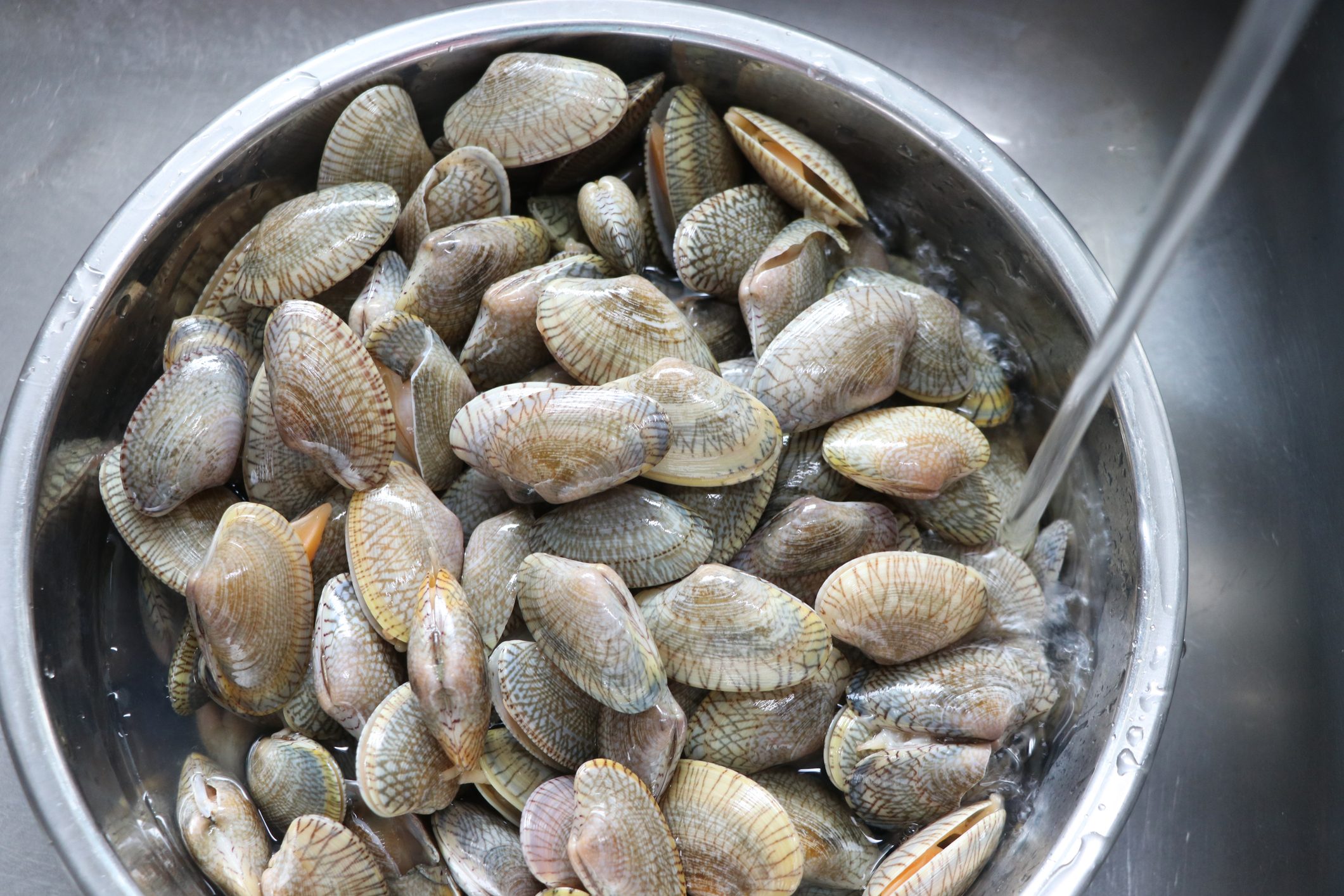
Imagine you are eating a good plate of spaghetti with clams, when you suddenly hear sand crunching under your teeth. A common experience that finds explanation in the very biology of these molluscs. To eliminate them, you can resort to the process of purge: place the molluscs in a basin with cold water and salt simulate the environment marine. Clams, like other filter-feeding organisms, accumulate within their bodies suspended particles present in sea water, including sand and inedible debris: placing them in water and salt causes restart the process filtrationfavoring theelimination of unwanted residues. Be careful, however: the complete elimination of any microbiological or chemical contaminants is not guaranteed.
How to eliminate internal residues from mussels and clams
The most common method is purge, immersing the molluscs in a basin containing water and salt; according to some cookbooks there should be about a spoonful of coarse salt for every liter of water. Purging occurs because, in a certain sense, the filtering system of these animals is “tricked”. In the presence of salt water, a certain temperature and sufficient oxygenation it is possible to simulate conditions compatible with those of the marine habitat: the molluscs thus spontaneously resume filtration activity. During the process they suck water through small tubes called siphonsthey filter it and expel it outside.
After a couple of hours, continuing their normal filtration activity, the molluscs expel a large part of the accumulated residues, such as sand and other unwanted particles, which settle at the bottom of the basin. This process allows you to reduce significantly the presence of inedible materialsimproving the quantity of the product before culinary preparation.
How bivalve filtering works
The clams are filter-feeding organisms: they suck in the surrounding seawater and pump it through internal systems that are able to retain suspended particles, regardless of whether they are edible (such as plankton and organic compounds) or inedible (grains of sand, shell fragments, microplastics derived from pollution). It can then be understood that inside these molluscs – as well as in other filter feeders bivalvesthat is, equipped with a shell divided into two parts, such as mussels or oysters – you can find many elements that must be eliminated before serving the dish.
Be careful of self-harvested bivalves
As highlighted in some documents of the Food and Agriculture Organization of the United Nations (FAO), purging is not a forced action, but the consequence of restoring optimal physiological conditions that allow the molluscs to filter continuously and get rid of unassimilable particles. And it is a fundamental requirement for their marketing: most of the bivalves we purchase are in fact subjected to both purification processes in special plants that carry out large-scale purging, and to checks for the presence of microbiological contaminants, heavy metals and various toxins.
If performed on bivalves fished independently and cleaned in domestic spherethis mechanism is effective above all for the removal of solid residues, but does not guarantee the complete elimination of microbiological contaminants possibly present, which could represent a problem from a nutritional point of view (such as bacteria of the genus Salmonellawhich may reside in the intestines of some molluscs).
