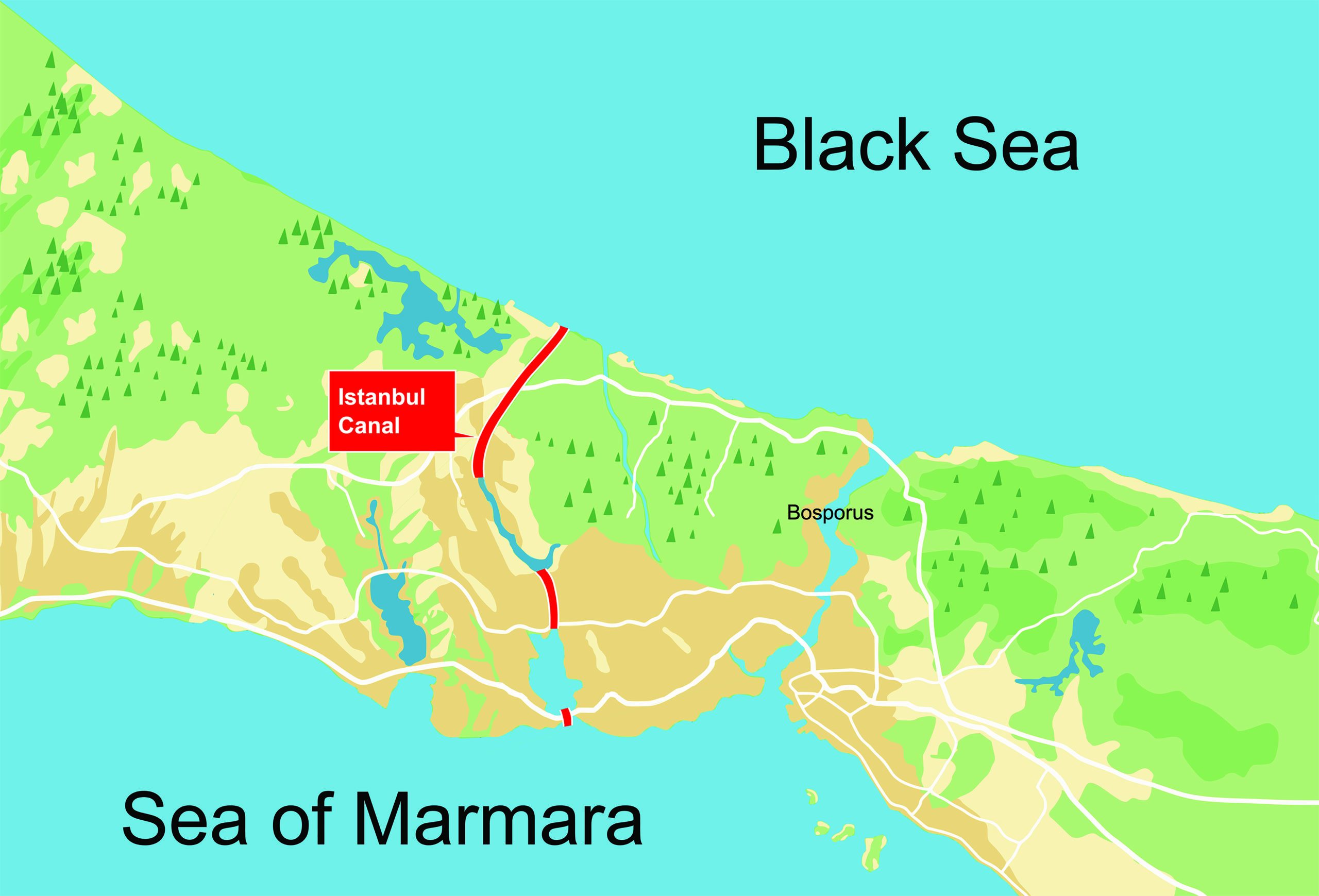
Ambitious project promoted by the current Turkish government of Recep Tayyip Erdoğan, the Istanbul Channel (Kanal Istanbul) is a 45 km artificial canal designed to connect the Black Sea to the Sea of Marmara, with the aim of alleviating naval traffic currently concentrated in the Bosphorus. The initiative would give Turkey a prime place in international shipping lanes and is presented as an opportunity to improve shipping and boost the economy. However, numerous experts and environmental organizations raise serious criticisms regarding the possible threats to biodiversity and the territory.
The Istanbul Canal maxi project
The artificial canal, approximately 45 kilometerswill run parallel to the Bosphorus Strait, with the aim of decongesting naval traffic in the area. The route will develop to the west of the European section of the city of Istanbul: it will start in the south from the Sea of Marmara, cross Lake Küçükçekmece and the Sazlıdere dam, and then flow to the north into the Black Sea. In this way the new canal will cut the western portion of the city, effectively transforming the historic center on an island between the Black Sea, the Sea of Marmara, the Bosphorus and the new infrastructure.
The cost of the project is estimated at around 7.65 billion euros. From a traffic point of view, the new canal would be able to equal – if not exceed – the transits currently recorded in the Bosphorus, equal to approximately 165 ships per day. The reasons that pushed the Turkish government to approve an intervention of this magnitude are different. The first is the need, already mentioned, to decongest the Strait; the second concerns the safety: Allowing the passage of oil tankers and ships carrying gas or highly dangerous materials near a densely populated metropolis is considered too risky. The potential consequences of an accident, both on a human and environmental level, would be extremely serious.
Criticisms of the project, between environment and geopolitics
While on the one hand, the Turkish government presents the Kanal Istanbul project as a measure also to protect the environment, claiming that it would reduce the risk of accidents, on the other hand, numerous experts highlight environmental risks of a very different type. According to several studies, in fact, the new channel could significantly damage the marine ecosystems of the area, altering the salinity, currents and hydro-biological balance between the Black Sea and the Sea of Marmara. Added to these critical issues is the transformation of the territory: the construction of the work would require the destruction of vast wooded areas and forest areas, which would be sacrificed to make room for the canal route and its artificial basin.
In the meantime, the works started in 2021 continue amidst tensions and protests, including on a geopolitical level. The canal would in fact fall under the Montreux Conventionwhich regulates the passage of military ships through the Bosphorus Strait, with the risk of altering the strategic balance of the entire region.
