When it comes to “staff”many people confuse i Two symbols very different between loco, accounted for only by the name and reference to number five.
On the one hand we find the musical pentagramthat is, the set of five parallel horizontal lines use to write music, on the other the esoteric pentagramor the five -pointed star traced with a single continuous sign, often enclosed in a circle.
Although today these two terms are sometimes mixed even in the most disparate contexts (even in journalistic or pop language), their history and meaning could no longer be different.
The lexical meaning of the term “pentagram”
To fully understand the reasons for the confusion between the Musical pentagram and the esoteric pentagramit is useful to start from the very lexical meaning of the word.
“Staff” It is a term of Greek origin, formed by the union of two roots: “Penta-“ (πέντε), what does it mean “five”And “gramma” (γράμμα), what does it mean “letter” or more general “written sign”. The original meaning of the term could therefore literally translate how “Five elements” sign “.
In the modern language, the term “pentagram” has entered the musical field mainly in use, to indicate the graphic system consisting of five parallel horizontal lines. However, in linguistics and semiotics, the term could also be interpreted in a broader sense: any figure or system that provides for the use of five graphic elements.
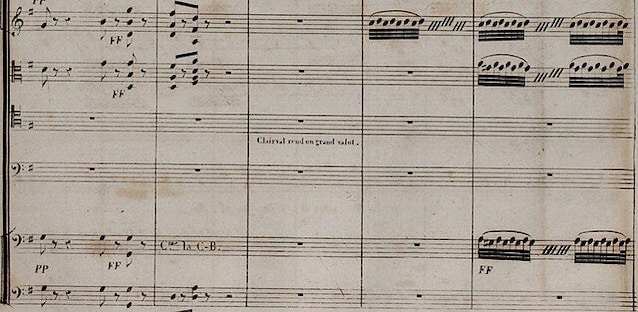
And it is here that the possibility of confusion opens especially in our Italian language. In fact, in English the term “Pentagram” indicates exclusively the five -pointed starwhile the system of five music lines is called “staff” or “Stave”. While in Italian, the term “pentagram” almost always refers to the musical notation, while the esoteric symbol tends to use more frequently terms such as “five -pointed star”.
The musical pentagram: the order of sound on five lines
The musical pentagram It was born in Europe between the IX and the XII century as a response to a very practical necessity: fix precisely the height of the sounds.
Before the introduction of the five lines, the medieval musical notations were based on very variable systems that indicated the melodic trend but not the heights exactly. Was Guido d’Arezzomonk and Italian musical theorist who lived in the 11th century, to introduce a system of lines that could act as a reference for the intonation, at that time with only three lines, therefore said “Tetragramma”. Over time, these lines became five, and the pentagram took the shape we know today.
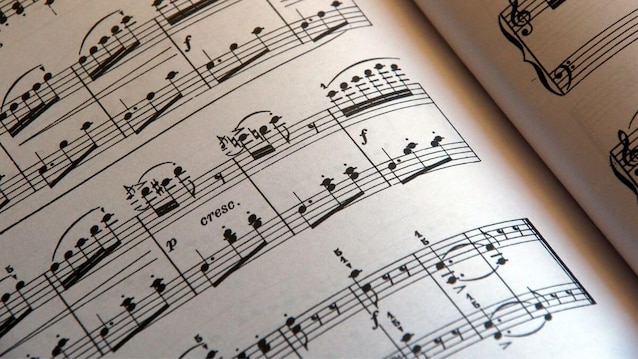
Its five lines and four spaces define an orderly visual field where each element has a precise meaning: the position of the notes, the keys, the alterations and any other graphic sign that regulates musical reading.
The esoteric pentagram: ancient symbol between harmony and occult powers
But the history of the esoteric pentagram is different, the five -pointed star Designed with a continuous stroke.
This symbol has very ancient roots and is found in many cultures: from Mesopotamia atAncient Greecewhere the Pythagoreans considered it an expression of universal harmony and the golden relationship.
Associated from the beginning of concepts of balance, perfection and cyclicalitythe pentagram contained the mystical meaning of the number five, connected to the five elements and the five senses.
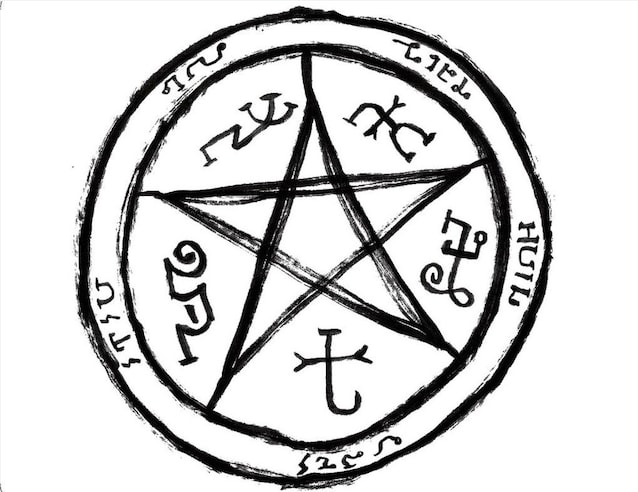
In the Christian Middle Agesthe star was reinterpreted as a symbol of the five wounds of Christ, also assuming a symbolic function against the forces of evil. Subsequently, with the Renaissance And the rise of esoteric and alchemical doctrines, the Pentragrammad returned to represent the relationship between man and cosmos: the human figure inscribed in the circle, with his arms and legs open, reflected the harmony between microcosm and macrocosm.
During the XIX and 20th centurywith the birth of new esoteric currents, the distinction between the pentagram with tip to the top has been strengthened, seen as a positive and protective symbol, and the inverted one, associated with dark practices, evocation of the devil and the black magic.
Contemporary ambiguity: the pentagram between music, fashion and pop culture
In the contemporary era, the esoteric pentagram has lost much of its original symbolic complexity.
The world of cinema, music and literary has contributed to simplifying its use, often reducing it to a simple icon of theoccult or forbidden. Today you can see the pentagram on the cover of Album metal, gadgets, tattoos or horror scenography, more for aesthetic call than for real esoteric motivations.
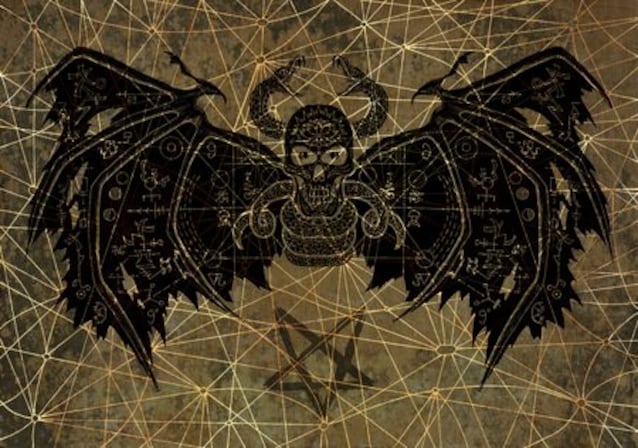
Curiously, right in the world of modern musicwhere the pentagram has a very precise and rational function, the five -pointed star has been resumed to evoke dark or rebellious atmospheres.
Just this overlap of “environments” He fueled the confusion, it is not uncommon to find those who believe that the five lines of the musical pentagram have magical or occult origins, when in reality it is only a linguistic coincidence.
Sources
Haines J. (2008) “The Origins of the musical staff”
Gettings F. (1981) “Dictionary of Occult, Hermetic & Alchemical Sigils”
Kherington S. (2024) “The Pentagram: Origins and History”
