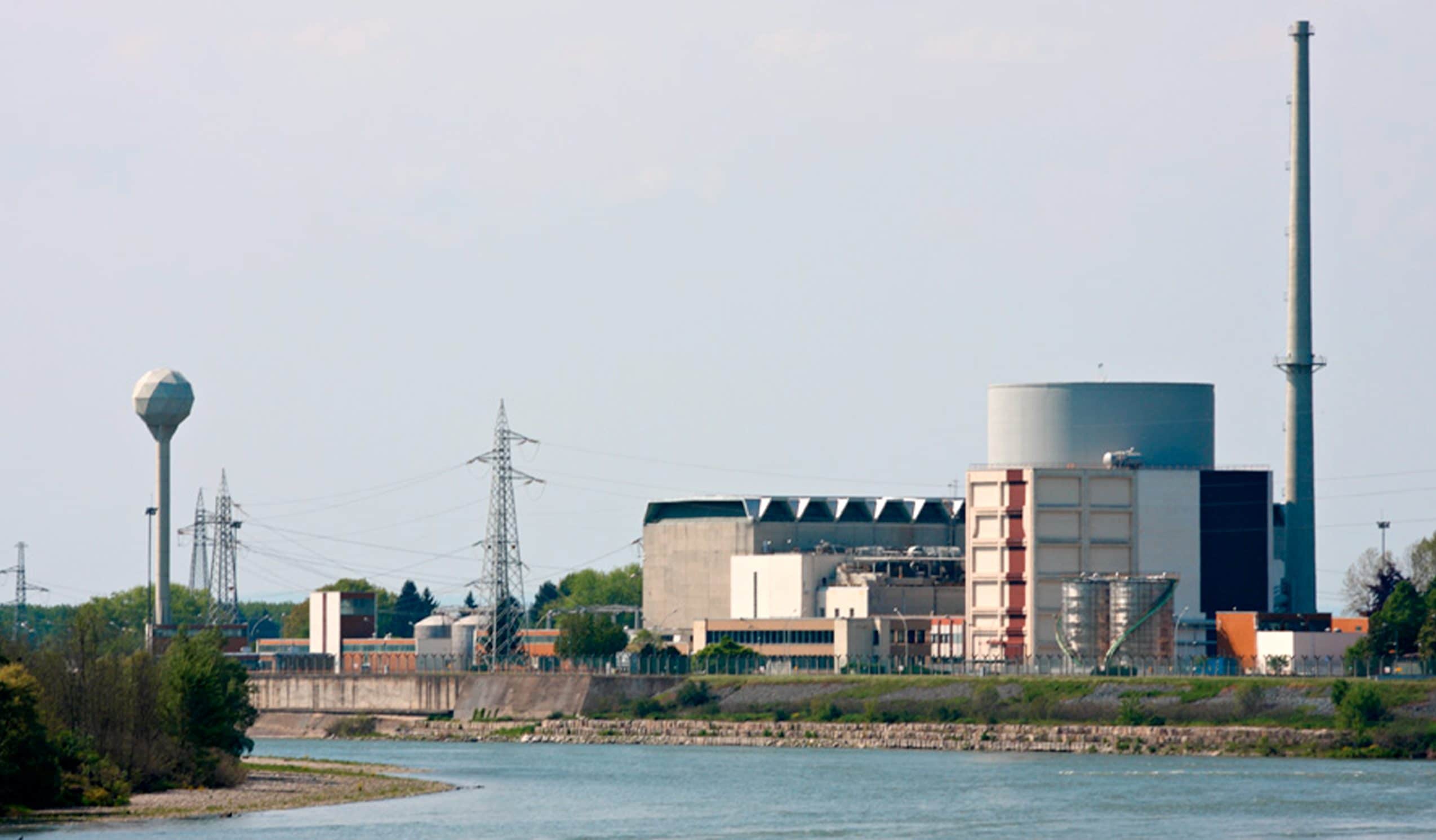
The start of the Italian nuclear program It is placed in the post-second world war period, characterized by a marked expansion supported by the aid of the Marshall floor and distinguished by a rapid increase in energy needs. Between the end of the years Sixty and the beginning of the years Seventythe geopolitical tensions deriving from the crisis Arab-Israeli they determined a significant rally of the prices of the import oil sources, imposing one revision of Italian energy policy. This scenario oriented the government interest in the adoption of thenuclear energy as a strategic solution aimed at guaranteeing the energy safety and the autonomy of national supply. In that context, in Italy they were designed, built and subsequently initiated to the commercial year Four nuclear plants: the plant of Trine VercelleseOf Borgo SabatinoOf Sessa Aurunca and of Carorso.
As a consequence of the media and social impact generated by the Chernobyl accident, the abrogative referendum held in the 1987even though Not having as an object explicit the abandonment of nuclear energy in Italy, substantially entailed the cessation of the operations of active nuclear power plants, as well as the cancellation of the development programs of new plants.
On the date of the referendum, the fifth nuclear power plant, located a Montalto di Castrowas completed with the85% and came converted in a thermo -regulators in polyombustible. In the 1999 there Sogin (Nuclear System Management Company) acquired the property of the four ex-active nuclear implants, assuming the responsibility for the operations of decomissions (dismantling) and safety, activities that are still in progress. Today Italy is the only country of G7 not to produce nuclear energy.
The four Italian nuclear power plants
First, let’s analyze the map of the 4 Italian former nuclear centers, indicated below in green:
Central of Trino Vercellese
The Trino Vercellese nuclear power plantlocated in the province of Vercelli, was equipped with a reactor ad pressurized water (Pwr- Pressurized Water Reactor) from 270 MW. The plant was operating from January 1965 al March 1987reaching a total production of electricity pariah 25 TWH (Teramo).
Caorso central
The Caorso plantlocated in the province of Piacenza, constituted the bigger Nuclear site active in Italy and had a reactor ad Second generation boiling water (Bwr- Boyling Water Reactor) from 860 MW. The unit started the business in the December 1981keeping the operations up to 1986 and producing 29 TWH of electricity.
Borgo Sabatino central
The Borgo Sabatino plant (Province of Latina), represented one of the first nuclear installations on the national territory, with construction works that began in 1963. The plant was equipped with a reactor Magnox Characterized by the use of natural uranium not enriched as fuel, graphite as a neutron moderator and carbon dioxide as a refrigerant fluid. The reactor from 210 MW he totalized a production of 26 TWH of electricity during its period of activity.
Sessa Aurunca central
The Sessa Aurunca nuclear power plantlocated near the Garigliano river, was equipped with a reactor BWR from 160 MW. The plant started the business in theApril 1964with the aim of supporting the industrial development of the Italian southern macro area. The termination of the operational activities took place in theAugust 1978, prior on the date of the referendum, following persistent Technical problems and relevant oppositions from local communities.
What asked for referendum questions about nuclear power?
On 8 and 9 November 1987 The voters were called to the polls to express themselves on five abrogative referendums, of which Three specifically concerning the current legislation relating to the regulation of the nuclear sector In Italy:
- The third question concerned the repeal of the competence of the Cipe (Interministerial Committee for economic programming) to deliberate on the location of nuclear power plants in the event that local authorities had not reached an agreement;
- The fourth question proposed the repeal of the legislation which provided for the disbursement of financial contributions to local authorities seats of central nuclear fuels or coal;
- The fifth question It concerned the repeal of the legislation that allowed Enel, then public body, to participate in the construction of nuclear power plants abroad.
The Quorum referendum was reached with an electoral participation equal to 65.1% approx 45.8 million of voters who are entitled. Although not explicitly foreseen as a direct effect, the referendum he determined in fact the progressive disposal of nuclear plants, marking the cessation of electronuclear production in Italy.
Current state of nuclear power plants
Currently All Italian nuclear power plants are subject to decommissioning operation, i.e. to technical procedures aimed at dismantling and safety, activities entrusted since 1999 to the company Sogin spa.. decommissioning represents the terminal phase of the life cycle of a nuclear power plant and includes the removal of the fuel, the radiological characterization of the site, the decontamination of the structures and the demolition of technical infrastructures. A fundamental aspect of this process concerns the radioactive waste managementwhich are initially stored in temporary deposits and then transferred and placed to the final national deposit. At the same time, the residual materials such as iron, copper or concrete resulting from the dismantling are removed from the site in order to be started Recovery and recycling. At the moment, the times estimated for the completion of the activities are uncertainbeing conditioned by the advancement of the works and the future operations of the national deposit.
