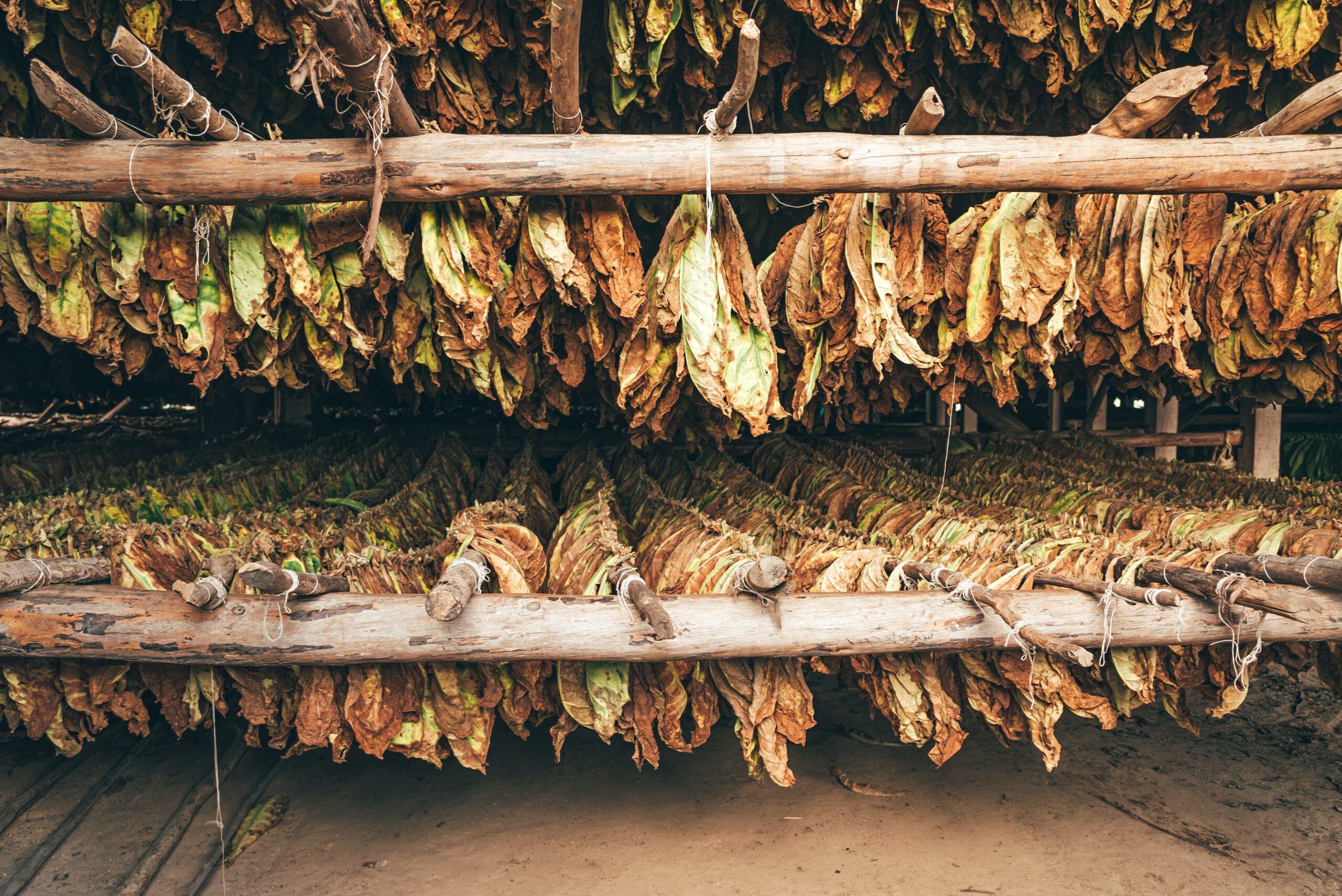
Although the tobacco be widely associated, in the collective imagination, al American continentit soon became a product a planetary diffusion. Already in the colonial era, the Europeans contributed to his overseas marketing and to the creation of a flourishing industry stimulated by the strong growth of his demand derivative products (cigarettes, cigars, pipe tobacco, just to name a few). With the passage of time, the emergence of new markets, especially among developing countries, has changed economic and tobacco political geography while the discovery of its potentials harmful effects on the health of individuals He has made adoption imperfection in many more stringent legislation countries in order to protect public health.
The origins of the tobacco plant
Exist 79 different species of plants that form the Nicotian genrehowever there are only two (Nicotiana Tabacum And Nicotiana Rustica) to be used in the economy of “tobacco” as we mean it. The main difference between the two is the content of nicotine concentrated in the leavesthat in the case of Nicotiana Tabacum is between 1% and 3% while in the case of Nicotiana Rustica even arrives at 9%. This means that the first is by far the favorite on industrial-commercial level, however in some countries the cultivation of Nicotiana Rustica It is prevalent.
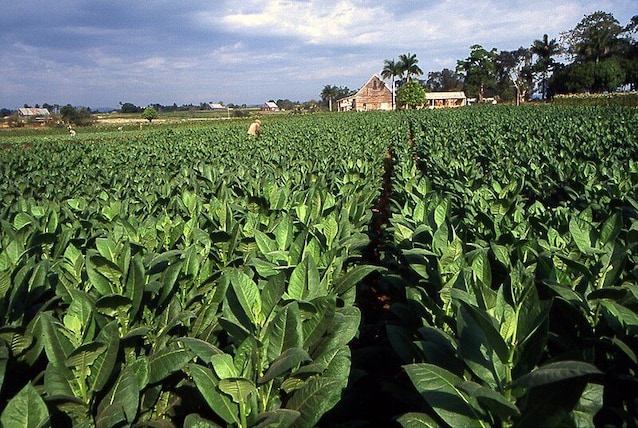
The peoples of the Americas They have long used tobacco plants for a plurality of uses, from those for ceremonial-religious purposes to the role of exchange currency. It was the European colonizers who brought tobacco to Europe and from here it spread to the whole of the entire globe. Over the centuries, the cultivation of tobacco and the production of consumer goods derived from it such as the famous cigarettesbut also i cigarsThe pipe tobacco And so on, he took on universal value because contrary to cotton or coffee, just to make two examples, tobacco has proven to be very resilient both against climate changes and in environmental changes and this has allowed all countries (with the exception of the Bhutan) to create premises “Tobacco production industries”.
Element that has greatly favored the diffusion of tobacco is its massive consumption in the most disparate forms, such as the widely used heated tobacco cigarettes in recent years, favored by the nicotine content which has a habitant effect for those who take it in modest quantities. Over time the consumption of tobacco (in particular of cigars) has created a real “culture” often associated with masculinity, as during the rusty years of Hollywood and of the youth dispute.
The manufacturers in the world
According to the data published by FAOthe expansion of the world production of tobacco has experienced its golden age in the time period included Between 1971 and 1997 when it grew by 40% passing through 4.2 million tons of leaves produced in 1971 to 5.9 million tons of leaves produced in 1997with a peak of 7.5 tons of leaves produced in 1992record that still remains unmatched. Interesting to note that to a decrease in productivity recorded in developed countries has contramed a very strong increase (+128%) in developing countriesand also in this case the “part of the lion” has touched the China whose quota of world production of tobacco leaves has passed From 17% in 1971 to 47% in 1997.
As already mentioned before, the only country in the world in which there is no production, not even in minimal form, of tobacco is the Bhutan which, moreover, still applies a very severe policy for the prohibition of marketing of any derivative of the processing of “raw material”. Excluding this necessary exception, if we consider all the other countries of the world, there is however a hierarchy that separates about ten large producers concentrated in six areas well located by the mass of all “others”. Always according to FAO data updated to 2022such production areas are: China, the Indian subcontinent (India and Pakistan), southern America (Brazil and Argentina), South -Eastern Africa (Zimbabwe, Malawi and Mozambique), Indonesia and the United States of America.
However, we must not fall into the temptation to believe that they earn this huge business only The large multinationals in the sector. During the aforementioned world peak period of production, the tobacco guaranteed the sustenance of beyond 20 million small Chinese farmers and related families who worked an extension of about 850,000 hectares of cultivable surfaces. The same goes for India, which ai early two thousand it counted just less than 100,000 “official” farmers (not to mention the unregistered ones) that cultivated an area equal to 0.25% of the fertile portion of the national territory. A particularly interesting case is then the Lebanese one. In fact, despite the Lebanon occupies only the thirty -fifth place In the international ranking of tobacco production, its cultivation occupies a prominent place in the material life of the poorest layers of the population, as well as being absolutely transversal with respect to all religious confessions, also going to positively affect the budgets of terrorist organizations such as Hezbollah.
The use of tobacco and health risks
Inevitably, however, the speech of the “tobacco geopolitics” cannot be tackled without mentioning also to the risk that tobacco represents for health in addition to disputes relating to the methods of cultivation and processing of the product. Thanks to the research carried out in the medical field since the 70s of the twentieth century we know that There is a direct correlation between the consumption of products deriving from the cultivation of tobacco and the development of potentially fatal diseases such as tumors and cancer. Much less known at the general public, however, it is the epidemiological incidence at macro level.
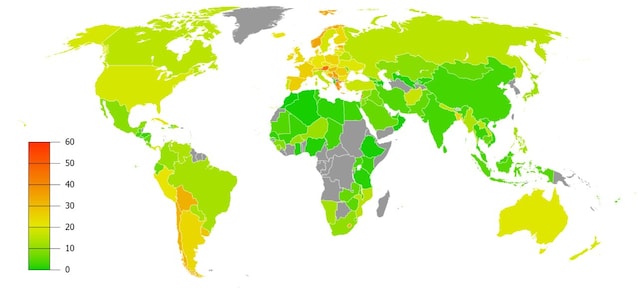
According to a report published in 2022 by World Health Organization (WHO), every year well 8 million people globally die for causes connected to the use of tobacco (this figure includes 1.3 million victims due to “passive smoke”) and that during the 20th century tobacco caused the death of at least 100 million people. Considering that, currently, approximately 1.1 billion people regularly use products deriving from tobacco And that the consumption of these products is growing highly growing especially in developing countries, where health systems are notoriously weaker, it is understood that the destructive potential is really high enough to push the WHO to declare tobacco as: “The most important single risk factor for human health in developed countries and an important cause of premature death worldwide”.
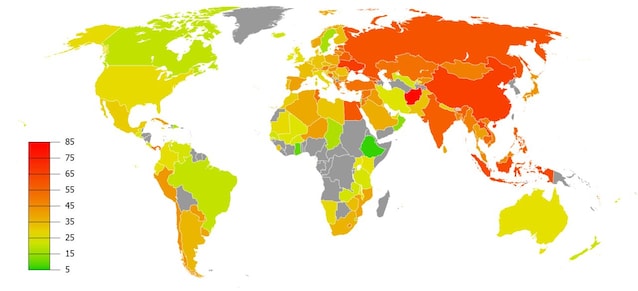
Other disputes about tobacco are recorded on the front of its cultivation. Although growing tobacco plants is not particularly expensive neither from the point of view of the territorial extensions nor the quantity of water requested, nevertheless it requires The contemporary use of no less than 16 different types of pesticides Many of which are potentially very dangerous for the environment and for human health itself. Another sore note concerns the question of “Juvenile work”. The International Labor Office has repeatedly pointed its finger against China, India, Brazil, Indonesia, Malawi and Zimbabweguilty of making wide use of child labor in tobacco crops. Lastly, holding the questionable primacy of “Legal product most smuggled in the world”Tobacco contributes, among others, to swelling the pockets of terrorist organizations and great international crime.
Considering all this, is it spontaneous to ask: why have the governments of the world have not yet come to approve a generalized call for the products deriving from tobacco? In reality the answer is very simple and has nothing to do with the free choice of individuals but with the old adage: “Money-Soldi-Cladi”. The tobacco trade in most of the countries of the world is in fact subjected to the control of State monopolies on tobacconists And this guarantees the coffers of the countries of the important annuities of which it is very difficult to do without.
