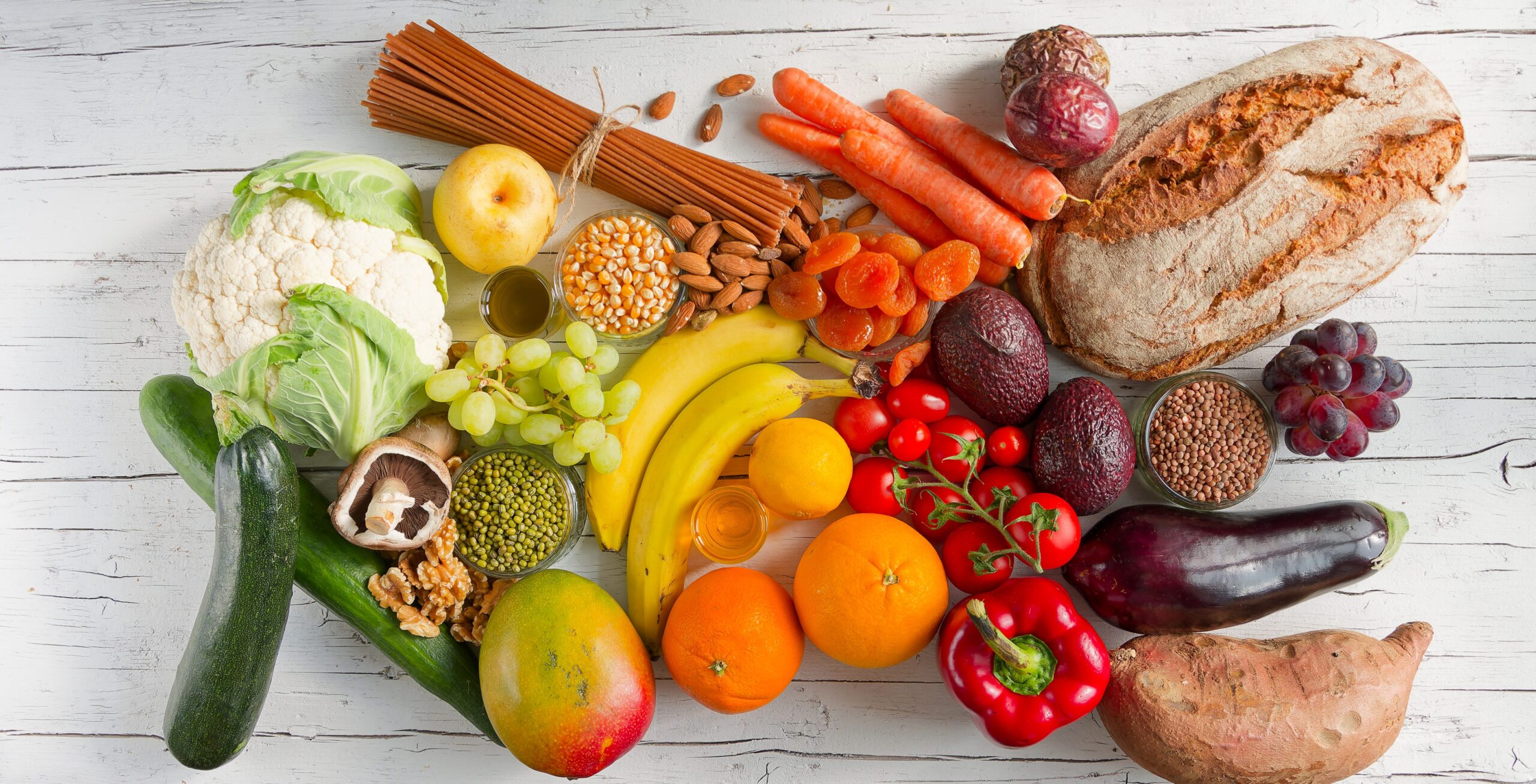
Some foods have an expiration date, others have an expiration date minimum shelf lifebut did you know that there are also foods that don’t need expiration dates at all? Well yes, there are food products for which it is not necessary to indicate the deadlinelisted in Annex X of European Regulation 1169/2011. Think about it: have you ever seen a peach at the grocery store with the expiration date printed on the skin? Or on the croissant you get at the pastry shop before going to work? For all these fresh products designed for a consumption within a few days (after all fruit and vegetables in themselves rot if we don’t eat them in a short time and no one wants a dry croissant), the expiry date should not be indicated. But if you think about it, even in our pantries there are foods with no expiration date: salt, sugar and alcoholic beverages due to their chemical-physical characteristics they create an environment hostile to the growth of bacteria and therefore an expiry date is not necessary.
Fresh and bakery products
Fresh foods such as fruit and vegetables, except bagged ones, bakery bread and bakery products are intended for a fast consumption, within 24 hours or so. Potatoes, not peeled or cut, but still intact, are also included. Let’s be clear: the expiry date is not needed not because they are eternal or never expire, but because they perish in a very short time and as far as the eye can see. For this reason, in the European Regulation they are listed as foods for which there is no need for an expiry date. On the other hand, we can see with our own eyes and in a short time when fruit and vegetables are no longer good and the same goes for bread, which risks becoming dry or moldy in a few days.
For salt and sugar the key is dehydration
In contrast, table salt and sugar packs seem to (almost) never expire. We may have heard in some documentary that salt was one of the most used methods to preserve food even in ancient times. The secret, for both salt and sugar, lies in their hygroscopic nature (i.e. they are able to attract water from the surrounding environment) and in the ability to create a environment unsuitable for the survival and growth of fungi and bacteria. In fact, like us, these microorganisms also need water to live. The key is the water activity (aw)that is, the free water contained in a food and actually available for biological life. It is a number from 0 to 1 and is the ratio between the vapor pressure present above the food (Pv) and the vapor pressure of pure water (P0) at constant temperature.
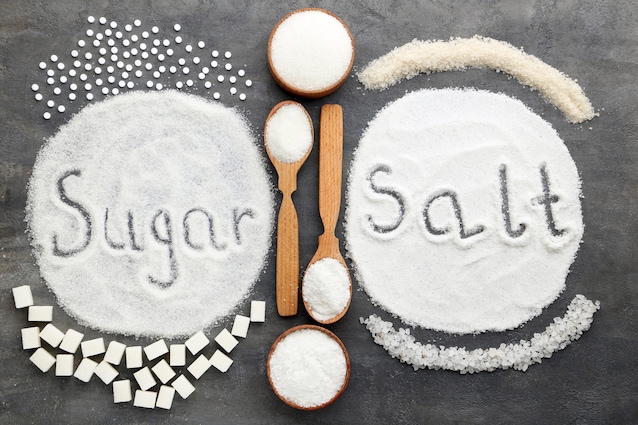
Most bacteria do not grow underneath tow 0.91, while mold and yeast do not grow underneath tow 0.80–0.62. Salt and sugar lower the aw below these thresholds, making it impossible for microorganisms to survive. In practice, they hoard all the water available in the environment (even that present as water vapor in humidity), and what’s more they also steal it from within the microorganisms themselves, with a mechanism called osmosis: to achieve balance, water “moves” from inside the cells to the outside, literally dehydrating the microorganisms present.
This is why, among the foods that do not require an expiry date or minimum shelf life in Annex sugars in solid state (what we use to sweeten coffee, so to speak), but also “confectionery products consisting almost exclusively of flavored and/or colored sugars” and chewing gum.
Alcohol and vinegar: destroyers of microorganisms
Beverages with an alcohol content greater than or equal to 10%as required by EU Regulation 1169/2011, do not need to expire because they do not constitute a suitable environment for the development of bacteria, mold or yeast. And the reason is twofold: the antibacterial action of ethanol and the almost total absence of available free water.
In fact, ethyl alcohol breaks the bonds that hold together the structure of enzymes and proteins, in technical jargon denature. Without functioning proteins and enzymes, microbial cells die. Furthermore, damages membranesmaking them more fluid and permeable: this leads to the loss of ions and molecules essential for the microorganism.
As for vinegar, the antimicrobial action is mainly linked to its acidity and lowering the pH. The high concentration of acetic acid (on average 5%) makes the environment very acidic, with pH values that vary depending on the production method and the starting material (on average around 2.5-3). High acidity leads to the rupture of membranes and molecules that are fundamental for the survival of some microorganisms, destroying them and preventing its proliferation inside our vinegar bottle.
Sources:
Regulation(EU) 1169/2011 Annex X Institute of Medicine (US) Committee on Strategies to Reduce Sodium Intake; Henney JE, Taylor CL, Boon CS, editors. Strategies to Reduce Sodium Intake in the United States. Washington (DC): National Academies Press (US); 2010 Preservation and Physical Property Roles of Sodium in Foods. Rahman, MS and Labuza TP Water Activity and Food Preservation, chapter 20 in Handbook of food preservation 2nd ed. (2007) SciAm, How do salt and sugar prevent microbial spoilage? (2006) Kalathenos, P. & Russell, NJ. (2003). Ethanol as a food preservative. Food Preservatives. IOWA State University Vinegar Shelf Life and Safety Ousaaid, D., Laaroussi, H., Bakour, M., Ennaji, H., Lyoussi, B., & El Arabi, I. (2021). Antifungal and Antibacterial Activities of Apple Vinegar of Different Cultivars. International journal of microbiology
