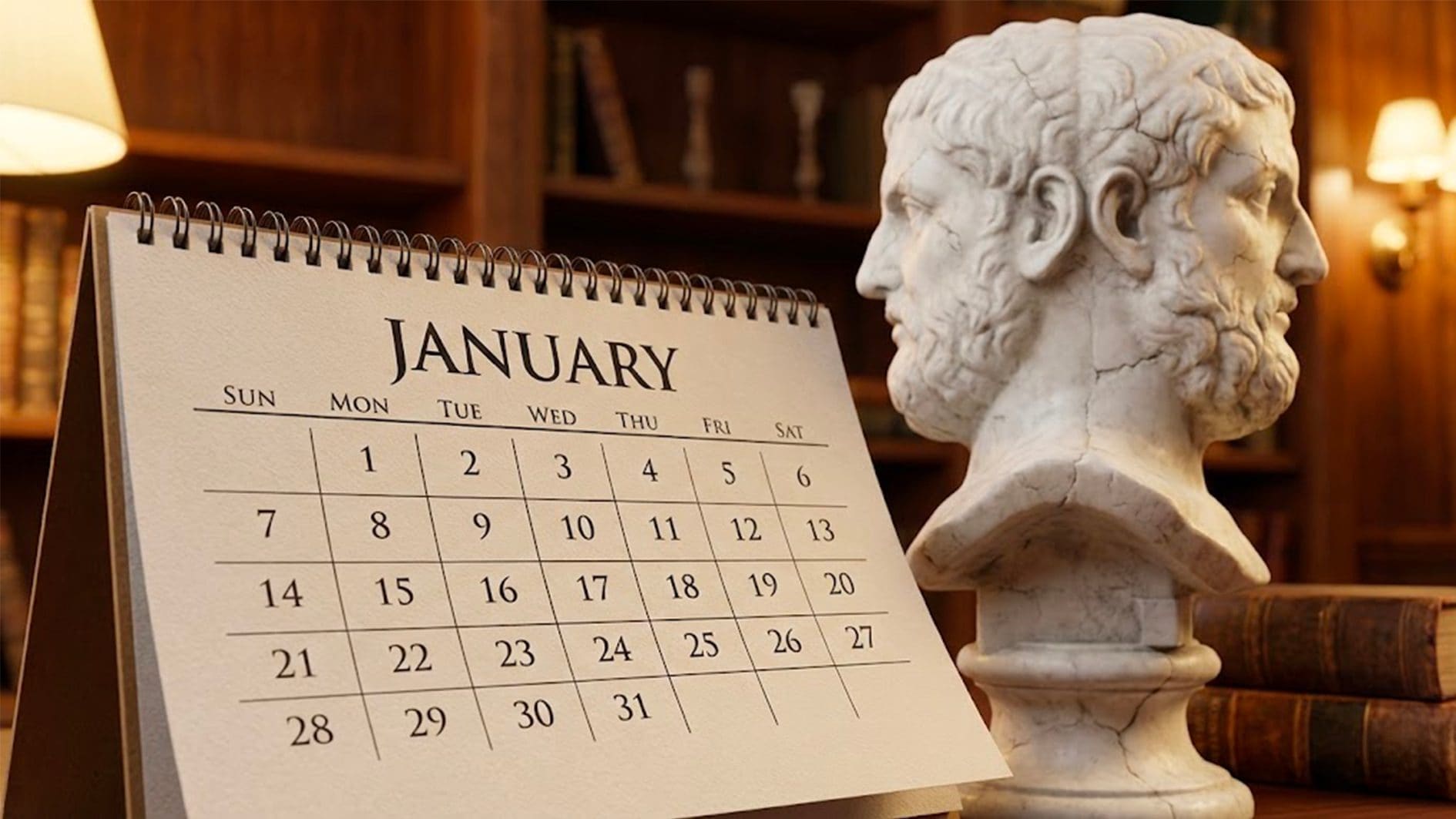
It is not at all obvious that the New Year’sthat is, the first day of the year, fall on January 1st: after all, it’s a totally arbitrary choice. And in fact it has not always been like this, and in many parts of the world it is not like this even today. Who decided this, and how?
The story begins inancient Rome. Before Caesar, the calendar in use (the Romulus calendar or Roman calendar) predicted that theyear began began to Marchwhich is the month in which spring begins as it contains the vernal equinox. It is precisely from this ancient convention that the names of the last months of the year derive: September, October, November And December in fact they respectively indicate the seventh, eighth, ninth And tenth month considering March as the first. At the time the calendar counted 355 days, with a gap of approximately 10 days between the civil year and the solar year which over time accumulated to the point of “misaligning” the calendar in use with the cycle of the seasons.
To solve this problem it was introduced in 46 AD The Julian calendarnamed in honor of its promulgator Julius Caesar. Developed by the astronomer Sosigenesthis calendar brought the length of the year to 365 days and introduced the leap yearsbut in addition to this he established the beginning of the year on January 1st.
The choice was purely symbolic, in the sense that January 1 is not associated with a significant astronomical event as can be solstices and equinoxes or aphelion and perihelion. Caesar chose January because it was the month dedicated to Janusthe god of beginnings, doors and passages. Janus has two faces: one that looks to the past (the old year) and one that looks to the future (the new year).
However, the date of January 1st did not take root everywhere. Different areas celebrated the beginning of the year on different dates, such as Christmas or Easter. This situation went on for centuries, even beyond the Middle Ages. Just to give an example, in the Florence of Dante’s time the year began on March 25 (and in fact this is the date on which, according to scholars, the imaginary journey of the Divine Comedy).
Order was brought about with the new great reform of the Western calendar, in 1582when Pope Gregory XIII introduced the Gregorian calendarwhich we still use today. This reform served to correct the small misalignment that had accumulated over the centuries between the Julian calendar and the solar year. A difference of approximately 12 minutes a yearbut which over the course of about 1600 years had grown to become 10 days long. Pope Gregory’s reform therefore saw the cancellation of 10 days from the calendar (this is why it is said – even if it is not true – that “Saint Lucia is the shortest day there is”) and the reduction of leap years. Here January 1st is re-established as the starting date of the year, but the universal and definitive adoption occurred only in 1691 thanks to an amendment by Pope Innocent XII.
In short, the first to propose January 1st as the date of the New Year was Julius Caesar before the birth of Christ, but in order for the whole West to adapt it took over 17 centuries!
