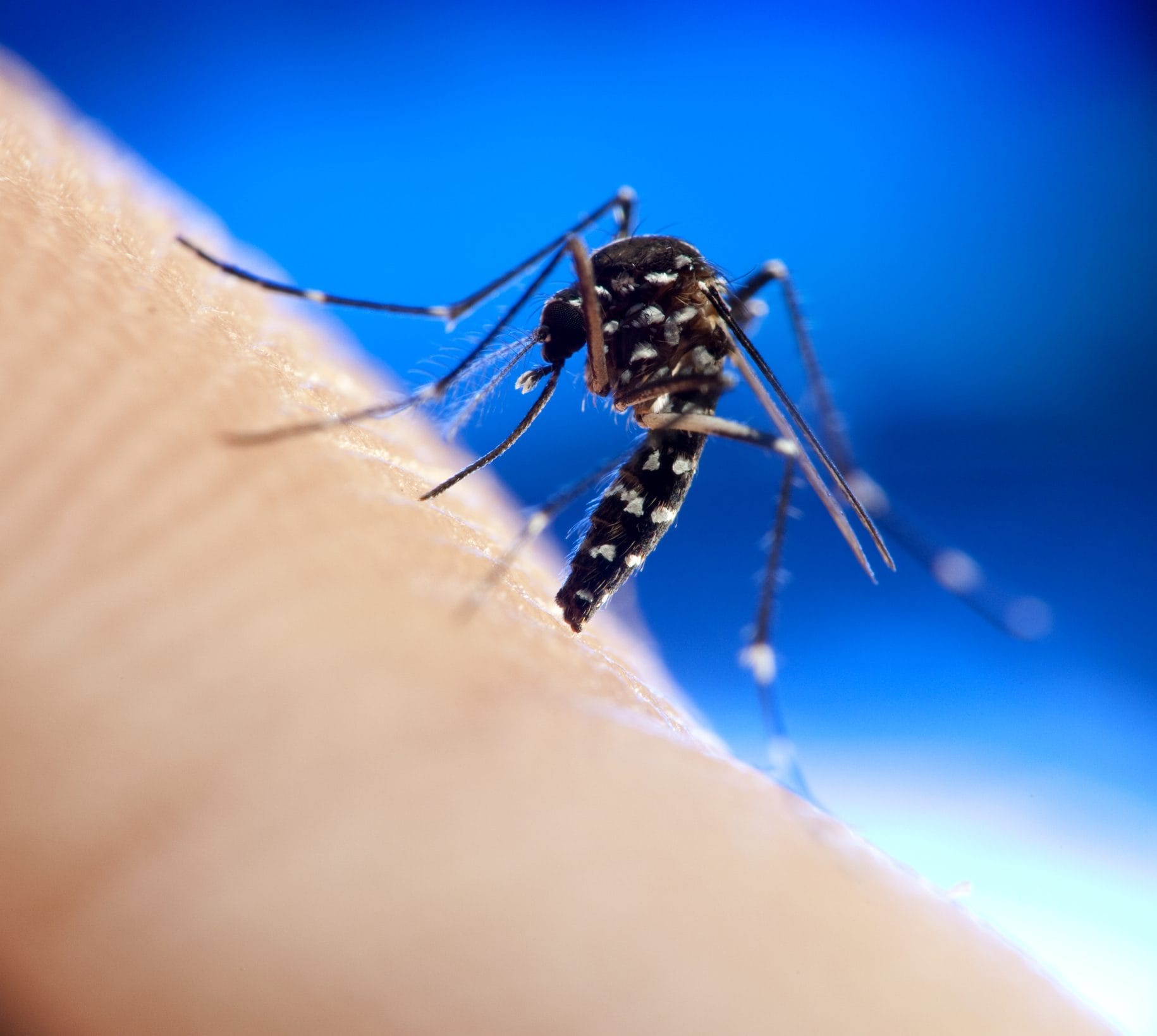
Behind the common name of Tiger mosquito the scientific name is hidden Aedes Albopictusone of the most mosquito species invasive And adaptable in the world.
It is an insect of Asian origin easily recognizable for the Black body with white streaks. Females point mainly during the day to feed on blood, necessary for the maturation of the eggs. He has adapted very well to live in urban environments, lays eggs in small water collections, and can also survive in temperate climates thanks to the diapausea sort of hibernation. Its life cycle is influenced by temperature, light and availability of waterfall, For this reason, to reduce its proliferation at least at home, it can be useful to eliminate or minimize the pools of stagnant waterlike the saucers or bowls of the water of our pets. He is a virus vector such as Dengue, Chikungunya and Zika, and is also expanding in Europe, where the health authorities recommend routine and extraordinary disinfestations to keep the tiger mosquito population under control, as indicated in National prevention, surveillance and response plan to arbovirosis (PNA) of the Ministry of Health.
What a tiger mosquito is waiting for and how to recognize it
Aedes Albopictus It is a small mosquito about 4–8 mm long. Has the body glossy black crossed by white streaks, In particular, the median white line on the chest, his distinctive stretch Compared to the other species, which instead have a hazel -colored body. This line is flanked by striated legs and abdominal segments with light bands.
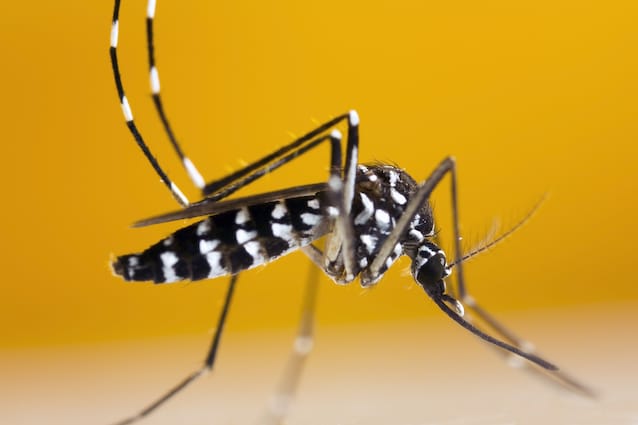
But why is it black and white? The answer can be found under the electronic microscope. According to a study conducted in 2023 by Dr. Rebora and published on Beilstein Journal of Nanotechnologywhite streaks are not pigmented cells, but the result of complex nanostructures that reflect the light (call Structural White). Similar mechanisms can also be found in some butterflies. Their purpose is not yet clear, but it is assumed that these structures can play a role in the visual communication between individuals.
The life cycle of the tiger mosquito
The life cycle of the tiger mosquito is made up of Four distinct stadiums: Egg, larva, pupa and adult. The eggs are laid by the female just above the surface of the water, often in small urban containers, for example manholes, saucers or jars containing water. In the laboratory, a female can lay up to 450 eggs per season. Are resistant and capable of Enter in diapause: This means that they survive the cold and drought for monthsa bit as if they were hibernating.
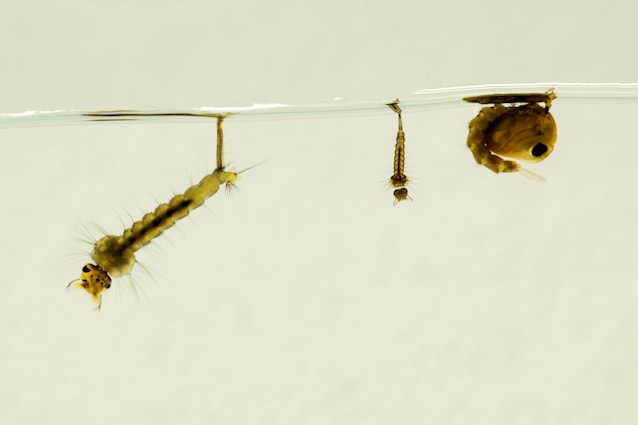
Myth conditions are enough (25 ° C and humidity of 60–70%) and at most an hour of submerged to stimulate the hatching. The larva lives in the water, feeds on microorganisms and after four mutes it turns into a pupa, from which theadult capable of flying away. The complete egg cycle to adult capable of sting, in summer it can take place in just 6–8 days!
Where the tiger mosquito is located: ecology and adaptability
Originally of the Southeast Asiathe tiger mosquito is now present in all continents (excluding Antarctica), thanks to his ecological plasticityThat is, it is able to survive in very different environments, even urban, exploiting small artificial stagnation.
In Emilia-Romagnafor example, has colonized almost all urban areas below 600 m, favored by passive diffusion through vehicle and from the international trade of tires. Also the climate change, With milder winters, it favored its diffusion and permanence.
Because he stings and who stings
The mosquito in general punishes, but but Only the female. After every blood meal, which he serves to make eggs mature, the female placed new eggs. The Puncture behavior is persistentsince it is often interrupted and looks for more guests in rapid succession.
It is mainly active During the day, With peaks in the morning and late afternoon, that is, in the cooler hours of the day. It is attracted by Body smellsfrom the carbon dioxide that we emit with breath and dark colors. Mammals, including man, are his favorite guests, a defined behavior Mammofilia.
What happens in case of puncture: symptoms and health risks
The stings cause itchy bumperssometimes painful and usually larger than those caused by common mosquito stings. The reaction can vary according to the individual sensitivity. It is not uncommon for the stings of Aedes Albopictus are reported as particularly annoying for persistence of the itching and local swelling.

In rare cases, more intense allergic reactions may occur, but the greatest concern is the risk of virus transmission. Aedes Albopictus it is in fact recognized carrier of viruses that bring diseases such as the Dengue, Chikungunya, Zika And Dirofilariasis. In Europe, the risk has grown, as reported by the European Center for the prevention and control of diseases (ECDC). For example, for the Dengue only in 2024 have been reported 304 Native cases (i.e. the infection took place directly in Europe and not related to travel abroad), of which 238 only in Italy, quadrupling the cases of the entire period 2010-2021. In Italy, moreover, only in 2024, i reported total cases were 741deriving for the most part from travel abroad, as indicated by the Bulletin of the Istituto Superiore di Sanità (ISS).
How to defend themselves from a mosquito that will be increasingly widespread
His presence in Italy dates back to the 90s, and today he is stable in all regions. Epidemiological projections suggest that, due to climate change, they could increase reproductive cycles and vector competence.
Knowing the morphology, cycle and behavior of the tiger mosquito is the first step to limit its diffusion and damage. The effective struggle passes from Management of water stagnation (for example, by emptying the saucers, or often changing the bowl of the water of our pets), the entomological surveillanceand – more and more often – integrated and community strategieslike routine or extraordinary disinfestations. For our individual protection, we can use special repellents for the home or for human use, but also mechanical protections such as mosquito nets.
