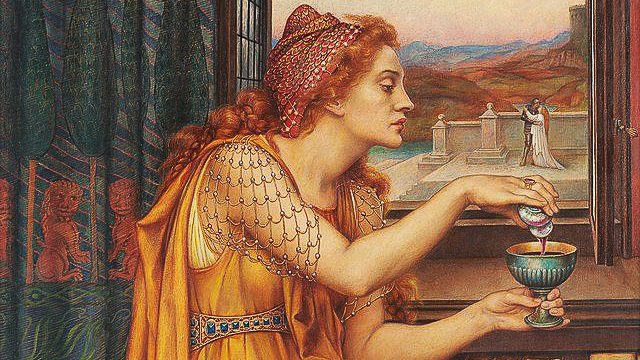
In the heart of Italy of Seventeenth A name circulated which still arouses charm and restlessness today: Giulia Tofana. Orphaned and very poor, it came from Bassifondi Palermitani and he was courtesan of the court of Filippo IV of Spain, but was known by many women as stainlessness. His fame was born thanks to his fatal invention, theTopana watera transparent poison almost tasteless capable of killing slowly without leaving a trace. Between 1630 and 1655, with this connoisseur they would have died over six hundred men, probably all violent husbands.
The chronicles describe it with two opposite faces: on the one hand the “Black virgin”, Ruthless assassin who sowed death in Baroque Europe; on the other a sort of Allied of womencapable of offering an invisible weapon against a patriarchal system that did not leave them escape. The truth, as often happens, probably moves between the two extremes.
The water topana, the poison that was masked by cosmetic
The poison was presented as cosmetic or holy water, but contained a lethal mixture of arsenic, antimony, pretty Woman And lead. A few drops per day were enough, poured into wine or soup, for kill without arousing suspicions: The symptoms imitated natural diseases (vomiting and fever) and left the color of the dead rosy. Thanks to his practical intelligence and the propensity for the experiments, Giulia perfected the formula until it makes it perfect for discreet administration. Many of its buyers were trapped women in imposed or violent weddingswithout protection from the law or from the Church, and the water topana represented for them the only escape route.
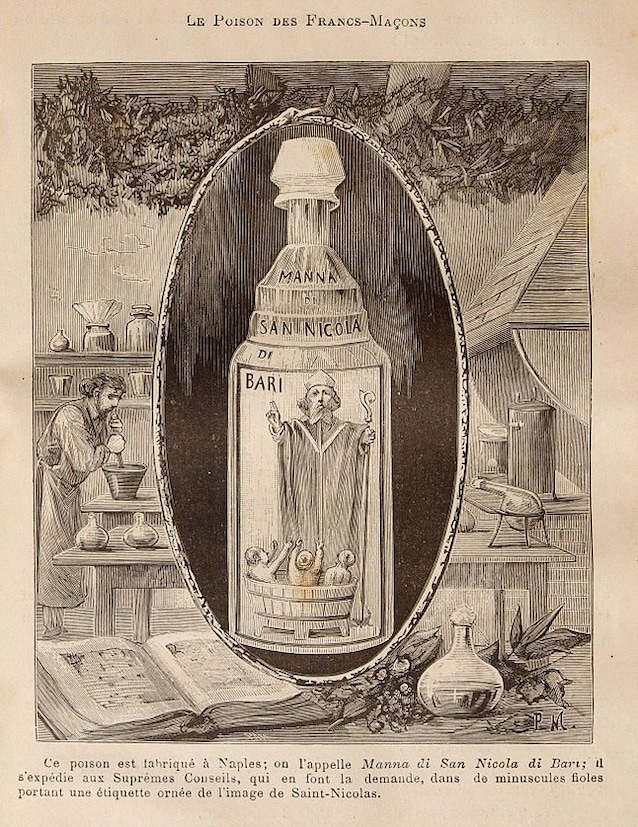
Giulia, although acting unscrupulously, did not pursue a direct personal profit, but created a means to allow these women to get rid of cruel husbands. He never acted alone: a network of pharmacist, loungers And accomplices who distributed the poison discreetly. Over time, his stepdaughter, Girolama Spana, would also have started to act by his side in the production and distribution of the poison. The bottles were decorated with the image of San Nicola (the image of a famous and revered saint, in fact, gave him the air of a relic or miraculous water) circulated for over twenty years, transforming the activity into a real clandestine industry.
Customers increased rapidly, allowing them to leave the malfached neighborhood of Papreto (In fact, he initially lived in Palermo) together with Latte Girolama’s sister. Subsequently, thanks to a friar lover, Giulia moved to Romewhere he lived in the district Trasteverehe learned to write and dressed like a high -ranking lady.
The fall and condemnation
Giulia’s fate changed when a client, the Countess of Cericontrary to the instructions, poured the entire bottle in the husband’s soup, killing him immediately and attracting the suspicions of the family. The police investigated, discovering Giulia’s network. During the trial, which also involved hundreds of its customers, many brides were condemned to death and live walls In the Inquisition building to Porta Cavalleggeri (Rome). Among the victims of this story there was also the stepdaughter Girolama, who ended up hanged in Campo dei Fiori on July 5, 1659 together with four other women who helped her produce and distribute the lethal potion. Giulia, on the other hand, subjected to torture, seems to have escaped from her cell thanks to the intervention of her lover friar, and nothing has been known about her. His defense in court? Those preparations were cosmeticsand it was not his deal if customers used them differently.
THE’Topana water He continued to circulate even after his death. A few months before dying, in 1791, Mozart He confided to his wife to suspect that he had been poisoned with this poison, testimony to the fame and fear that the mixture had aroused almost two centuries after his creation. Today Giulia Tofana It remains suspended between two figures: first Sery Killer of Europe or silent heroine In a world that denied justice to women.
