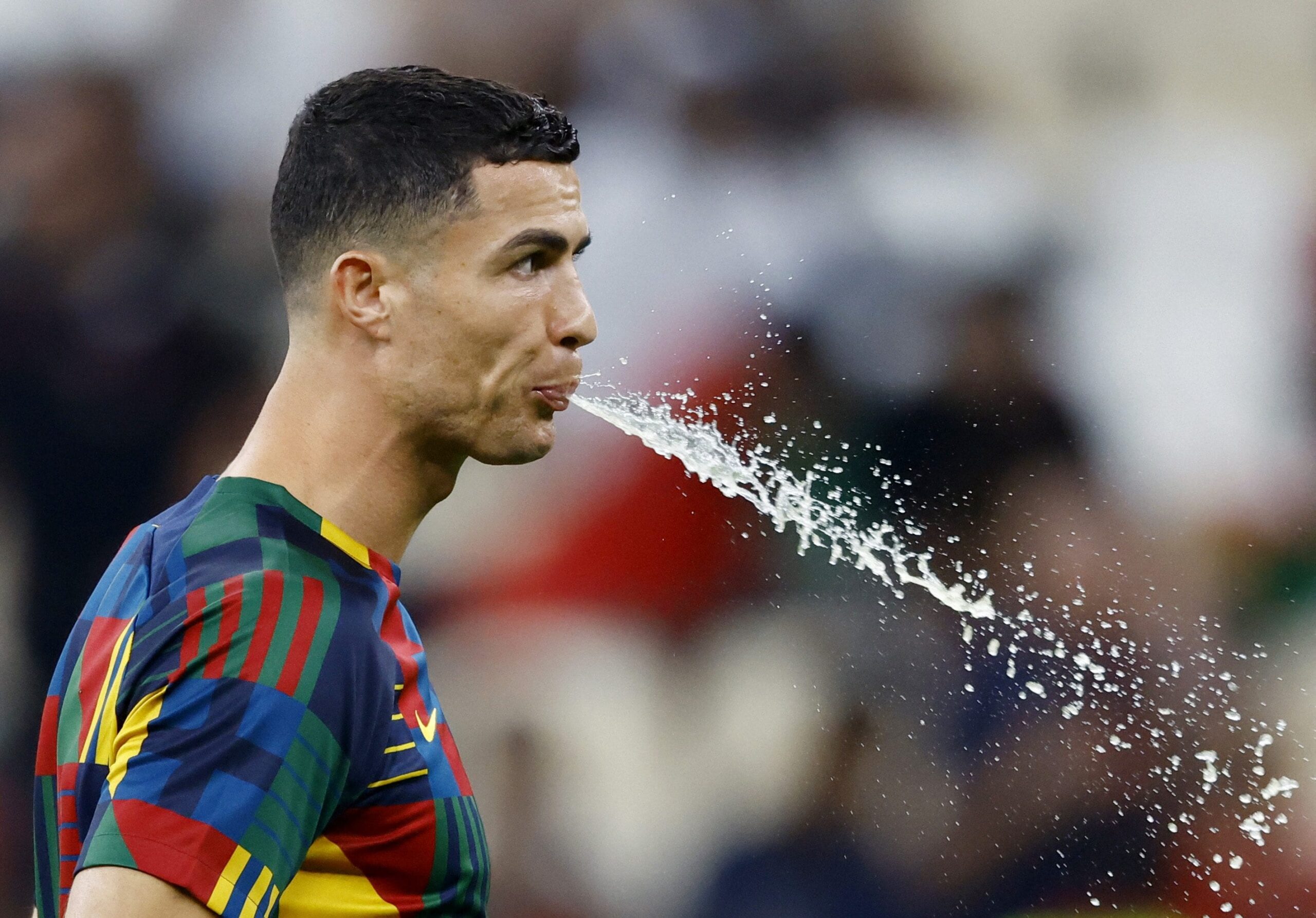
If you have ever watched a Serie A football match or a stage of the Tour de France, you will surely have noticed a curious scene: the athlete takes a water bottle, takes a sip, holds the liquid in his mouth for a few seconds and then… spits it all out on the ground. At the basis of this practice, apparently disgusting and rude, there is the strategy of Carbohydrate Mouth Rinsing or mouth rinsing with carbohydrates. In practice, it consists of rinsing the mouth with a solution containing complex sugars (maltodextrin, glucose, sucralose) for a short time, approximately 10 secondswithout ingesting it, as if it were a mouthwash. Studies suggest that this practice is especially effective for prolonged physical efforts and is therefore more widespread in endurance sports such as cycling and running, rather than in team sports such as football, basketball and volleyball.
The underlying idea is that i carbohydrate receptors present in the oral cavity and on the tongue activate brain areas linked to motor activity, thus improving performance even in the absence of a real energy supply. As reported by an article by Naturethe answer to Carbohydrate Mouth Rinsing it is not the same for everyone. It seems that those who perceive the taste of carbohydrates more intensely benefit more, suggesting that some athletes “respond” better than others to this technique.
To understand how it works and whether this strategy has a consolidated scientific basis, we asked for help from Gabriele Boccolinicurrently Strength and Conditioning Coach of AS Roma with a degree in motor sciences and a doctorate in Sports Science.
What is Carbohydrate Mouth Rinsing and how does it work in simple words? Is there any scientific basis behind this method?
The Carbohydrate Mouth Rinsing it is a technique that consists of rinse your mouth with a carbohydrate solution for about 5-10 seconds and then spit it outwithout swallowing the liquid. It is a much studied topic in the literature, with several scientific studies showing that this method has beneficial effects. Especially in terms of performance in sports endurance – of resistance, ed – such as long-distance running and cycling, but effects are also seen in strength exercises. It is true, however, that in the team sports like football, basketball or volleyball, it is still a less widespread and little-known practice, often due to logistical problems: the frenetic gaming environment or closed places do not always allow the method to be applied with the ideal frequency.
In practice, what is it for? Are we telling the brain that gasoline is coming even if it isn’t true?
At the buccal level we have receptors capable of assimilate signali from nutrients, a bit like what happens with certain sublingual drugs, it is the same principle as when we take a medicine under the tongue.
But there’s more, it seems that the central nervous systemand in particular the areas related to reward et al motor controlare directly connected to these taste receptors. When the mouth tastes carbohydrates, the brain receives a signal of “pleasure” and incoming energy. This mechanism counteracts perceived fatigue and increases motivation to continue the effort, precisely because the brain believes that energy is available.
The crucial point is not to swallow. Can ingesting carbohydrates during exercise cause digestion problems?
Exactly. The reason why this flushing practice has been studied and is used is because in some way one tries to overcome what may be the problems related to intestinal peristalsis – contractions and relaxations of the smooth muscles of the intestine, ed – that running and motion favors. So the intestinal problems that you may haveassimilate carbohydrates both solids and liquids while running, clearly can also lead to some negative effects on the performance itself or on the perception of effort. So in this way we try to overcome this problem. It’s as if the mouth is sending an urgent message to the brain saying “Hey, energy’s coming!”even if it doesn’t arrive.
What exactly does the ideal mouth rinse solution contain? Are simple commercial isotonic drinks or specific preparations with different concentrations of maltodextrin or glucose used?
To obtain maximum benefits, the solution should have a high content of maltodextrins – complex carbohydrates derived from cereal starch, ed – and it needs to be done a little more frequently over time during sports practice to get the best benefits. Some studies suggest doing it every 10-20 minuteswhich explains why it’s easier to apply in a marathon that lasts more than two hours than in a football match.
As advised by the Nutritional Biologist Guido Rillo – specialist in Food Science at AS Roma – the ideal solution must be isotonic at 6% carbohydrates – with the same concentration of solutes as the body’s cells, ed. A hypertonic solution – too concentrated compared to body fluids, ed. – in fact, it would risk causing osmosis problems and gastrointestinal disorders if even just a small amount were ingested, which can happen in practice. Furthermore, this technique is particularly useful in adverse weather conditionssuch as the extreme heat seen at the World Cup in Qatar, where hydration and energy management is critical.
