
Memory loss and cognitive impairment they do not follow a single trajectory: the solidity of memories depends on the type of memory and the brain circuits that are affected by the pathology. When we talk about memory losswe tend to imagine it as an orderly process, in which more recent memories fade while distant ones remain intact. This intuition describes well some brain pathologies, such as brain disease Alzheimer’sin which the neuronal circuits that allow us to store new information are lost first. In some conditions, on the contrary, the remote past dissolves before the present: in pathologies such as semantic dementiafor example, the brain areas where our oldest memories are kept are affected, making it easier to remember what we ate yesterday than the name of our first four-legged friend.
Alzheimer’s disease: a classic model of cognitive impairment
When we talk about cognitive impairmentthe best-known example is Alzheimer’s disease, a pathology that seems to faithfully follow the “Ribot’s law“: the most recent memories are the first to crumble, while the remote ones remain accessible for longer. This happens because Alzheimer’s affects the disease earlyhippocampus and regions of the medial temporal lobe, structures essential for storing new information and retrieve recent episodic memories. As a result, the patient loses the ability to record what happened a few hours earlier, but retains memories of decades past. However, the solidity of these ancient memories is not immutable: with time, the vividness of the details and the associated bodily sensations when remembered they transform into one general and schematic knowledge of that fact.
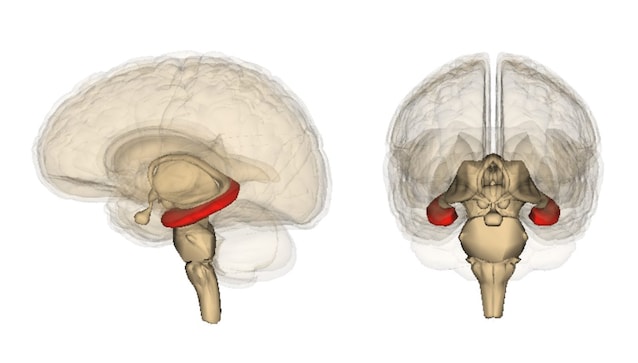
Interestingly, there appears to be a “peak of reminiscence“: patients tend to remember events that occurred between the ages of 10 and 30 more clearly, a crucial period for the formation ofidentitywhich seems to anchor itself more deeply in the mind than other stages of life. Even when specific details fade, the emotional coloring of these memories tends to persist, suggesting that theemotion acts as a glue capable of preserving traces of the past even when the cognitive structure collapses.
The various forms of dementia
However, this relationship between time and strength of memory it is not a universal rulebut it depends specifically on which brain circuits are affected: conditions, such as semantic dementiapresent a diametrically opposite memory profile. In these patients, recent memories are surprisingly intact, while knowledge of the remote past and the meaning of words dissolve. This happens because the deterioration leaves the hippocampus relatively intact, at least in the initial stages, and instead affects the anterior temporal lobesthat is, the areas of ours semantic and conceptual memorywhich we could imagine as the encyclopedia of our lifewhere the “explanations” of words, things around us or abstract concepts are contained. As a result, a patient may perfectly remember taking a walk yesterday, but have forgotten key childhood events or the meaning of common objects, such as “what is a pen.”
Other forms of dementia, as in some expressions of frontotemporal dementiainstead show a “flat” profile: there is no difference between recent and remote memories, because the damage to the frontal lobes prevents the strategies of search and recovery of information, making the entire lifespan inaccessible in an indiscriminate way. The memories are there, but we no longer know where they are or how to get there: as if we were no longer able to reach the highest shelf in the library, because the ladder we used to get there broke. Even in mild neurocognitive disordera phase that often precedes Alzheimer’s, there is already a difficulty in episodic memory: It becomes more difficult to remember recent events accurately. On the semantic memory (i.e. facts and general knowledge) the results, however, are not always in agreement: in some people it seems to hold up well, and sometimes the most recent facts appear even more accessible than distant ones.
Beyond the distinction between recent and past
In general we can say that when the structures of thehippocampusit is easier to observe the picture most familiar to us, with recent memory more compromised than ancient and consolidated memory. In other cases, however, the problem is not that the memories have disappeared, but that the brain is struggling to find them: like having an archive that is still full, but losing the keys to open the right drawers.
Furthermore, the solidity of the memory depends on its nature: the memories they become “facts” of our life, like the name of the elementary school we attended, behave differently than memories of one-off events, like the first day of school. In Alzheimer’s, as the ability to mentally time travel deteriorates, the ability to access general facts about oneself may remain preserved longer, especially if supported by external stimuli such as music or him odorswhich can reactivate silent memories. We remember the name of our school, but not when we first entered it.
Sources
Stramba-Badiale et al., 2025, Autobiographical memory in Alzheimer’s disease: a systematic review Marselli et al., 2023, Episodic and Semantic Autobiographical Memory in Mild Cognitive Impairment (MCI): A Systematic Review Irish, 2022, Autobiographical memory in dementia syndromes-An integrative review Ketonis et al., 2025, Human retrograde amnesia and memory consolidation Donnarelli et al., 2025, Autobiographical memory in dementia syndromes-An integrative review al., 2025, Autobiographical Memory: A Scoping Meta-Review of Neuroimaging Data Enlightens the Inconsistencies Between Theory and Experimentation Irish et al., 2014, Gray and White Matter Correlates of Recent and Remote Autobiographical Memory Retrieval – Insights from the Dementias
