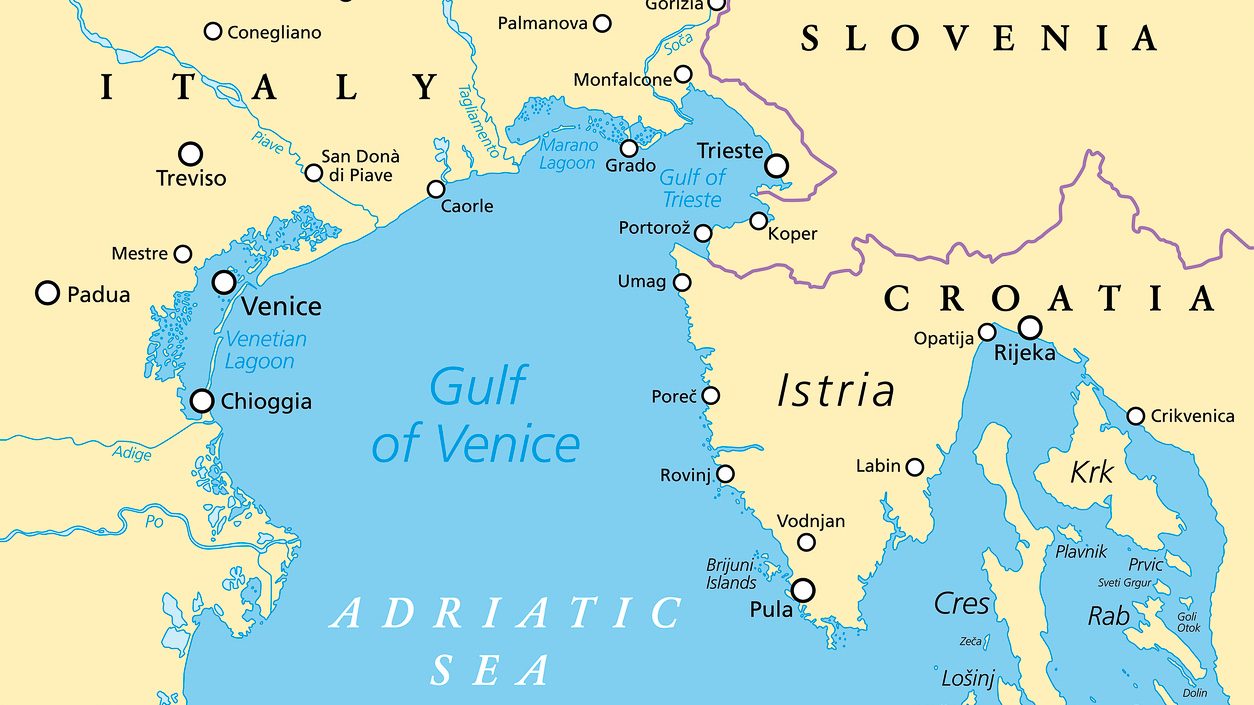
Istria does not belong to Italy because after the Second World War it was assigned to Yugoslavia by peace treatysigned in Paris on 10 February 1947. Previously, a part of the population was Italian speaking and ethnic but, even before the signing of the treaty, it had begun to abandon the territory and to seek refuge in Italy. The definitive borders between Italy and Yugoslavia were established by Treaty of Osimo of 1975which resolved the Trieste issue, and have not changed since the dissolution of Yugoslavia in the 1990s. Today Istria belongs almost entirely to Croatia.
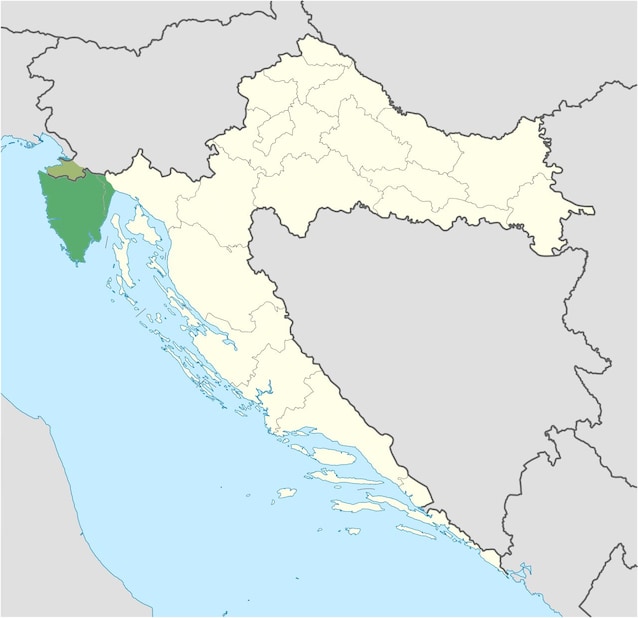
Where is Istria: the map
Istria is one peninsula of the Adriatic Sealocated between the Gulf of Trieste and the Gulf of Kvarner. From a political point of view, it belongs almost entirely to Croatia, with the exception of a portion of territory which is part of Slovenia and two municipalities, Muggia and San Dorligo della Valle, belonging to Italy. The most populous city is Pulabelonging to Croatia.
History of Istria
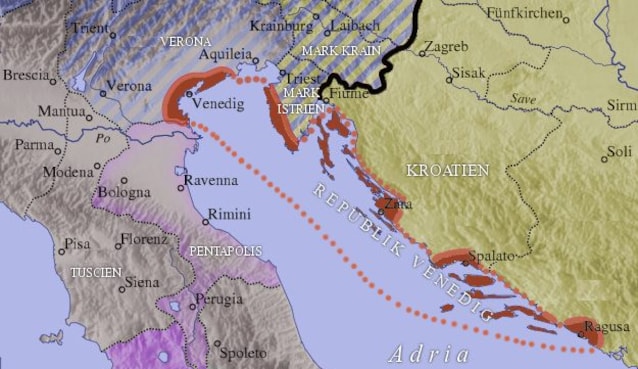
Istria has been a disputed territory for centuries. In the Middle Ages, a part of the Peninsula belonged to the dominions of Republic of Venice and another at Holy Roman Empire. The borders between the two portions of the territory varied over the centuries but, in general, Venice controlled the western and southern part, with the cities of Pula, Koper and Rovinj (today Pula, Koper and Rovinj), while the Empire administered the north-eastern part, with the city of Opatija (Opatija). In 1797 following the Treaty of Campo Formiothe territory of Venice was annexed by the Habsburg Empire, which thus obtained control of all of Istria.
A part of the Istrian population, concentrated in the cities and in the western sector of the peninsula, was from ethnicity and Italian language. The exact percentage is up for debate. According to the 1910 census, the linguistic composition of Istria was as follows:
- 41.6% of the population spoke Serbo-Croatianconcentrated in the eastern part of the Peninsula
- 36.5% of the population spoke Italianconcentrated in the western part and in urban centres
- 13.7% of the population spoke Slovenian
- 3.3% of the population spoke German
Smaller minorities spoke Romanian and other languages. The census, carried out by the Austrian authorities, was considered wrong by the Italians.
At the end of the First World War, the Austrian Empire dissolved and the Kingdom of Italy was able annex the whole of Istriaincluding the eastern part, inhabited by Slavic populations. According to a census carried out in 1921, 58% of the total population spoke the Italian language.
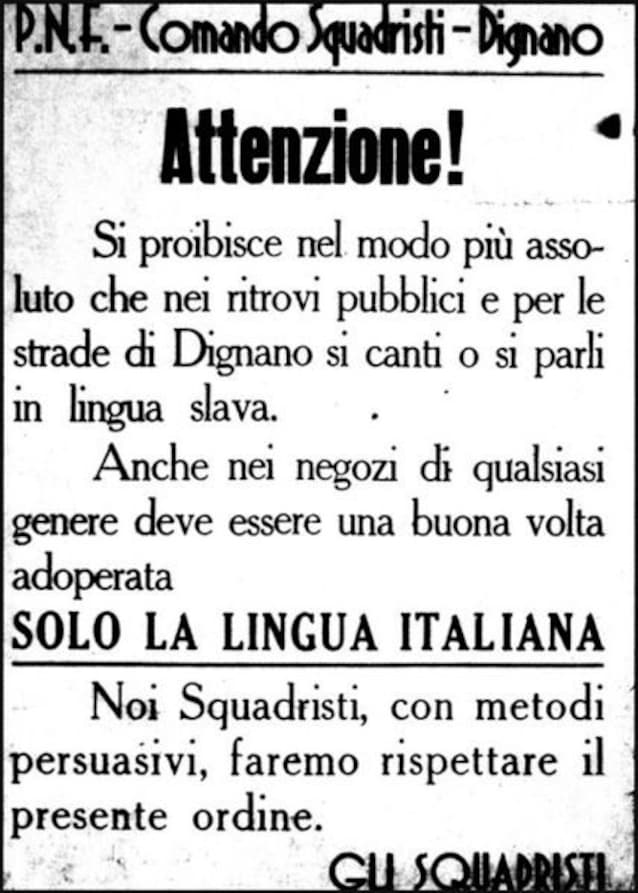
During the twenty years of fascism, Istria was subjected to a Italianization processwhich entailed, among other things, the ban on the use of languages other than Italian and the discrimination of the ethnic Slav population.
Istria after the Second World War: the annexation to Yugoslavia and the exodus
The Second World War in Istria showed all its tragedy. In 1941, taking advantage of the successes of Nazi Germany, the Kingdom of Italy was able annex other Adriatic territories and the whole of Sloveniaguilty of serious crimes against the Slavic population. The Italian occupation, however, did not last long: after the armistice of 8 September 1943the whole area, including Istria, was occupied by the Germans, who two years later were forced to withdraw from Yugoslav partisans led by Marshal Tito.
At the end of the war, the question of the border between Italy and Yugoslavia arose. The four winning countries (Soviet Union, United States, United Kingdom and France) put forward four different proposals. It was the French one acceptedwhich traced the border along the line that still delimits it today and which, excluding the Soviet one, was the most disadvantageous for Italy, because left the whole of Istria to Yugoslavia. The peace treaty that sanctioned the new border was signed in Paris on 10 February 1947.
A large part of the Italian-speaking and ethnic population left the Istrian territory to take refuge in Italy: it was the Julian-Dalmatian exoduswhich, which began before the signing of the treaty, also involved other territories that passed to Yugoslavia, for a total of 250,000-300,000 people. The affair, which is part of the population transfers that occurred at the end of the Second World War, is the subject of controversy regarding the role of the Yugoslav militiaswho were guilty of crimes against the Italian population, pushing them to leave the territory.
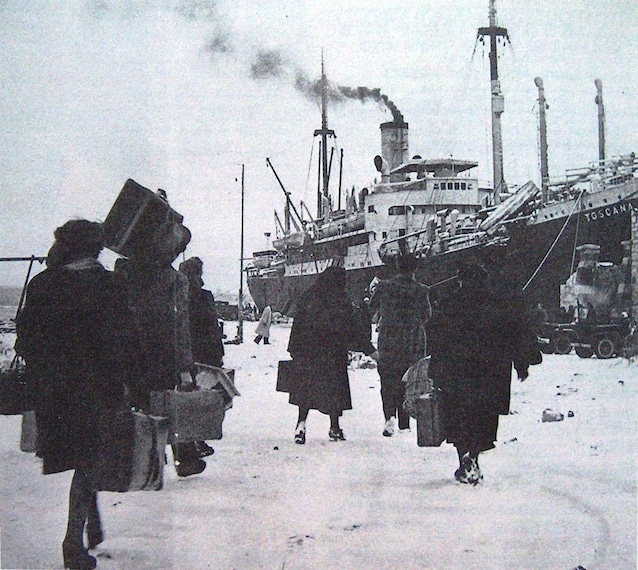
The Trieste question
The 1947 treaty it did not resolve the Trieste question (not belonging to Istria, but close to it), claimed by both Italy and Yugoslavia. The treaty in fact provided for the creation of a separate state, the Free territory of Trieste (TLT), divided into two sectors: sector A, administered by the Allies and including the city of Trieste; sector B, administered by Yugoslavia, including the southern portion of the territory.
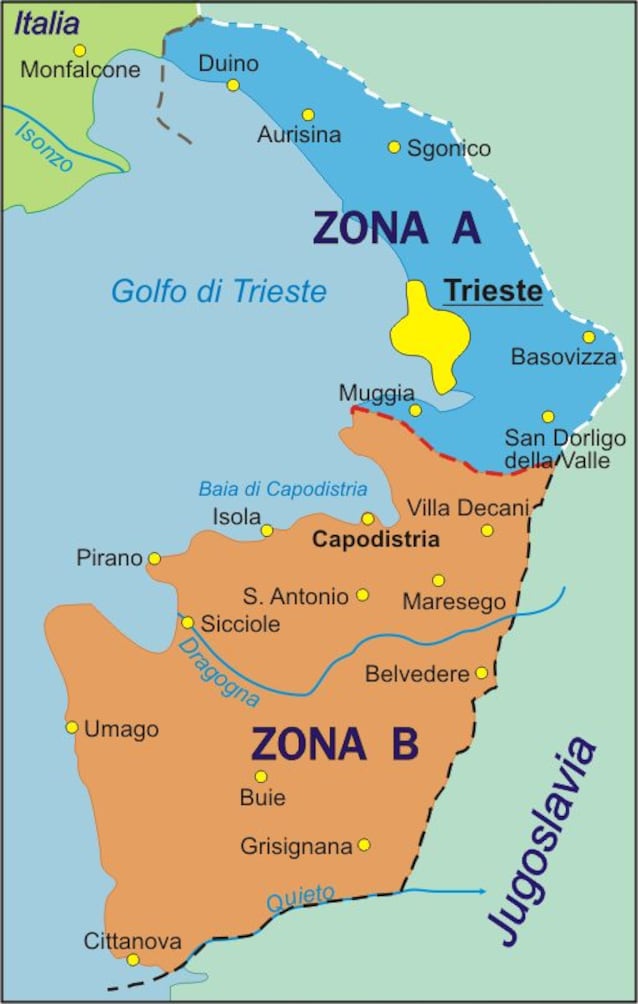
In 1954, following the London Memorandumsector A came under the control of Italy and sector B under that of Yugoslavia. In fact, the line that divided sectors A and B became the border between Italy and Yugoslavia. At a legal level, the issue was defined only in 1975 with the Treaty of Osimo, signed by the two foreign ministers: Mariano Rumor for Italy and Miloš Minić for Yugoslavia. Under the treaty, which entered into force in 1977 after ratification by the two Parliaments, i borders established in 1954 became definitive. Trieste therefore remained in Italy.
The dissolution of Yugoslavia, which occurred in the 1990s, did not change the borders and Istria, as we have seen, became almost completely part of the Croatian republic.
Sources
Darko Darovec, A Brief History of Istra, ALA Publications, 1998,
Raoul Pupo, The long exodus. Istria: the persecutions, the foibe, the exile, Rizzoli 2005.
Marina Cattaruzza, Italy and the eastern border 1866-2006, Il Mulino 2007
