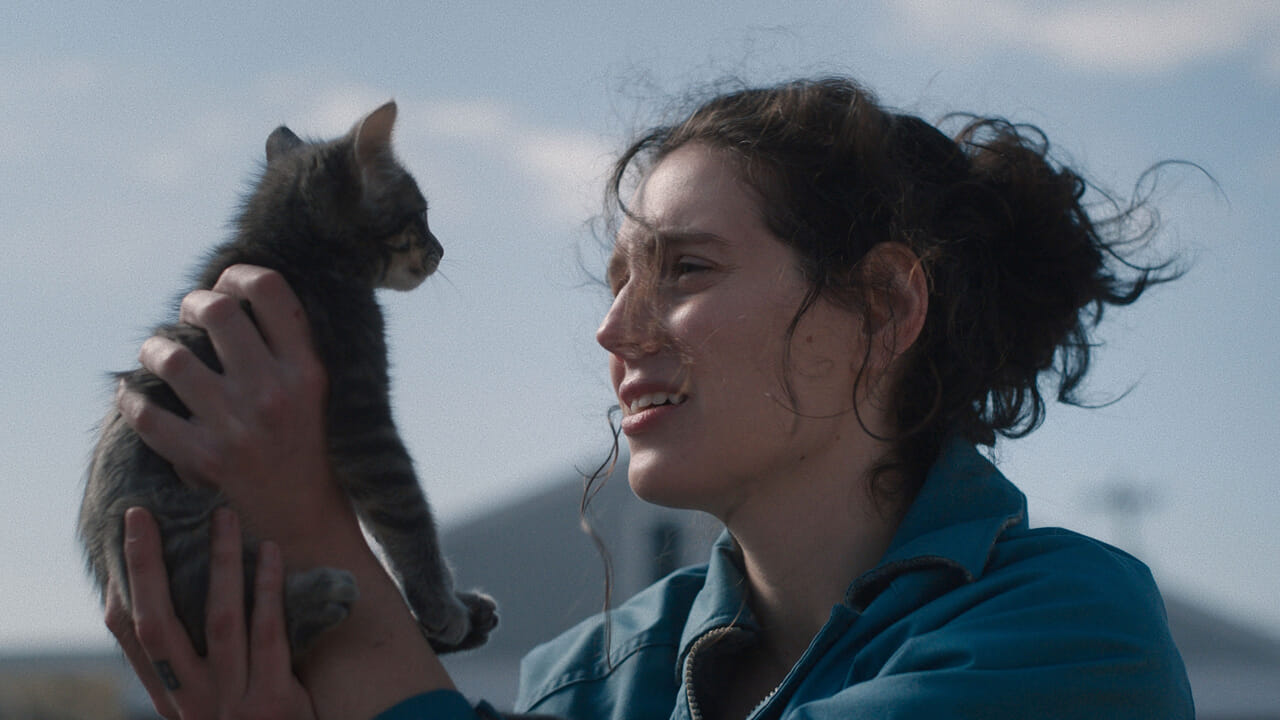
With “Sorry, Baby” Eva Victor’s talent was born
Writing, directing and starring. Between a gamble and egomania, when you happen to come across artists who take a similar initiative it often ends up in nothing. This is not the case with Eva Victor, born in 1994, one of the stars of the moment in the United States and present in many nominations of the current awards season with her “Sorry, Baby”.
Which is actually a truly remarkable film. What’s more: a debut. The Wonder Pictures brings him to the cinema from January 15th, the story of a depression dug by the deep wound of sexual abuse suffered and which Victor wraps in pastel tones, soft outfits and melancholy of trees stripped by autumn.
The structure of Sorry, Baby
Sorry, Baby is divided into chapters. It starts with the reunion of Agnes (Victor) and Lydie (Naomi Ackie), former friends from university when they attended the faculty of literature in New England. Agnes remained to live there because she had meanwhile become an associate professor right where the two had studied, while Lydie, who goes to visit her, has started a family and is now expecting a baby girl.
From this reunion the film then goes backwards, then returns, then moves forward. He entrusts to his fragmented narrative structure the pieces of a life that has remained in a certain sense as if crystallized, blocked by the psychological consequences of that trauma that has become a watershed. Because it took place in the university environment, a place of knowledge and resistance whose key principles have disappeared. Which Agnes continues to frequent daily, almost as if it were a cruel form of Stockholm syndrome induced by contingency.
It was a teacher (Louis Cancelmi) who abused her, and the relationship between teachers and students – more generally the balance of power between mentors and acolytes – seems to be a hot topic in today’s crazed, schizophrenic USA. In 2025 After the Hunt by Luca Guadagnino had already tackled it head-on, which in any case has nothing in common with Sorry, Baby other than the theme of abuse and the intercepting of the underlying vibration, that is, the collapse of certainties.
In the biting After the Hunt, what was missing was certainty as such (in the wake of the paradoxical reverse of post-MeToo social struggles), no longer placeable because it is in the mouth of polarized half-truths and personal interests. In Victor’s film it is the crumbling of certainty as personal security and intellectual sharing.
Excellent writing, direction, acting
In short, the institutions and places where we thought we would find growth and reassurance are slipping into threat. It is not surprising that Victor then casts a shadow over the houses as well. In particular, she remains outside the house her tutor invited her to enter, which she views from the outside with a fixed camera as if it were a house of horrors. And then he does a very simple thing which is, through the direction, a chilling narrative comment: he stays with this fixed image for thirty interminable seconds, making time flow forward with an ellipsis that passes from day to afternoon, then from afternoon to night.
In short, a language of horror cinema that cools the blood in the veins before returning to that tone of bitter sarcasm that pervades the film, which however never shakes off the change of perception on safety spaces which in fact are no longer such. And if it still finds a cold distance in the restorative institutional procedures – medical and human resources – the film seeks the lopsided irony of everyday life with essential writing, with never verbose dialogues whose effectiveness actually seems to find validation in the small silences that exist between one joke and another.
He must therefore also be recognized for an excellent choice of supporting and counterpoint casting, including the courteous and reassuring faces of Lucas Hedges and John Carroll Lynch in small roles. Because in overlooking the abyss Sorry, Baby underlines the importance of doing and casting a net, of carving out small kindnesses and acts of thoughtfulness, daily balms with which to soothe the wounds.
Wounds that, if the skill in the script and behind the lens wasn’t already enough, Victor (with a career already in acting) tightens and represses on his sharp face, nailing a very tough and fragile role to which he returns a vast range of feelings never subcontracted to pietism. Was a talent born?
Rating: 7.5
undefined
