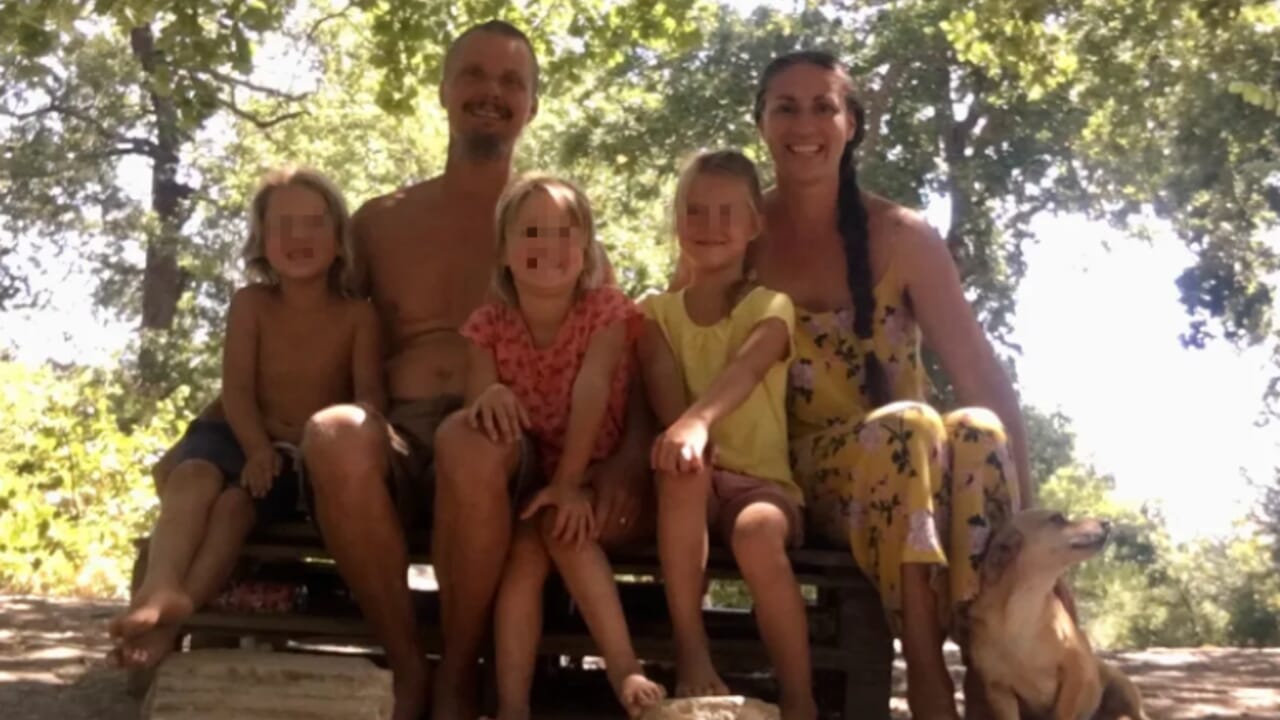
With the “family in the woods” we give the worst, between banality, benevolence and ignorance
The case of the “forest family” tells us a lot about Italy today. Three children torn from the arms of their mother and father, guilty only of wanting to raise them in the midst of nature, far from the immorality and corruption of modern society. This is the media narrative of the story, which inevitably generated a real popular uprising, complete with political exploitation, which in these circumstances never takes long to wait. A concentration of trivialization, benevolentism and much, much ignorance about the laws of our state and the reasons that support them.
Trivialization
Let’s start with trivialization. “The family of the forest”, as it has been renamed, seems like the title of a fairy tale, which appeals to a shared intolerance. In fact, how many of us, exhausted by the exhausting dynamics of contemporary life, have dreamed of giving up everything and moving to the countryside, far from everything and everyone. Society scares us: the technologies that overturn our lives, the wars of which we are helpless spectators, the difficulties of coexistence that push us towards polarization and, sometimes, misanthropy. Slaves of algorithms, we are willing to do anything to defend those who seem to have had the courage to escape this yoke. Thus we romanticize those who “give up everything” to travel the world in a camper, those who live off the fruits of their own garden or those who, as in this case, renounce even the most basic benefits of modernity, such as adequate sanitary ware or the certainty that the roof of their house will not collapse at any moment. Everything is thrown into the cauldron of “evil modernity”, of “it was better before”. Then there is the benevolentism, inevitable in every public discussion. “Think of the children in the Roma camps!”, “Think of those mothers who kill their children!”, up to the apotheosis: “Think of those who leave their children glued to their smartphones all day!”. Totally different problems, which require different interventions, but used as argumentative shortcuts to “win” a debate that makes no sense. Every issue that puts the physical or psychological safety of a citizen, whether adult or minor, at risk deserves to be taken seriously, regardless of our personal priorities. The fact that bigger problems exist does not exclude that we can also deal with apparently smaller ones, assuming that they really are smaller.
Ignorance
And we arrive, finally, at ignorance. The ignorance of a country that does not know the law and is convinced that, with a child, you can do what you want as long as you physically abuse him. Because saying “leave those parents alone” means exactly that: “Allow a parent to raise a child as they choose.” And here’s the catch. The State places limits on parental responsibility precisely because it is an actor in the educational process of minors living on its territory and cannot ignore such an extreme condition as that of the “forest family”. Children isolated from their peers, without friends, without the possibility of learning about ways of living different from that of their parents.
Give minors the opportunity to choose
The State has the duty to offer alternatives, new perspectives, educational models that differ significantly from those present in the family of origin. This serves to diversify educational risk and prevent a minor from being entirely dependent on his parents, becoming fragile, manipulable and controllable. It serves to give him the possibility to choose, once he becomes an adult. The decision of the Juvenile Court, in this case, can be right or wrong: this can be discussed and the facts evaluated on their merits. What is undoubted, however, is that the premises from which most of the criticisms arise are completely incorrect. Judges are attacked on the basis of an emotional and misleading narrative, built more on instinctive indignation than on knowledge of the rules and criteria that regulate state intervention in the protection of minors. It is taken for granted that removal is an abuse, without asking whether it is instead the result of checks, inspections, psychological and social evaluations carried out by professionals. We start from the assumption that “parents are always right”, as if love were enough to automatically guarantee the safety and well-being of their children. Now this is a beautiful tale.
