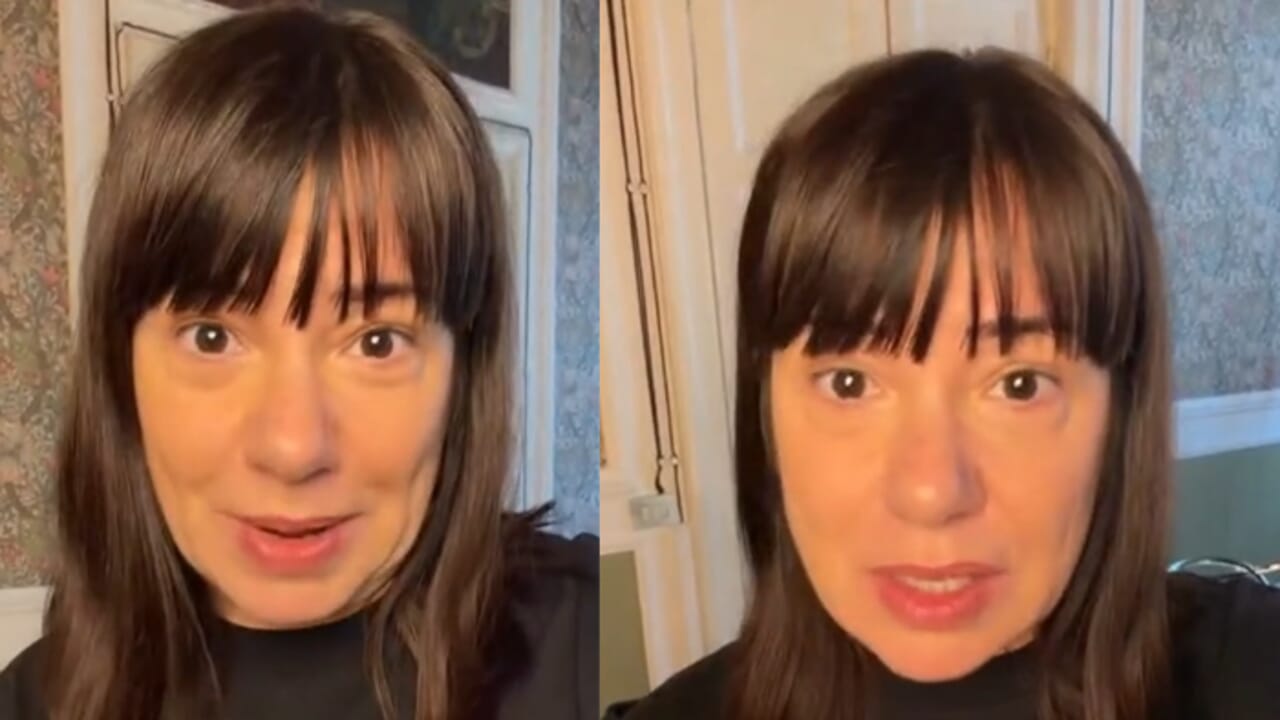
“You’re fat because you don’t work hard.” The Cynical Beautician blurts out on social media: because those about bodies are never (just) comments
“I have a belly but it’s not contagious”. In the Instagram bio of Cristina Fogazzi, aka the Cynical Beautician, there is the entire manifesto of an entrepreneur who has transformed her company into a 75 million euro empire. That ironic phrase almost sounds like an identifying motto. A proudly declared “belly” that becomes the figurative battlefield of a necessary reflection because, in 2026, we still feel entitled to pick on other people’s weight and bodies.
In the last few hours, Fogazzi has raised a fuss that should concern all of us. At the center of the debate is that “concern for health” which too often hides a pure and simple stigmatization of fat bodies. It all started from a comment received from a follower: “If my best friend has 20 extra kilos, for her sake I try to make her understand that it would be good to lose them.”
Cinica’s response was not long in coming: “Telling a person that they have to lose weight has never made them lose 20 kilos. It only generates discomfort.” There are many studies that have shown how stigma and prejudice towards obese or overweight people influence their mental health or compromise their academic and work performance. So, adds Fogazzi: “Why continue doing it?”.
The “dictatorship of the physique”
The timing of the complaint does not appear to be coincidental. 2025 marked the forceful return of an aesthetic of thinness, fueled by the spread of GLP-1 drugs (such as Ozempic) and the success of meal replacements, powders and drinks sold as miracle shortcuts. If up until two years ago the watchword was body positivitytoday the narrative has reversed course: a U-turn that offers no discounts to anyone, and in particular to those who are part of the world of entertainment.
Just think of Olly, winner of the 2025 Sanremo Festival, who came under fire for an alleged “forced” diet by his management. The singer had to publicly deny it, speaking to the whole of Italy to defend his mental and physical balance, also underlining that he has no problems with alcohol. The back and forth had such an impact that it was even talked about on TV. A harsh truth emerged on La Vita in Diretta, from the mouth of the choreographer Luca Tommassini: “As artistic director I had to make many singers change their bodies because the record companies wanted it. It also happened to very well-known presenters, forced into diets against their will”.
It is therefore not surprising if on social media, but more generally in the world of international showbiz, we are used to seeing models that are often unachievable. Also because i “perfect” models they invest thousands of euros in personal trainers, aesthetic sessions and time that an ordinary person doesn’t have. Why? Because he most likely doesn’t work with his body. And this is a difference to consider.
An objective misaligned from reality that the fashion industry contributes to making even more distorted through the so-called ‘vanity sizing‘. Literally ‘vanity sizing’: this is a marketing strategy that assigns smaller size numbers to items that have larger physical dimensions. A psychological trick that deludes us that we fit within certain standards, making the number on the label the only judge of our value and fueling frustration when reality does not coincide with marketing.
The era of ‘fat is beautiful’ is officially over. From slimming tips to the madness of the ballerina-bodysuit
The toxic myth of willpower
Against those who wave the cliché of “you don’t lose weight because you don’t feel like it”, Fogazzi makes no concessions. As underlined by the entrepreneur qThis is the same old “you don’t lose weight because you don’t want to, you’re lazy, you don’t try hard enough” stuff. It’s always the same rhetoric. But have you ever worn a fat body? If you go to a gym, you’ve seen how people look at you. But I’m not in a gym, anywhere, you’ve seen how people look at you, right?
“I hope that your concern for health also applies to those who smoke, to those who drink, to those who live in smog”, underlines Fogazzi. “But you’re only worried about fat bodies. That’s the only health everyone cares about.”
From 44 to 40, how come the clothing sizes got smaller? Fashion psychologist Paola Pizza explains it to us (well).
A matter of public (and mental) health
Thinking that it is a topic that does not affect us or that interests few is wrong. The data from Bambin Gesù speak clearly: in Italy around 3.5 million people suffer from nutrition and eating disorders. 90% are women, but the phenomenon is growing among very young males (20% in the 12-17 year age group).
No one questions the importance of a healthy lifestyle. But support from friends and family doesn’t come through judgment or unsolicited advice. It comes through listening and the ability to recognize the complexity of individual experiences. It is important to recognize that between health, self-perception and social pressure there is a complex area, which if simplified risks doing more harm than good, because a comment, even in good faith, is never just a comment.
“If you gain weight they won’t give you clothes”: the background of Perego and Tommassini on the (ruthless) world of entertainment after the ‘Olly case’
